Trap Botox in Irvine, CA - Neck & Shoulder Slimming
TrapTox in Irvine: How Trapezius Botox Slims the Neck and Relieves Shoulder Pain
You've probably seen the before and after photos, a tense, broad shoulder-to-neck line transformed into something longer, softer, and more elegant. What was once called "Barbie Botox" has a proper name now: TrapTox short for trapezius Botox, and it has become one of the most requested treatments at Spectrum Skin Clinic in Irvine.
What makes TrapTox genuinely different from other aesthetic treatments is that it addresses both appearance and function at the same time. Patients often come in for the visual result, a slimmer neck line, a more refined silhouette, and leave equally grateful for something they weren't expecting: real, lasting relief from the neck and shoulder tension they'd been carrying for years.
If you've been curious about this treatment and want to understand exactly how it works, whether you're a good candidate, and what results actually look like, this guide walks you through everything.
What Is TrapTox and How Does It Work?
TrapTox involves injecting Botox® or Dysport into the trapezius muscle, the large triangular muscle that runs from the base of your skull down to your mid-back and out across both shoulders. When this muscle is overdeveloped, chronically contracted, or simply large by nature, it creates a thick, raised appearance between the neck and shoulder that shortens the visible neck line and adds bulk to the upper body.
Botox® works by blocking nerve signals to the muscle. Specifically, it blocks nerve signals that cause the trapezius to contract with full force. As muscle contraction decreases, two things happen in parallel: the tension and pain that come from a chronically tight trapezius begin to ease, and over several weeks, the muscle gradually reduces in size, creating the elongated neck and softened shoulder line that TrapTox is known for.
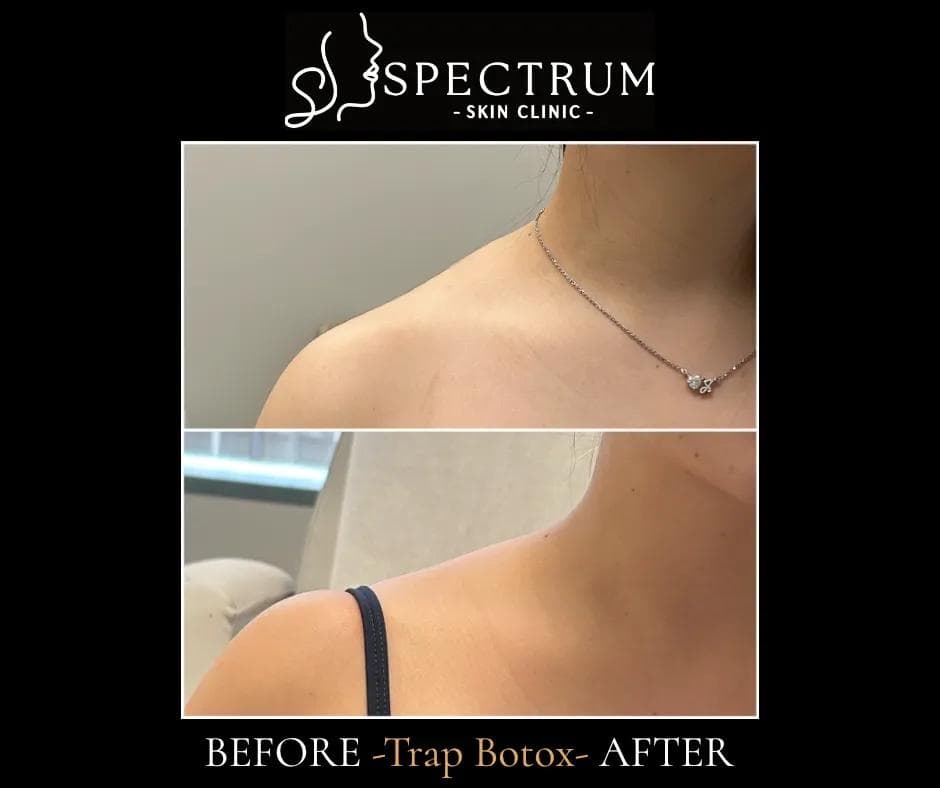
This is not a dramatic or sudden change. The effects of Botox on a large muscle like the trapezius develop progressively, which is actually what makes the results look so natural. Patients don't look "done." They look like a more relaxed, more defined version of themselves. Here are general before and after results for quick reference.
The Cosmetic and Medical Benefits of TrapTox
The benefits of TrapTox fall into two categories, and most patients experience both simultaneously.
On the cosmetic side, trapezius Botox treatment creates a visibly longer, more elegant neck-to-shoulder silhouette. For patients who feel their upper body looks disproportionately broad, whether from genetics, muscle development, or poor posture over time, the change can be striking. The neck looks longer. The shoulders appear softer. The overall line from ear to shoulder takes on the refined quality that has made this treatment famous on social media.
On the medical side, TrapTox is an effective treatment for patients dealing with chronic muscle tightness, stiffness, soreness, and pain in the upper back and neck. Many patients with desk jobs, frequent travel, or stress-related muscle tension carry an enormous amount of tightness in their trapezius without realizing how much it's affecting them. When the muscle finally has a chance to relax, truly relax, the relief can feel transformative. We routinely hear from patients that their neck pain diminished significantly within a few days of treatment, well before the cosmetic results were even visible.
Are You a Good Candidate for TrapTox?
Understanding whether you're a good candidate for TrapTox starts with understanding what the treatment can and can't address.
You may be a good candidate if your trapezius muscles are visibly prominent or create a hunched appearance at the neck-shoulder junction. You may also be a good candidate if you experience chronic upper back and shoulder pain, muscle tension that doesn't resolve with stretching or massage, or neck pain that radiates upward toward the base of the skull. Patients who have large trapezius muscles due to genetics, not just exercise, are often particularly strong candidates because the muscle responds predictably to Botox injections.
TrapTox may not be the right fit if your shoulder appearance is due to bone structure rather than muscle size, or if you have certain neuromuscular conditions that affect how your body responds to botulinum toxin. This is precisely why a TrapTox consultation matters before committing to treatment. During your consultation at Spectrum Skin Clinic, Sabeen Munib, MD will assess your trapezius muscle directly, review your medical history, and give you an honest, accurate picture of what TrapTox can realistically accomplish for your specific anatomy.
How Many Units of Botox Are Used for TrapTox?
One of the most common questions patients ask before their traptox consultation is how many units of Botox the treatment requires. The honest answer is: it depends on your muscle size.
The trapezius is one of the largest muscles in the upper body, and treating it requires significantly more Botox than a facial treatment. Depending on your muscle size and the goals of your treatment, most patients require between 50 and 100 units per side, sometimes more for large trapezius muscles with significant bulk or chronic tension.
This is why dosing precision matters. Too few units and you won't see a meaningful cosmetic or therapeutic result. Too many and you risk affecting muscle function in ways that interfere with posture or shoulder movement. At Spectrum Skin Clinic, Dr. Munib personalizes the dose for every patient based on a direct assessment of your trapezius muscle, not a standard formula. We use a fine needle for each injection point, and the number of injection sites is mapped to the specific areas of tightness and bulk we're targeting for you.
What to Expect During Your TrapTox Consultation and Treatment
Your TrapTox consultation at Spectrum begins with Dr. Munib reviewing your medical history, understanding your goals, whether cosmetic, therapeutic, or both, and physically assessing your trapezius to determine candidacy and dosing. This is not a perfunctory step. Treating the trapezius requires understanding how your muscle moves, where it's tightest, and how it fits your overall posture and upper body proportions. You'll leave your consultation with a clear treatment plan and a transparent cost breakdown before anything is scheduled.
On the day of your trapezius Botox treatment, the procedure itself takes approximately 20 to 30 minutes. Dr. Munib injects Botox into multiple precise points along the trapezius muscle on each side, using a fine needle to minimize discomfort. Most patients describe the sensation as a brief pinch at each injection site, manageable and over quickly.
There is no meaningful downtime. Most patients return to their normal routine the same day. We do recommend avoiding strenuous upper body exercise and heavy lifting for 24 hours post-injection, and the usual aftercare advice applies: avoid lying flat for four hours, don't massage the injection site, and protect yourself from excessive heat for the first day.
When Do Results Appear and How Long Do They Last?
TrapTox results develop in stages, and understanding the timeline helps set realistic expectations.
Within a few days of treatment, many patients notice the first sign of change: a softening of the tension and tightness in their upper back and neck. Muscle pain begins to ease. The neck and shoulders feel different, lighter, less contracted. This therapeutic effect typically arrives before the cosmetic changes are visible.
Over the following four to six weeks, the visual transformation develops gradually. The trapezius muscle begins to reduce in size as it loses its ability to fully contract. The neck looks longer. The shoulder line softens. The upper body takes on a more refined silhouette.
Full results are generally visible at the three-month mark. Effects can last between three and six months depending on the patient, with many finding that the muscle stays softer between maintenance injections over time. Patients who receive regular trapezius Botox treatment often find that subsequent sessions require slightly fewer units as the muscle gradually adapts.
TrapTox vs. Other Shoulder and Neck Treatments
It's worth understanding where TrapTox sits relative to other options for patients dealing with upper back and shoulder concerns.
For purely cosmetic goals, shoulder contouring, elongating the neck line, TrapTox is uniquely effective because it addresses muscle size directly. No topical product, no massage protocol, and no exercise modification reduces trapezius bulk the way an injection of botulinum toxin does. Surgery is the only alternative that comes close, and TrapTox offers a non-surgical path to the same visual result.
For pain and tension relief, TrapTox is one of several approaches. Physical therapy, chiropractic care, and targeted massage can all relieve pain and tension in the short term. What TrapTox adds is a longer window of relief, the muscle is neurologically prevented from returning to its contracted, tension-holding state for the duration of the treatment. For patients who have tried everything else and found that results don't last, getting Botox injections in the trapezius often provides the sustained relief that other treatments couldn't deliver.
Why Choose Spectrum Skin Clinic for TrapTox in Irvine?
Botox for the trapezius is a treatment that requires both aesthetic judgment and anatomical precision. The trapezius is a functional muscle involved in posture, shoulder stability, and daily movement. The injector placing your units needs to understand not just where to inject, but how your specific muscle anatomy, posture, and goals interact, and how to create a result that looks refined without compromising how your body moves.
At Spectrum Skin Clinic, all TrapTox treatments are performed directly by Sabeen Munib, MD, with over 15 years of experience in Orange County in both aesthetic medicine and clinical practice. Dr. Munib approaches every trapezius Botox treatment with the same precision she brings to facial aesthetics: results that serve your proportions, your goals, and your wellbeing, not a standard protocol applied to everyone.
Patients travel to us from Irvine, Newport Beach, Tustin, and throughout Orange County, and what they consistently tell us is that they feel genuinely heard during the consultation and genuinely cared for throughout the process. In aesthetics, that matters as much as the result itself.