

A series
Matched to regrowth
Snap and warmth
Shave the day before
Overview
Laser Hair Removal in Irvine, CA
Laser hair removal disables a hair follicle by heating the pigment inside it. Melanin runs down the hair shaft to the root, and the root is the target. At Spectrum Skin Clinic in Irvine, Sabeen Munib, MD, performs every laser hair removal session herself.
Laser hair removal, laser hair reduction and hair removal for men or women describe the same treatment. A patient coming from Tustin, Newport Beach, Lake Forest, Costa Mesa or elsewhere in Orange County is booking the same appointment at the same clinic. The postcode does not change the assessment. The skin and the hair do.
Irvine patients span the full range of skin tones, and that range is what drives device choice. Skin that holds more melanin competes with the follicle for the same light, which raises the risk of pigment change. The Vikini diode is the primary laser, Nordlys is the second platform, and the settings for each patient come from their skin type and hair.
The Spectrum approach
Why Patients Choose Spectrum Skin Clinic for Laser Hair Removal
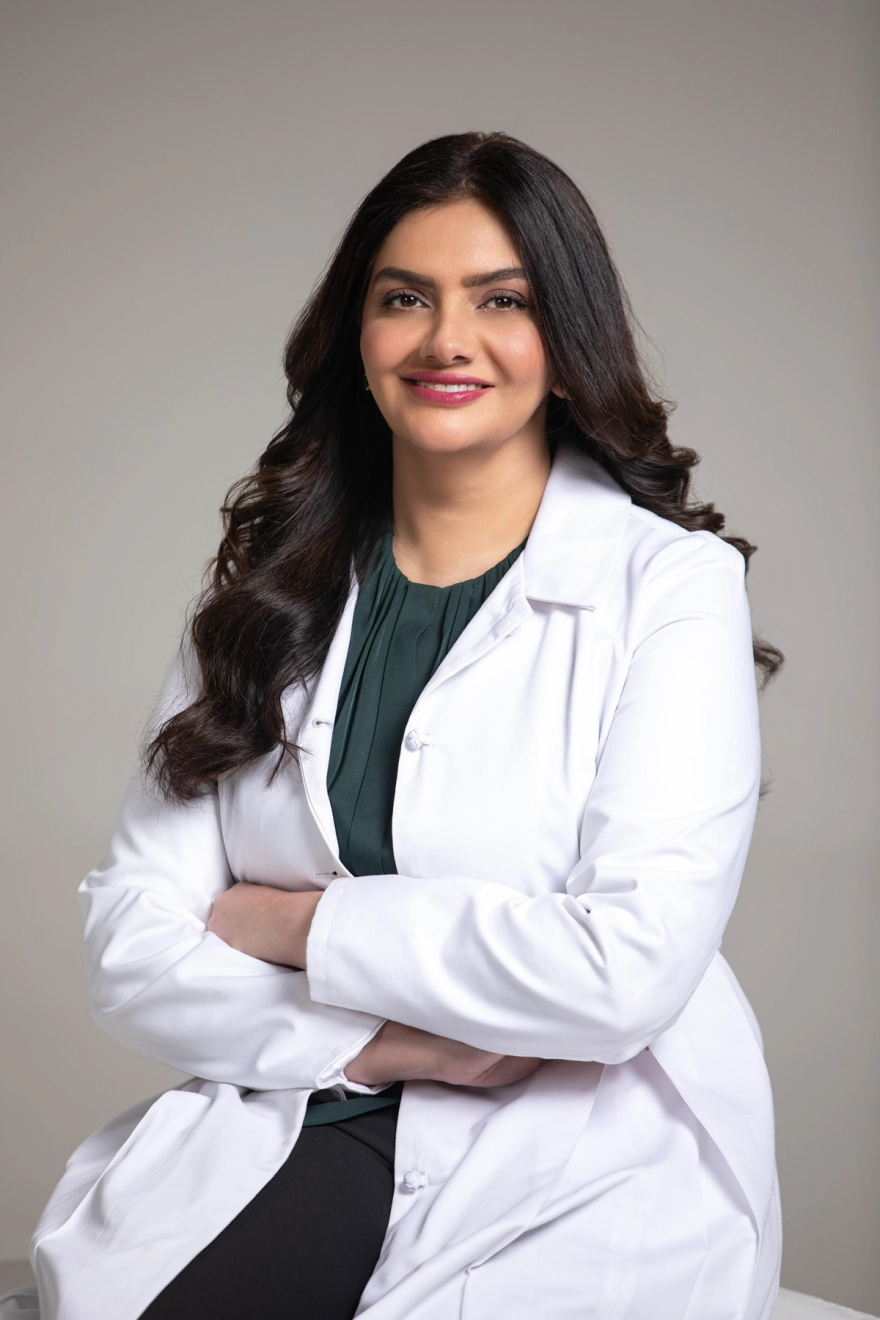
Every laser hair removal session at Spectrum Skin Clinic is performed by Sabeen Munib, MD, who founded the clinic. She holds the handpiece, sets the energy and decides the spacing. California does not allow an esthetician to operate a laser, and no esthetician here does.
Device choice starts with the skin. Light, medium and melanin-rich skin absorb the same light differently, and a setting that clears hair on one skin type can mark another. Dr. Munib types the skin first, then selects the diode, Nordlys or, for selected darker skin, the Fotona Nd:YAG.
The treatment changes as the hair does. As the hair thins over a series, energy is adjusted and spacing is reviewed, which keeps the skin calm and may reduce ingrown hairs along the way.
Personally performed
Skin typed
Device matched
Informed consent
How Laser Hair Removal Works
Melanin in the hair shaft and follicle absorbs the light, and the absorbed energy becomes heat at the root. A follicle in its active growth phase is attached to its hair and takes that heat. A resting follicle is not, which is why one session cannot reach every hair at once.
The treatment is gradual for the same reason. Follicles cycle into growth at different times, and each session catches the ones that are active. Responding follicles are disabled long term, and the hair that returns is sparser and finer. Hair type and hormones decide how much comes back, which makes the result a reduction, not total removal.
Laser does very little to gray, white or very light hair. Those hairs carry little melanin, and without pigment there is nothing in the follicle to absorb the light. Dark hair on darker skin is a different case: the hair responds, but the skin around it holds melanin too.
Which Laser, and Why
The Vikini diode is the primary hair-removal laser at Spectrum Skin Clinic. Nordlys, a Candela platform, is the second. Its intense pulsed light targets the same follicle melanin from a broader light source, and its suitability across Fitzpatrick skin types I to VI depends on the applicator chosen for that skin.
Darker skin, Fitzpatrick IV to VI, holds enough melanin near the surface to absorb light meant for the follicle. The Fotona Nd:YAG works at 1064 nm, a longer wavelength that passes more safely through that melanin. For some patients with darker skin, Dr. Munib may choose it instead of the diode. It is a decision made for one patient's skin and does not appear as a menu item.
The device is settled at consultation, before the first pulse. Skin type, hair color, hair thickness and the site being treated each move the choice.
Which Path Fits
Matching the Hair and Skin to the Right Treatment
Hair color, skin type and the cause of the growth decide which treatment helps. Some of these findings call for a different treatment, and one does not respond to laser at all.
Combined Approaches
Treatments That Pair With Laser Hair Removal
Who May Be a Candidate
Pigment in the hair decides most of the answer. Dark hair responds because it absorbs the light, while gray, white and very light hair do not respond well to laser.
Hormones, medications and skin history decide the rest. A thyroid condition alone is not a reason to avoid treatment, though the medicines that come with it may affect timing. We review your full medication list before the first session.
How Dr. Munib decides
Dr. Munib reads the skin type, hair color and thickness, the site, and the medication and treatment history together. Coarse hair on the chin and jawline that keeps returning points toward a hormonal cause and a longer course. Skin that holds more melanin points toward the device and settings least likely to change its pigment.
Often a good fit
Dark hair on the face, underarms, arms, legs, bikini line, back or chest. Recurring razor bumps or ingrown hairs from shaving or waxing. Patients who want longer-lasting reduction instead of daily shaving, with settings matched to their skin tone.
Not now, or not this treatment
Pregnancy, when treatment is postponed. An active skin infection where the laser would pass. Medications that increase light sensitivity, until timing has been reviewed. Gray, white or very light hair, which carries too little melanin for the laser to target.
What to Expect
How Many Sessions Does Laser Hair Removal Take?
Session count and spacing are set by Dr. Munib for each site at consultation. Hormonally driven hair, including PCOS-related growth, usually needs more sessions and ongoing maintenance.
Safety
Documented Risks
Laser hair removal heats tissue to disable a follicle, and each documented risk follows from where that heat lands. Most are managed by timing and settings decided before treatment begins.
Pigment change
Skin that holds more melanin absorbs some of the light aimed at the follicle. That can leave darker or lighter patches, and the risk is higher in Fitzpatrick IV to VI skin. Device choice and settings matched to skin type lower it.
Cold sore flare
Laser near the lip or on the face can occasionally trigger a cold sore in people prone to them. A short preventive antiviral course may be advised before those sites are treated. Body sites are generally not affected.
Light-sensitive medication
Some antibiotics, acne treatments and other photosensitizing drugs make skin react more strongly to laser energy. Timing or settings may change, and in selected cases waiting is the safer decision.
Retinoid irritation
Tretinoin and similar retinoids raise skin sensitivity and may increase irritation or pigment change after laser. Most patients pause them for a short window before and after each session, timed to the product and the site.
Before the first session we go through these risks with you, along with the device chosen for your skin and the reason for it. You sign once you understand both.
How risk is kept down
Sabeen Munib, MD, performs every session and reviews the skin, the hair and the medication list beforehand. No laser at Spectrum Skin Clinic is operated by an esthetician.
Pigment that darkened after laser treatment elsewhere is assessed in a separate physician evaluation. Some of it can be treated here and some cannot, and the evaluation decides which.
Before and After Your Session
Pricing
What Affects Your Cost
Laser hair removal is priced by how much skin is treated. An upper lip or the underarms costs less per session than a full leg or a back.
The number of sessions moves the total more than any single visit. Hair type and the site treated set that number, and Dr. Munib confirms it at consultation.
We offer packages, sold in office and built around what your assessment shows.
New patients: 15% off your first treatment.
Pay monthly with


Will it look natural?
What the Skin Looks Like After a Series
The finish is skin, with no device mark left behind when settings fit the skin type. Treated follicles produce sparser, finer hair, and the skin between them tends to see fewer razor bumps and less irritation than it did with repeated shaving.
Some hair returns. Hair type and hormones decide how much, and occasional maintenance sessions treat the regrowth that appears later.
What is observably different is less regrowth and a calmer surface. The principle behind it is energy that follows the hair as it thins, adjusted session by session for each skin.
Explore
Related Treatments
Ingrown Hair Treatment
When razor bumps and ingrown hairs along the beard, neck or bikini line need calming before or alongside laser.
PCOS Facial Hair Treatment
When coarse chin, jawline or upper lip hair keeps returning and the cause may be hormonal.
Nordlys IPL
When the finding is redness, small vessels or sun damage, which the same Nordlys platform treats.
Laser Genesis
When the skin itself is the reason for the visit: redness, visible pores and dullness, treated with a gentle laser.
Picoway Laser
When brown pigment or tattoo ink is the target, on a picosecond laser.
Vein Removal
When spider veins or facial veins are the finding.
Laser and Energy Devices
When you want to see the laser and energy devices Dr. Munib operates and how each is chosen.
Patient reviews
What Patients Say
4.97★ across 441 verified Boulevard patient reviews.

Dina Naziri

Staci Sitorius

Jamel Neill


Questions
Frequently Asked Questions
Yes. We use modern technology that allows for treatment across all Fitzpatrick skin types, including medium to deep tones, with proper settings and precautions.
Yes, many patients choose to do all areas at once. However, for comfort or scheduling, some patients split the treatment over 2 sessions. We’ll help you decide what’s best.
Brazilian, bikini, and other sensitive areas can be treated, but safety and suitability depend on individual factors. Sabeen Munib, MD evaluates skin tone, hair color, treatment history, and the treatment area before treatment.
Avoid waxing or plucking for 4 weeks before treatment. Shave the areas to be treated 24 hours before your session. Avoid sun exposure and self-tanners for at least 1 week.
Yes. While the upfront cost may be higher, patients save time and money long term by eliminating waxing, shaving, and ingrown hairs. Most enjoy smooth skin year-round with minimal upkeep.
Laser hair removal at Spectrum is priced by the size of the area treated. Small areas such as the upper lip or underarms start around $65 to $100 per session. Medium to large areas run about $200 to $400 per session, and full-body packages of up to eight sessions start at $3,500. The exact plan and number of sessions are set at consultation.
Laser hair removal gives permanent hair reduction rather than total removal, the follicles that respond are disabled long term, so hair grows back much less and finer. Most people need about six to eight sessions for the fullest result, with occasional maintenance over time. Hair type and hormones affect how much regrowth returns.
Most laser hair removal plans use six to eight sessions spaced several weeks apart, because hair grows in cycles and each session targets follicles in the active growth phase. Many patients notice less regrowth after the first one to two sessions, with smoother skin after about four to six. Hair type and the area treated affect the final number.
It can reduce it, with one important caveat. PCOS-driven hair growth is hormonally fueled, so while laser meaningfully thins and slows it, results often need more sessions and periodic maintenance than non-hormonal cases, because the hormones keep stimulating new follicles. Because Spectrum is physician-led, Sabeen Munib, MD can also consider whether the underlying hormonal picture is being addressed, not just the visible hair. In selected patients, pairing laser with medical management of PCOS gives more durable results than laser alone.
Generally yes. A thyroid condition by itself is not a reason to avoid laser hair removal. What matters more is your medications, skin sensitivity, and any related skin changes. In a physician-led setting, Dr. Munib reviews your history before treatment so settings and timing reflect your individual situation rather than a one-size-fits-all protocol.
Usually retinoids are paused around treatment. Tretinoin and similar retinoids increase skin sensitivity and may raise the risk of irritation or pigment change after laser, so most patients are advised to stop them for a short window before and after each session. The exact timing depends on the product and the area being treated, and is reviewed at your consultation.
Some can. Certain medications, including some antibiotics, acne treatments, and other photosensitizing drugs, can make skin more reactive to laser energy. This is one reason a physician-led setting matters: Dr. Munib reviews your full medication list and may adjust timing or settings, or recommend waiting, in selected cases. Bring an up-to-date medication list to your consultation.
It depends on the area. Laser near the lip or face can occasionally trigger a cold-sore (HSV) outbreak in people prone to them. If that applies to you, a short course of preventive antiviral medication may be advised before treating those areas. For body areas this is generally not a concern. Dr. Munib factors your history into the treatment plan.
It is typically postponed. There is not enough safety data to recommend laser hair removal during pregnancy, and hormonal hair changes in pregnancy often reverse on their own afterward. Most patients are advised to wait until after pregnancy, and often after breastfeeding, before starting or resuming treatment.