Quoted at consultation
15–30 min
None
8–12
4.97
Overview
PCOS Facial Hair Treatment
Facial hair driven by polycystic ovary syndrome is treated in Irvine with laser hair reduction, planned around the fact that a hormonal signal keeps recruiting new follicles, which is why these patients need more sessions and ongoing maintenance than someone without a hormonal cause.
Most patients arrive having been quoted a standard six-session package somewhere and having watched the hair return. That is not usually a failure of the laser. It is what happens when a treatment aimed at existing hair meets a condition that keeps producing more.
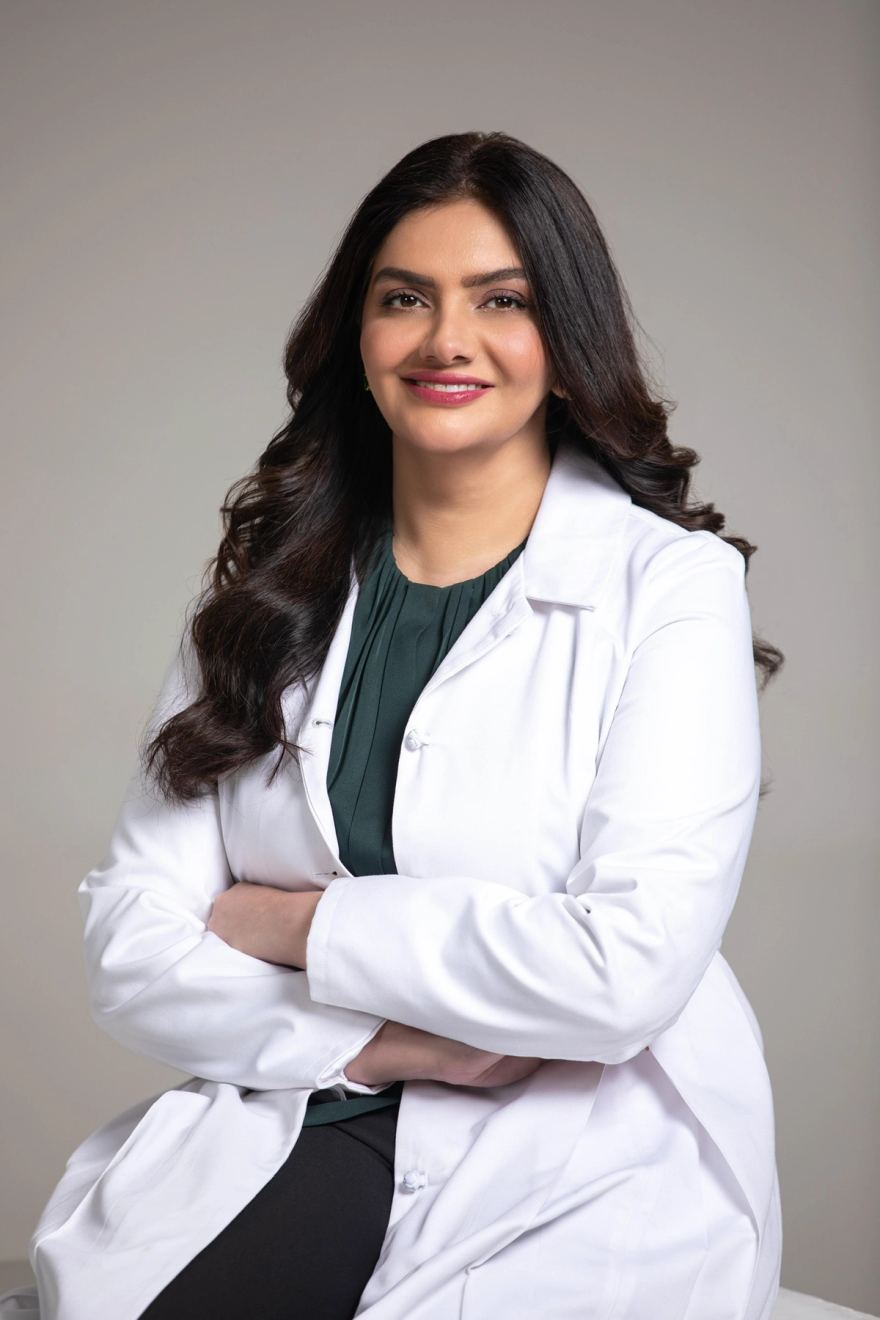
Spectrum treats this as a medical picture with a cosmetic component. Dr. Sabeen Munib, MD treats the hair and will also raise what else PCOS affects, because facial hair is often the symptom that finally brings someone in for a condition that has been going untreated.
Who treats you
Why Patients Choose Spectrum for Hormonal Facial Hair
The difference between a med spa package and a medical practice matters more here than in almost any other hair removal case, because the reason the hair returns is not on the skin.
Spectrum began as a medical practice and still sees medical patients daily. A patient describing facial hair alongside irregular cycles or difficulty losing weight is describing a pattern, and that pattern is worth naming rather than treating one visible piece of.
Dr. Munib sets expectations honestly at the start. Patients are told to expect more sessions than a standard course and that maintenance is likely. Every laser treatment is performed personally by her.
100%
15+
8–12
4.97
How the treatment is planned
How Treatment Is Tailored
Four decisions that differ from a standard hair removal course.
Name the driver
Establish whether the cause is being managed
Treat the full distribution
Avoid an obvious treated border
Wavelength for skin type
Protect against pigment change
Plan for maintenance
Set an honest expectation
8 to 12 sessions
every 4 to 6 weeks, then maintenance every few months
Why PCOS Causes Coarse Facial Hair
Polycystic ovary syndrome raises circulating androgens. Hair follicles in androgen-sensitive areas respond by converting fine vellus hair into thick pigmented terminal hair.
The chin, jawline, upper lip and neck carry the highest concentration of those sensitive follicles, which is why the pattern is recognizable and why it rarely appears in only one spot.
Why the Hair Returns After a Standard Course
Laser damages the follicles it treats. In a patient without a hormonal driver, that reduction largely holds because nothing is recruiting new coarse hair.
In PCOS the signal continues. Follicles that were still producing fine hair at the time of treatment can convert to terminal hair afterwards. The new growth is not the old hair returning. It is different follicles being switched on, and no amount of laser can pre-treat a hair that is not yet coarse.
Is this the right tool?
What Laser Can and Cannot Do Here
Being clear about the limits is the point. This is where most patients have been let down before.
Sequencing
Combined Approaches
Candidacy
Who May Be a Candidate
Laser reduction suits PCOS patients with coarse pigmented facial hair who understand this is an ongoing relationship rather than a finite package.
It is a poor fit for anyone who has been promised permanent removal and is measuring against that. The honest goal is substantially less hair, maintained.
How Dr. Munib Decides
She examines hair distribution, coarseness and pigment, assesses Fitzpatrick type, and asks whether PCOS has been diagnosed and whether it is being treated. She also asks what the patient has been told before, because unrealistic expectations set elsewhere are the most common reason a technically good result feels like a failure.
Often a Reasonable Fit
Coarse dark hair on the chin, jawline, upper lip or neck. Patients whose PCOS is diagnosed and managed. Patients who have been plucking or threading daily and want that to stop. Patients who accept maintenance as part of the plan.
Where It Falls Short
Fine or light-colored hair, which lacks the pigment the laser targets. Sudden rapid onset of coarse hair, which needs medical assessment first. Patients unwilling to stop plucking and threading between sessions. Pregnancy. Recent isotretinoin use. Anyone expecting permanent removal, which is not what hormonally driven hair allows.
What happens
What to Expect and When
The checkpoint that matters is how often you reach for tweezers, not whether every hair is gone. Patients measuring against permanent removal will read a good result as a failure.
Informed consent
Documented Risks
These are uncommon and they are real.
Pigment change
Darkening or lightening of treated skin, most relevant in higher Fitzpatrick types and on facial skin. Reduced by wavelength choice, conservative settings, test areas and sun avoidance. Usually settles over months.
Paradoxical hypertrichosis
Rarely, laser treatment stimulates finer hair to grow at the edges of a treated area, reported more often on the face and in patients with hormonal drivers. It is uncommon and worth knowing about before starting rather than after.
Burns and blistering
Uncommon, more likely when energy is too high for the skin type or the skin is tanned. Recent sun exposure is a reason to postpone rather than to proceed carefully.
Ongoing recurrence
The expected limit rather than a complication. Hormonally driven hair recurs while the driver persists. Patients told otherwise were told wrong.
These risks, and the realistic limits of treating hormonally driven hair, are discussed at consultation before anything is scheduled.
How Risk Is Reduced
Skin type is assessed and a test area used where pigment risk is meaningful. Facial settings are more conservative than body settings, and energy is increased only after the skin has tolerated a session.
Daily sunscreen on the treated area is the main safeguard the patient controls.
Aftercare and Recovery
Cost
What Affects Your Cost
Cost depends on which areas are treated and how many sessions the plan calls for. Because hormonally driven hair usually needs more sessions than a standard course, a package priced for six sessions understates the real total.
Pricing is quoted at consultation once the distribution has been examined, and the maintenance expectation is given at the same time rather than raised later.
New patients: 15% off your first treatment.
Pay monthly with


The last question
Will My Skin Look Different?
Nothing is added or reshaped. What changes is the amount of coarse hair in an area, and skin that has been repeatedly plucked often looks calmer once that stops.
Patients most often describe the change as no longer checking their chin in every mirror and no longer planning their day around whether they have had time to pluck.
Explore
Related Treatments
Laser Hair Removal
Laser hair reduction generally, when there is no hormonal driver behind the hair.
Ingrown Hair Treatment
When plucking and shaving have left recurring ingrown hairs alongside the coarse hair.
Acne Facial
Acne that often accompanies PCOS, driven by the same hormonal picture.
Weight Loss Membership
Medically supervised weight and metabolic care, where insulin resistance is part of the picture.
Pigmentation Treatment
Dark marks left by years of plucking and threading, treated once that has stopped.
Nordlys IPL
IPL on the Nordlys platform, for redness and pigment rather than hair.
Patient reviews
What Patients Say
4.97★ across 441 verified Boulevard patient reviews.
P. B.
Questions
Frequently Asked Questions
It reduces the hair that is present, and for many patients that is a meaningful change. What it does not do is switch off the hormonal signal telling follicles to produce coarse hair. That is why PCOS patients often need more sessions than average and usually need ongoing maintenance.
Because the underlying driver is different. In a patient without a hormonal cause, treated follicles stay reduced. In PCOS, elevated androgens can convert previously fine vellus hair into coarse terminal hair over time, so new hair appears in follicles that were never treated.
Yes. Facial hair is one visible sign of a condition that also affects cycles, metabolism, insulin resistance and fertility. Treating only the hair leaves the rest unaddressed. Spectrum is a medical practice and can discuss what a workup involves and where it should happen.
Expect eight to twelve rather than the six to eight quoted for non-hormonal hair, followed by maintenance every few months. Anyone quoting a fixed number for hormonally driven hair is guessing.
Often yes. Treatments that reduce androgen effect can slow the conversion of fine hair into coarse hair, which means fewer new targets appearing between sessions. That is a prescribing decision made with whoever manages the PCOS.
PCOS is common across all skin tones, and higher Fitzpatrick types need wavelength choices that bypass surface pigment. Dr. Munib assesses skin type and may test a small area before treating the face.
No. Plucking, threading and waxing remove the hair the laser needs to target, so a session after threading treats nothing. Shaving or trimming is fine and does not affect the result.
Chin, jawline, upper lip and neck are the typical distribution in PCOS and are treated as one area rather than separately, since treating only the chin leaves an obvious border.