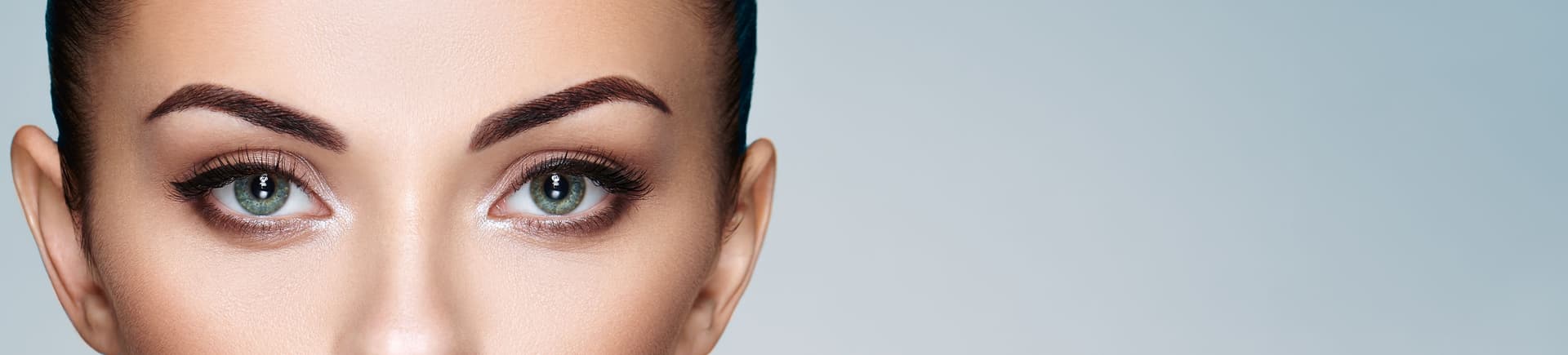
CO₂ Laser Under the Eyes in Irvine, CA — by Sabeen Munib, M.D.
Conservative fractional CO₂ resurfacing for under-eye crepiness and texture — settings dialed down for thin periorbital skin, not the device default.
CO₂ Laser Under the Eyes
CO₂ laser under the eyes is a fractional, ablative resurfacing treatment that targets crepey skin, fine lines, and rough texture in the delicate periorbital area. At Spectrum Skin Clinic in Irvine, every CO₂ treatment under the eyes is performed by Dr. Sabeen Munib, MD, using conservative settings chosen for thin under-eye skin. Whether it is the right tool depends on what is actually driving your under-eye concern, surface texture, lost volume, or pigment, because CO₂ addresses some of these and not others. The sections below walk through what it treats, what recovery is really like, how many sessions to expect, and when a different treatment fits better.

Spectrum at a glance
| Starting price | Google rating | Patient reviews | Physician-performed | Experience |
|---|---|---|---|---|
| Starting at $750 | 5.0★ Google | 441+ across platforms | 100% by Dr. Sabeen Munib, MD | 15+ years |
Spectrum Skin Clinic — Irvine
114 Pacifica, Suite 280, Irvine, CA 92618 · (949) 259-4790
Why patients choose Spectrum Skin Clinic For CO2
Under-eye laser is judgment-heavy: the same complaint can need resurfacing, filler, or pigment work, and the wrong call on thin skin is hard to undo. At Spectrum, Dr. Sabeen Munib, MD performs every treatment herself and starts by identifying what is actually causing your concern before recommending CO₂, or telling you honestly when something else would serve you better.
That diagnostic-first approach is the reason patients travel to Irvine for this, and it is why conservative settings and a real recovery plan are the norm here rather than the exception. Medically reviewed by Dr. Sabeen Munib, MD.

When CO₂ is, and isn't, the right tool
| Your main concern | What Dr. Munib weighs | Often the better-matched option |
|---|---|---|
| Crepey skin, fine lines, crow's feet | Skin thickness, texture, downtime tolerance | CO₂ resurfacing |
| Hollowing / tear-trough shadow | Whether the shadow is volume, not texture | Under-eye filler |
| Brown or true dark pigment | Pigment depth, skin type, PIH risk | Pigment-directed laser or PRFM |
| Loose, sagging lower-lid skin | Degree of laxity vs surgical need | Resurfacing vs referral |

What CO₂ laser under the eyes treats
CO₂ under-eye resurfacing is best matched to crepey, finely wrinkled skin and crow's feet, the loss of smoothness that comes from sun exposure and aging collagen. It works on the quality of the skin's surface, refining tone and texture around the eyes and softening the etched fine lines that make the area look tired.
It is not a volumizer, and on its own it does not erase true dark shadowing. If the main issue is a hollow tear trough or pigment, CO₂ is usually the wrong starting point, which is why the cause is assessed before anything is recommended.
Patients often arrive describing "bags" or "dark circles" when what they actually have is fine crepe-paper texture catching shadow. Where that is the case, resurfacing can make a visible difference. Where puffiness or a deep tear-trough hollow is the real driver, the honest answer is that a laser will not fix it, and the consultation is the place that distinction gets made.
How fractional CO₂ works on thin under-eye skin
Fractional CO₂ delivers laser energy in tiny columns rather than treating the whole surface at once, leaving healthy skin between each column to speed healing. As those columns heal, the skin responds by building new collagen and elastin, which is what gradually firms and smooths crepey periorbital skin over the weeks that follow.
Because under-eye skin is thinner than skin elsewhere on the face, the fractional approach and a lower density matter here. The aim is enough remodeling to make a visible difference while respecting how delicate this area is, more is not better when the skin is this thin.
CO₂ is an ablative laser, meaning it removes a controlled fraction of the surface rather than only heating it like a non-ablative device. That is what gives it its strength on texture, and also why downtime is real and why the settings are dialed down for the eye area specifically.
What the treatment is like
Before treatment, a topical numbing cream is applied so the area is comfortable. Internal protective eye shields are placed to keep the eye safe while the skin right up to the lash line can be treated. The laser pass itself is quick, the under-eye area is small, and most patients describe a warm, prickling sensation rather than sharp pain.
Afterward the skin feels hot, like a sunburn, and looks pink. Dr. Munib reviews exactly what to do over the next several days before you leave, so the healing phase is planned, not improvised.
Recovery and healing: what to expect
| Timeframe | What to expect |
|---|---|
| Days 1–2 | Pink to red, swollen, warm — like a sunburn; keep the area moist per aftercare |
| Days 3–5 | Surface roughness and fine flaking as old skin sheds; avoid picking |
| Days 5–7 | Flaking settles; most people resume makeup and normal routines |
| Weeks 2–4 | Pinkness fades; skin looks smoother and more even |
| Months 1–3 | New collagen continues to build; final texture improvement settles in |
How many sessions, and how long results last
Many patients see a meaningful change from a single conservative session; others do better with a short series spaced several weeks apart, trading a little more time for a little more correction. What drives the number is how much texture and crepiness is present, your skin type and pigment risk, and how much downtime you can take at once.
Because the improvement comes from your own new collagen, results tend to last well, though skin keeps aging, so they are not permanent. How long the result holds depends heavily on sun protection and ongoing skin care, and a light maintenance treatment down the line is reasonable for some patients rather than required for all.
Cost
Starting at $300: the exact figure depends on the area treated and how many sessions you choose.
Financing: available through Cherry and CareCredit.
Your quote: matched to your skin at consultation, not a generic package.

Is CO₂ laser under the eyes safe?
Protective eye shields: internal corneal shields guard the eye, so the skin right up to the lash line can be treated.
Conservative settings: lower densities are chosen for thin under-eye skin, more is not better here.
Pigment risk: post-inflammatory hyperpigmentation is more likely in deeper skin tones, so candidacy and aftercare are judged individually.

Who is, and isn't: a candidate
Good candidates: crepey texture and fine lines, realistic expectations, and room for a few days of downtime.
Wait or reconsider: active skin infection, very recent isotretinoin, a tendency to keloid, or untreated melasma.
Deeper skin tones: treatable in selected cases, but the pigment conversation and a more cautious plan come first.

Aftercare that protects the result
Keep it moist: a gentle occlusive ointment in the first days; let the flaking shed on its own, no picking.
Calm the swelling: cool compresses, and sleeping with the head slightly elevated, ease the early days.
Protect the result: strict daily SPF and sunglasses; hold off on retinoids and acids until the skin has fully healed.
Related treatments
Under-eye CO₂ is one focus of our broader fractional CO₂ laser resurfacing program. For texture, fine lines, and laxity, related resurfacing and collagen-building options include Secret PRO RF microneedling, RF microneedling, and Matrix Pro.
When the concern is uneven tone, brown spots, or the pigment that can masquerade as dark circles, the diagnosis-first routes are Light & Bright, PicoWay, Q-Switch Nd:YAG, and our Pigmentation Treatment page.
If the real issue is a hollow tear trough rather than surface texture, under-eye filler is usually the better match. Dr. Munib helps you choose the right tool, or combination, at consultation.
Book a consultation
If you're considering CO₂ laser under the eyes in Irvine, a consultation with Dr. Munib is the way to find out whether it fits your skin and your goals, or whether a different approach would serve you better. Book a consultation to get a plan matched to your skin.
Patient Reviews
4.97★ · 441 Patient Reviews

I had an amazing experience with Dr. Munib, who performed my aesthetic treatments including Pico laser, Botox, a glassy facial, Botox for migraine, and HIFU. Every procedure was done with great care, precision, and professionalism, and the results exceeded my expectations. Dr. Munib is incredibly knowledgeable and takes the time to explain everything, making me feel comfortable and confident throughout the process. Her expertise truly shows in her work. The staff was extremely accommodating, friendly, and professional, which made the entire experience even better. On top of that, the prices were very reasonable for the quality of service provided. I highly recommend Dr. Munib to anyone looking for outstanding aesthetic treatments and excellent patient
Mahjabeen Saeed
3 months ago

I had an excellent experience with Dr. Sabeen Munib at Spectrum Skin Clinic in Irvine. I visited her for acne scar treatment and underwent three subcision sessions spaced six weeks apart. Throughout my treatment, I was consistently impressed by her expertise, attention to detail, and compassionate approach. Dr. Munib took the time to carefully evaluate my scars, explain the procedure, and answer all of my questions before starting. During each procedure, she made sure I was comfortable and informed every step of the way. Her technique, skill and experience with acne scar subcision gave me complete confidence that I was in capable hands. The entire team at Spectrum Skin Clinic was professional, friendly, and supportive throughout the process. Although acne scar improvement takes time and healing, I appreciate that Dr. Munib focuses on achieving the best possible long-term results rather than making unrealistic promises. She explained what to expect during recovery and emphasized that collagen remodeling happens gradually. If you're looking for a knowledgeable and caring physician for acne scar treatment or subcision, I highly recommend Dr. Sabeen Munib Spectrum Skin Clinic, Irvine. I truly appreciate the care, professionalism, and dedication I received and would not hesitate to recommend her to anyone seeking advanced scar treatment.
Deepak Jadhav
3 months ago

After several aesthetic nurses told me I was allergic to filler dissolver, Dr. Munib took a careful, evidence-based approach. She used ultrasound to locate my migrated lip filler, tested a small area first, and explained I was reactive—not allergic. She dissolved a small test area before safely treating my upper lip. Throughout the process she was gentle, thorough, and educational. It’s a long drive for me, but her knowledge and expertise make it absolutely worth it.
Jamel Neill
2 months ago

Thank GOD for Dr. Munib. She is the angel of dissolver!!! I had HA nodules and Sculptra nodules from previously going to Dermfx and I went to Dr. Munib for ultrasound guided dissolving. She is gentle, patient, knowledgeable, kind and funny. I feel like she is the last of the good ones in this business. If you are interested in natural looking aesthetic results that aren’t botched and don’t cause you years of facial pain go to her. I would try to see her as my primary doc if I wasn’t moving out of the area. I would travel to go see her though.
Siena Viencek-Walsh
2 months ago
Real Patient Results
All treatments performed personally by Dr. Sabeen Munib at Spectrum Skin Clinic, Irvine.
Related Blogs
Personalized Aesthetic & Regenerative Solutions Designed to Heal, Enhance & Restore Naturally




Frequently Asked Questions
Got questions? We’re here to help! Find out what we offer, how to book an appointment, where we’re located, and more. We treat all age groups and offer skincare products too.