PicoWay for Acne Scars: What Before and After Photos Actually Show
Reading before-and-after photos honestly
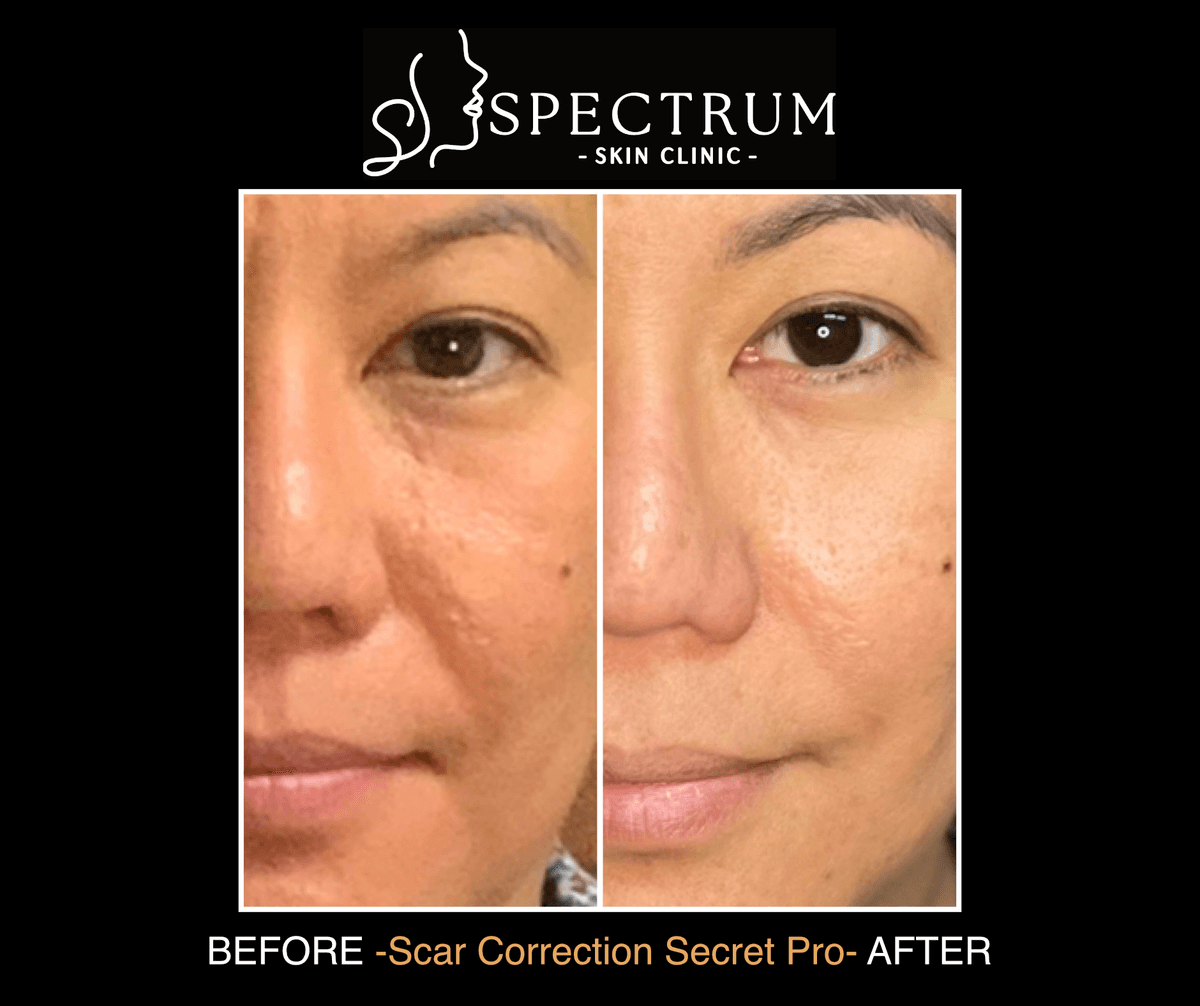
Before-and-after photos sell more aesthetic treatments than any other marketing material. They also mislead more patients than any other marketing material. The reason is rarely fraud, it's that the photos don't tell you what kind of scarring was being treated, what combination of treatments produced the result, or what the patient's starting skin type was. A genuinely great PicoWay result on superficial post-inflammatory pigmentation in Fitzpatrick III skin looks dramatically different from a real PicoWay result on deep ice-pick scars in Fitzpatrick V skin.
This blog explains what PicoWay actually does for acne scarring by scar type, what realistic before-and-after improvement looks like, and which results in marketing photos are misleading you.
The acne scarring taxonomy that matters
Before discussing what PicoWay does to scars, you need to know what scars you have:
- Boxcar scars: broad, U-shaped depressions with defined edges, typically on the cheeks
- Rolling scars: broader, undulating depressions with sloped edges, fibrous tethering to underlying tissue gives them a wavy appearance
- Ice-pick scars: narrow, deep, pit-like (2 mm or smaller at surface, extending deep into the dermis)
- Atrophic mixed scarring: combinations of the above on a single patient
- Post-inflammatory hyperpigmentation (PIH): flat brown or red-brown marks left by past breakouts. This is pigment, not scar tissue
The distinction matters because PicoWay is more useful for pigment and surface texture than for deep structural scars.
What PicoWay does well on acne scarring
Post-inflammatory hyperpigmentation: very good response. This is where PicoWay is most useful. The picosecond mechanism targets excess pigment with a lower-heat approach than many older laser options. In Fitzpatrick IV-VI patients especially, we use it carefully because reducing inflammation is part of reducing rebound risk.
Expect: visible fading of brown and red-brown marks over 2–4 sessions spaced 4–8 weeks apart. Some patients see early fading after the first session, but the safer expectation is a series.
Boxcar scars: moderate response over a series. PicoWay's secondary benefit - controlled collagen remodeling from laser energy - softens boxcar scar edges and gradually fills the depression. The result is partial, not complete. A genuine before-and-after of PicoWay alone on boxcar scarring shows softening, not erasure.
Expect: visible softening after 4–6 sessions, often combined with additional modalities for fuller correction.
Rolling scars: moderate response. Similar to boxcar, the texture irregularity becomes less visible, the contrast between scarred and unscarred tissue reduces.
Expect: gradual smoothing over 4–6 sessions, often paired with subcision (a separate procedure that releases the fibrous tethering causing the rolling appearance).
Acne scar texture in skin of color: useful in selected cases. For Fitzpatrick IV-VI patients, PicoWay can be a more conservative adjunct than aggressive heat-based resurfacing, but settings and diagnosis still matter.
What PicoWay does NOT do on acne scarring
Ice-pick scars: minimal direct improvement. This is the most important honest statement on the page. The depth-to-width ratio of ice-pick scars is too aggressive for picosecond laser to flatten meaningfully. A before-and-after that shows ice-pick scars dramatically improved after "just PicoWay" is misrepresenting what was actually done, usually the patient also received TCA CROSS, punch excision, or another targeted treatment.
For ice-pick scars, the right answer is usually TCA CROSS (focal trichloroacetic acid application), punch excision, or fractional CO2, and then PicoWay on top to support overall skin quality.
Hypertrophic and keloid scarring: not appropriate. Raised scars need different treatment entirely, intralesional steroid injection, pulsed dye laser, or surgical revision.
Active acne lesions: do not treat with PicoWay first. Active inflammation needs to be calmed before laser is introduced. We coordinate medical acne management before booking laser sessions.
What a realistic PicoWay before-and-after looks like
If you are evaluating before-and-after photos at any clinic, here is what to look for:
- Lighting matches. Same camera, same angle, same lighting in both photos. Different lighting can fake half the apparent improvement.
- No makeup difference. Foundation in the "after" photo invalidates the comparison.
- Skin type is visible. Fitzpatrick I–III improvements look very different from Fitzpatrick IV–VI improvements. The marketing photos in the U.S. are heavily Fitzpatrick I–III; the responses don't translate directly.
- The scar type is named. A photo labeled "acne scars before and after" with no specification is less useful than a photo labeled "rolling scars after 4 PicoWay + subcision sessions, 6 months."
- The number of sessions is listed. "After PicoWay" without "after 6 PicoWay sessions over 4 months" is hiding the cost.
- Combination treatments are disclosed. Most genuinely impressive scarring before-and-afters are multi-modality plans, not single-treatment results.
How we combine PicoWay with other treatments for acne scarring
At Spectrum, most acne scarring patients receive a multi-modality plan over 6–12 months. Typical pattern:
- Phase 1: medical acne stabilization, topical pigment inhibitors if PIH is present, photoprotection
- Phase 2: targeted destruction, TCA CROSS for ice-pick, subcision for rolling
- Phase 3: PicoWay sessions for overall texture, PIH, and ongoing scar softening
- Phase 4: maintenance, usually 1–2 sessions per year
The mix depends on your specific scar profile, Fitzpatrick type, and downtime tolerance.
Photos before booking treatment
If you want to see Spectrum's own PicoWay before-and-after results, our gallery is filtered by treatment and concern. We tag each patient case with the actual treatment performed, the number of sessions, and the diagnosis, not a generic label.
Book a consultation in Irvine
Acne scarring rarely has a single-treatment answer. If you have been told it does, a second opinion is worth booking. Dr. Sabeen Munib evaluates each case at Spectrum Skin Clinic and proposes the multi-modality plan that fits your scarring type, your skin type, and your goals.
Book a consultation.