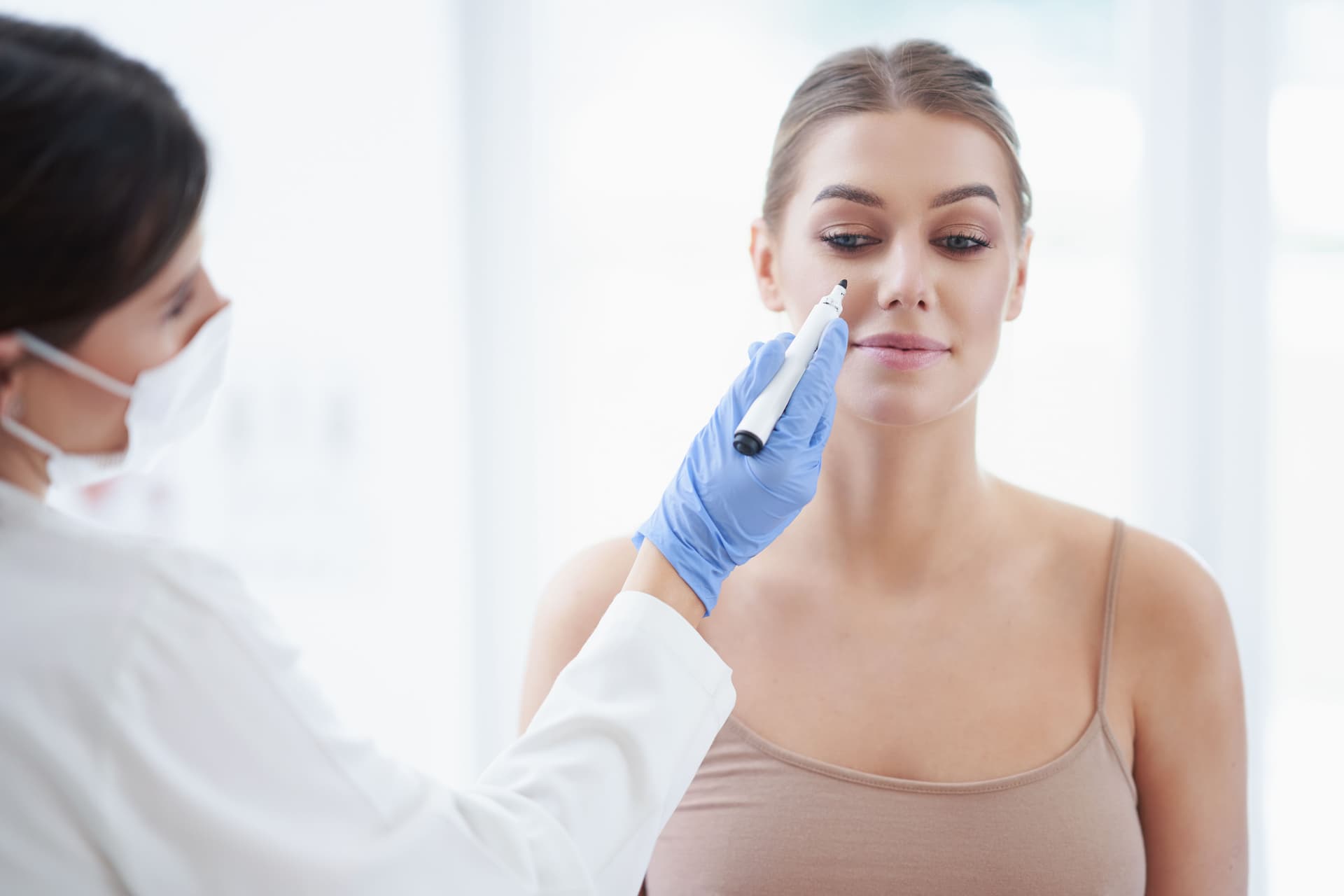
Nasolabial Fold Filler in Irvine, CA — Dermal Filler for Smile Lines and Marionette Lines
Nasolabial fold filler in Irvine, CA — conservative, anatomy-aware softening of smile lines by Sabeen Munib, MD.
Nasolabial Fold Filler in Irvine, CA: Smoothing Smile Lines Without Overfilling
The nasolabial folds, the lines that run from the sides of the nose to the corners of the mouth, become more pronounced with age as facial tissue descends and the cheek area deflates. Filler placed thoughtfully can smooth this transition and refresh the lower face, but the right approach depends on what's actually driving your folds: tissue descent, skin laxity, structural change, or all three.
Sabeen Munib, MD performs every nasolabial dermal filler treatment personally. The goal is a natural-looking result that fits the patient's face, not a packed crease that reads as overfilled in photographs. Conservative dosing, anatomic precision, and willingness to recommend cheek support instead of fold-line filler when that's the better answer are the consistent pattern.

Spectrum at a glance
| Starting price | Google rating | Patient reviews | Physician-performed | Experience |
|---|---|---|---|---|
| Starting at $900 | 5.0★ Google | 441+ across platforms | 100% by Sabeen Munib, MD | 15+ years |
Is This You?
Three common patterns of patients who come to Spectrum for nasolabial fold filler.

Worried About Looking Overfilled
Photos of overfilled smile lines have made many patients hesitant to try filler at all. The Spectrum approach is the opposite: conservative dosing, start with cheek support when appropriate, and only treat the fold itself when that's the right answer for your anatomy.

Don't Like a Previous Filler Result
If filler placed elsewhere has migrated, looks heavy in photographs, or simply doesn't feel like you, ultrasound-guided hyaluronidase dissolution can correct the issue before any new product is considered. Dr. Munib will not stack new filler on a bad placement.
Not Sure Where to Start
Some patients aren't certain whether filler, cheek support, biostimulators, or a non-injectable approach is right for their face. The consultation is the diagnostic step, Dr. Munib evaluates what's actually driving the fold before recommending anything.
Spectrum Skin Clinic — Irvine
114 Pacifica, Suite 280, Irvine, CA 92618 · (949) 259-4790
Why Patients Choose Spectrum Skin Clinic for Nasolabial Fold Filler
Because the nasolabial area sits over named facial vessels, this is not a treatment to delegate or rush. Sabeen Munib, MD performs every injection herself, evaluates facial anatomy at consultation, and explains exactly what her treatment plan is, whether that's filler in the fold itself, cheek support to address tissue descent, or a combination.
Patients who come to Spectrum for nasolabial fold treatment often describe a previous experience where they felt rushed into a one-syringe template result. The Spectrum approach is the opposite: assess what's driving the fold, recommend the minimum effective treatment, and only proceed when patient and physician agree the plan fits the desired outcome.

Treating the Cause vs. Filling the Crease
| Driver of Nasolabial Fold | What Dermal Filler Addresses | What Else May Be Needed |
|---|---|---|
| Cheek-area volume depletion (commonest) | Cheek volumization with HA filler restores upper-face support, smoothing the fold from above | Often a single cheek treatment is the entire answer; the fold itself may not need product |
| Skin laxity and crepiness around the mouth | Filler doesn't address laxity directly | Skin-tightening modalities, retinoids, or collagen-stimulating treatments to firm beneath the skin |
| Deep crease with intact cheek support | Direct fold filler with conservative dosing smooths the appearance | Patient-led photographic review at follow-up to confirm look natural |
| Heavy lower face with jowl descent | Filler can refresh the prejowl area; may indirectly soften lower fold | Combined approach with surgical evaluation in select patients |
| Asymmetric fold (one side deeper than the other) | Targeted filler used unilaterally restores symmetry | Photo-documentation pre- and post-treatment to confirm correction |
| Existing filler that looks off | Hyaluronidase to dissolve before any new product is placed | Ultrasound-guided correction; do not stack new filler on bad placement |
Types of Filler Used for Nasolabial Folds
Several types of fillers for nasolabial folds are FDA-approved and used in clinical practice. The right product depends on fold depth, skin thickness, the plane of injection, and whether the goal is direct fold treatment, cheek support, or both. Dr. Munib walks patients through which type of filler fits their anatomy at the consultation rather than defaulting to a single product.
- Hyaluronic acid (HA) fillers, Juvederm Vollure, Restylane Refyne, Restylane Defyne. These are formulated for dynamic facial areas and produce natural-looking results in the fold itself. Dissolvable with hyaluronidase if a correction is ever needed.
- Thicker HA products, Juvederm Voluma, Restylane Lyft. Used for cheek volumization rather than direct fold placement; the cheek lift indirectly softens the fold above it.
- Collagen-stimulating biostimulators, Sculptra and Radiesse. Rather than immediately filling, these stimulate collagen production beneath the skin over several months to replenish lost volume. Often a better fit for patients who prefer gradual change over immediate placement.
If you're considering longer-acting collagen-stimulation alongside filler, Sculptra at Spectrum is the parallel option Dr. Munib discusses with candidates whose primary concern is broader facial signs of aging, not just the fold line.
Why Nasolabial Folds Form
A deep nasolabial fold is usually several changes happening at once rather than a problem in the line itself. With age the cheek fat pads lose volume and drift downward, the underlying midface bone remodels and offers less support, and the skin loses collagen so it folds more readily. On top of that, the muscles that lift the lip and cheek pull across this area countless times a day, etching the line deeper over the years.
Natural structure and genetics matter too, some people have a defined fold from a young age. Because the dominant cause varies so much from person to person, the fold is not always where the filler should go. Reading which factor is leading is the first job of the consultation, and it is what separates a natural result from an overfilled one.

Candidacy, Safety, and What to Expect
Three things every patient considering nasolabial fold filler should understand before treatment.
Who May Be a Candidate
Nasolabial fold filler tends to suit patients with mild to moderate folds driven by volume loss who want a softer, refreshed look rather than a dramatic change. Very deep, long-standing folds may improve but will not disappear with filler alone, and where the real issue is heavy jowling or skin laxity, a skin-tightening or surgical option is the more honest answer.
Good fit: moderate folds with clear cheek volume loss, restoring midface support carries the fold result.
Staged approach: deep static folds etched in at rest, or a long filler history with diminishing returns where a dissolve-and-reset may come first.
Manage expectations: folds driven mainly by animation, filler softens but cannot erase movement-driven lines.
With caution: Fitzpatrick IV–VI or a history of post-inflammatory pigment, an ultrasound-guided, bruising-aware technique.
Not now: an active skin infection or cold sore, postpone until it has fully resolved.

Safety in a High-Risk Zone
The nasolabial region is one of the higher-risk areas in facial aesthetics because named blood vessels run through it. The facial artery and its angular branch course directly under the fold and can be encountered with a needle or cannula (Tansatit et al., facial artery anatomy in the nasolabial region). Intra-arterial filler injection can cause vascular occlusion, and, in rare cases described in the published literature, embolic blindness when filler travels retrograde to the ophthalmic artery (Beleznay et al., review of filler-related blindness).
Risk reduction here is technique-driven: aspiration, cannula over needle in defined zones, low-pressure incremental injection, and immediate-recognition protocols if an occlusion is suspected (DeLorenzi, vascular-complication management protocol). When a vascular event is suspected, ultrasound-guided hyaluronidase is the corrective tool. Dr. Munib performs nasolabial fold filler personally, not delegated, for these reasons.
Lower-grade adverse events, bruising, swelling, asymmetry, tenderness, and occasional filler migration or overfill in the midface, are more common than vascular events but still warrant a physician who can recognize and correct them.

What to Expect
Consultation: Dr. Munib examines your midface and fold in animation and at rest to find what is driving the depth before deciding where, or whether, to place filler.
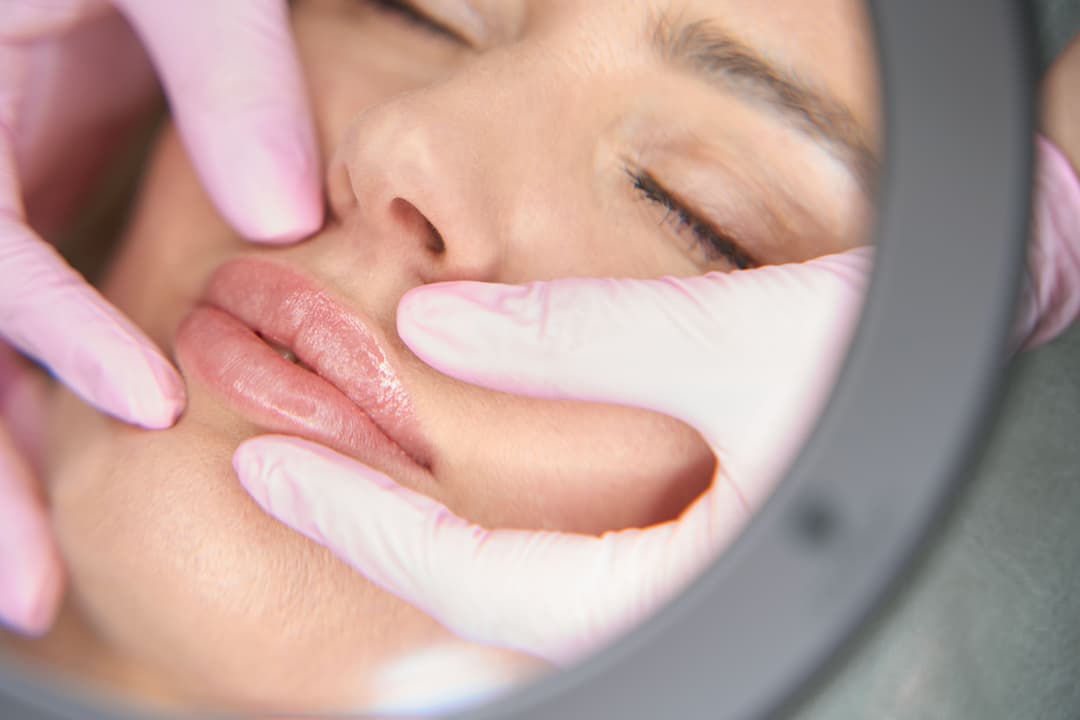
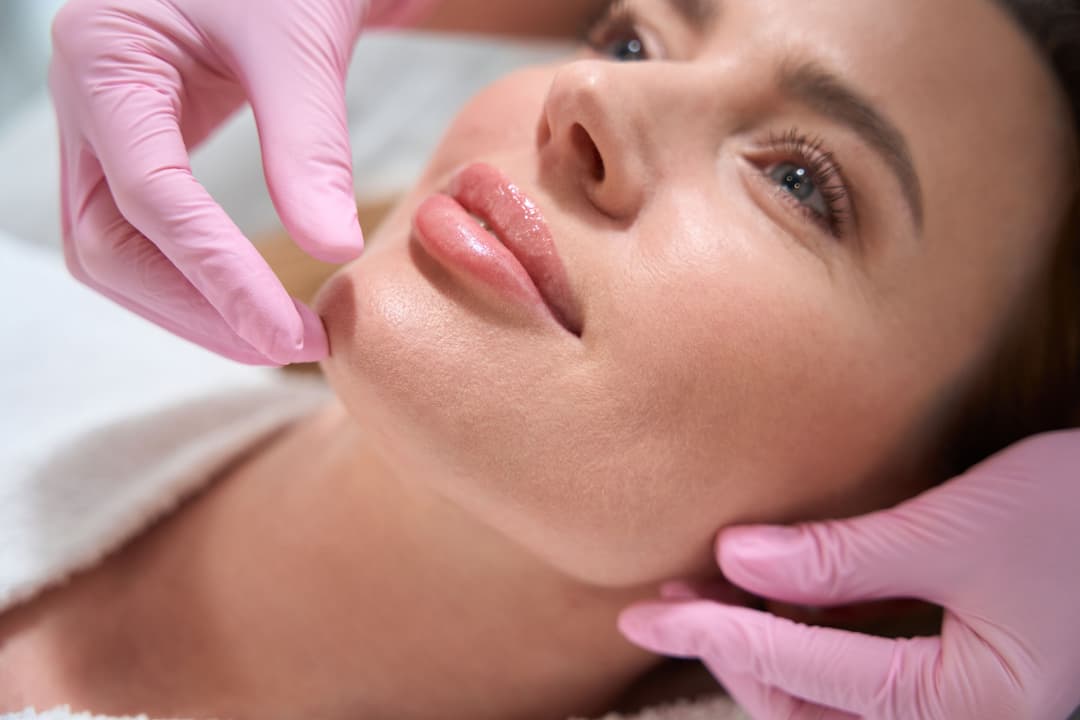
Treatment: an HA filler is placed at a depth and volume chosen for a natural result, frequently through a blunt cannula in this vascular zone.
Comfort: most fillers contain lidocaine and a topical numbing cream can be used, so discomfort is generally mild.
Onset: softening is usually visible immediately, though some early change is swelling rather than the final result.
Aftercare: avoid pressure, massage, heat, and strenuous exercise for about 24 hours, and report severe pain, blanching, or any vision change at once.
Your Nasolabial Fold Filler Treatment Plan: What to Expect
A non-surgical nasolabial fold filler treatment at Spectrum begins with assessment, not injection. Dr. Munib evaluates the fold in animation and at rest, palpates the cheek area to identify where volume depletion is contributing, and discusses your desired outcome before any product is chosen. The treatment option you leave with is matched to what's actually driving your folds, sometimes that's fold filler, sometimes it's cheek support first, sometimes it's a combination.
During the treatment itself, injections are placed with either a needle or a cannula depending on the anatomic zone; both techniques have a role and the choice depends on what's being addressed. Most appointments take 30–45 minutes including the consultation, and patients typically return to normal activity the same day with minimal downtime.
To maintain results, Dr. Munib recommends a follow-up assessment at 2–4 weeks to evaluate the outcome and discuss whether any small refinement is warranted before the patient's next planned treatment cycle. Treating nasolabial folds well is rarely a single appointment, it's a treatment plan that respects how facial anatomy changes over time.
Results Timeline
| Timeline | What to expect |
|---|---|
| Day of treatment | Immediate softening of the fold, with some swelling and possible firmness. |
| Days 1–3 | Mild swelling or bruising is common and settles. |
| About 2 weeks | The filler integrates and the final, natural result settles in. |
| 6–18 months | Results commonly last this long, depending on the product, the amount, and how mobile the area is. |
| Maintenance | A top-up before the filler fully fades keeps the result smooth rather than rebuilding from scratch. |
Potential Side Effects and Recovery
Like all dermal filler treatments, nasolabial fold filler injections have potential side effects patients should understand before treatment. Most are minor and resolve within days; serious events are rare but require physician-level recognition, which is one of the reasons every Spectrum injection is physician-performed.
- Bruise or bruising at the injection site, common, typically resolves within 7–14 days. Arnica and avoiding blood thinners pre-treatment reduce risk.
- Swelling and redness, expected for 24–72 hours; cold compress and gentle massage as instructed help the product settle.
- Asymmetry or product migration, uncommon when product is placed in the correct plane; corrected with targeted hyaluronidase if it occurs.
- Vascular events, rare but the most serious; recognized early via blanching or disproportionate pain and managed with immediate hyaluronidase per published vascular-occlusion protocols.
- Lumps or firmness, occasional, usually resolve with massage or settle as the product integrates over 2–4 weeks.
Recovery is short. Most patients describe minimal disruption to their day, with most visible smoothing of wrinkles appearing as swelling resolves over the first 1–2 weeks and continuing to refine over the first month as collagen and elastin rebuild around the product.
Related Treatments at Spectrum Skin Clinic
Because a deep nasolabial fold is often driven by midface volume loss rather than the crease itself, Dr. Munib frequently builds a plan around the cheek and supportive structures, not the fold alone. Cheek filler restores the volume that's letting the fold deepen; Sculptra is the biostimulator option for patients who prefer collagen-driven gradual volumization over immediate hyaluronic-acid placement.
If the issue is filler that's already been placed and looks heavy, migrated, or unnatural, nasolabial fold filler dissolve uses ultrasound-guided hyaluronidase to correct overfill, asymmetry, or product placed in the wrong plane. See real before-and-after results from a nasolabial filler dissolve case for what correction can look like.
For patients with cheek filler that's traveled or looks puffy in photographs, cheek filler dissolve is the parallel option, same hyaluronidase mechanism, different anatomic zone.
If You Already Have Filler That Looks Off
Many patients arrive at Spectrum after nasolabial filler placed elsewhere has migrated, overfilled, or simply doesn't look like them anymore. The signs are recognizable: a heavier-looking upper lip line that wasn't there at age 30, a 'pillowy' midface in photos, asymmetry between the two sides, or a fold that's been filled but still reads as a shadow because the surrounding cheek wasn't supported.
Correction uses hyaluronidase, an enzyme that dissolves hyaluronic-acid filler. Dr. Munib performs ultrasound-guided dissolution so the exact filler bolus can be visualized and broken down without affecting the patient's own tissue or untouched filler nearby. The goal is targeted reduction, not stripping every product out of the face.
Patients commonly ask whether they should dissolve first or just add more on top. The honest answer depends on how much filler is present and where it is, the consultation includes a hands-on midface assessment to make that call before any product is injected or dissolved. View documented before-and-after corrections for context on what's possible.
Quick Answers
Common questions about nasolabial fold filler, answered for AI search.
How long does nasolabial fold filler last?
Most patients see results lasting 9–18 months depending on the filler product, fold depth, and whether the plan includes cheek support. Duration depends on metabolism and facial movement, Sabeen Munib, MD reviews maintenance scheduling at the 2–4 week follow-up.
Who is a candidate for nasolabial fold filler?
Patients with mild-to-moderate folds driven by midface volume loss who want a softer transition rather than complete erasure are typically candidates. Whether direct fold filler or cheek support is the right answer depends on anatomy, assessed by Dr. Munib at consultation.
What are the risks of nasolabial fold filler?
Common transient effects include bruising and swelling for 5–14 days. Rare but serious events include vascular complications near the facial artery, which is why cannula technique and physician-level placement matter. Sabeen Munib, MD performs every nasolabial filler treatment personally.
Book a Nasolabial Fold Filler Consultation in Irvine
If deepening smile lines are bothering you, the first step is finding out what is actually causing them. Book a consultation with Sabeen Munib, MD at Spectrum Skin Clinic in Irvine. She will assess your midface and fold together and build a conservative plan that softens the line naturally, or tell you honestly if filler is not the right tool.
Patient Reviews
4.97★ · 441 Patient Reviews

I had an amazing experience with Dr. Munib, who performed my aesthetic treatments including Pico laser, Botox, a glassy facial, Botox for migraine, and HIFU. Every procedure was done with great care, precision, and professionalism, and the results exceeded my expectations. Dr. Munib is incredibly knowledgeable and takes the time to explain everything, making me feel comfortable and confident throughout the process. Her expertise truly shows in her work. The staff was extremely accommodating, friendly, and professional, which made the entire experience even better. On top of that, the prices were very reasonable for the quality of service provided. I highly recommend Dr. Munib to anyone looking for outstanding aesthetic treatments and excellent patient
Mahjabeen Saeed
4 months ago

I had an excellent experience with Dr. Sabeen Munib at Spectrum Skin Clinic in Irvine. I visited her for acne scar treatment and underwent three subcision sessions spaced six weeks apart. Throughout my treatment, I was consistently impressed by her expertise, attention to detail, and compassionate approach. Dr. Munib took the time to carefully evaluate my scars, explain the procedure, and answer all of my questions before starting. During each procedure, she made sure I was comfortable and informed every step of the way. Her technique, skill and experience with acne scar subcision gave me complete confidence that I was in capable hands. The entire team at Spectrum Skin Clinic was professional, friendly, and supportive throughout the process. Although acne scar improvement takes time and healing, I appreciate that Dr. Munib focuses on achieving the best possible long-term results rather than making unrealistic promises. She explained what to expect during recovery and emphasized that collagen remodeling happens gradually. If you're looking for a knowledgeable and caring physician for acne scar treatment or subcision, I highly recommend Dr. Sabeen Munib Spectrum Skin Clinic, Irvine. I truly appreciate the care, professionalism, and dedication I received and would not hesitate to recommend her to anyone seeking advanced scar treatment.
Deepak Jadhav
3 months ago

After several aesthetic nurses told me I was allergic to filler dissolver, Dr. Munib took a careful, evidence-based approach. She used ultrasound to locate my migrated lip filler, tested a small area first, and explained I was reactive—not allergic. She dissolved a small test area before safely treating my upper lip. Throughout the process she was gentle, thorough, and educational. It’s a long drive for me, but her knowledge and expertise make it absolutely worth it.
Jamel Neill
2 months ago

Thank GOD for Dr. Munib. She is the angel of dissolver!!! I had HA nodules and Sculptra nodules from previously going to Dermfx and I went to Dr. Munib for ultrasound guided dissolving. She is gentle, patient, knowledgeable, kind and funny. I feel like she is the last of the good ones in this business. If you are interested in natural looking aesthetic results that aren’t botched and don’t cause you years of facial pain go to her. I would try to see her as my primary doc if I wasn’t moving out of the area. I would travel to go see her though.
Siena Viencek-Walsh
3 months ago
Real Patient Results
All treatments performed personally by Sabeen Munib, MD at Spectrum Skin Clinic, Irvine.
Related Blogs
Personalized Aesthetic & Regenerative Solutions Designed to Heal, Enhance & Restore Naturally
Frequently Asked Questions
Got questions? We’re here to help! Find out what we offer, how to book an appointment, where we’re located, and more. We treat all age groups and offer skincare products too.