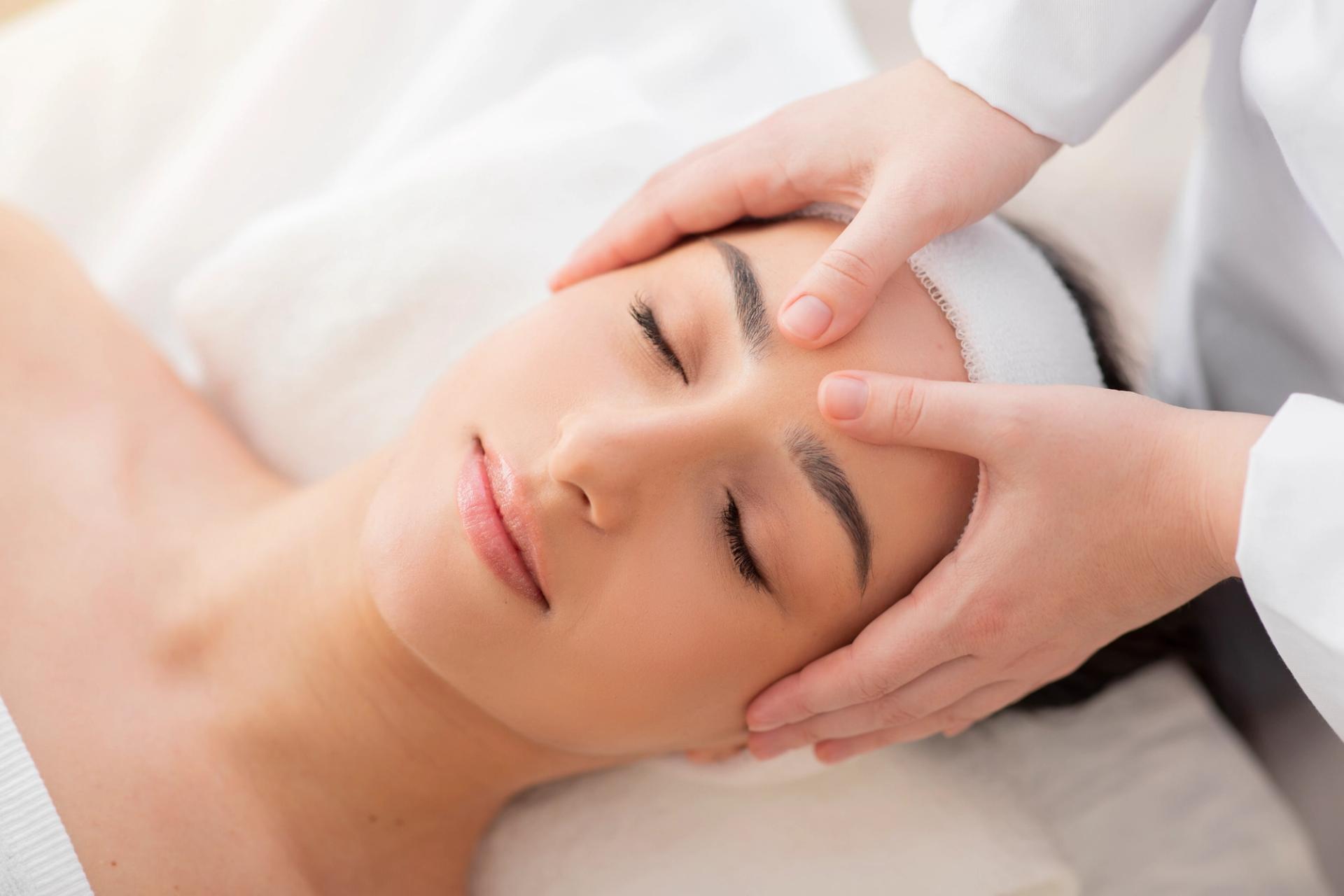

Single visit
None
No laser, no needles
Same-day glow
Overview
What a Glass Skin Facial Is
A glass skin facial is a topical hydradermabrasion facial worked across the surface of the skin. The look comes out of Korean skincare, where the goal is a complexion smooth and hydrated enough to catch light like glass.
Glass skin facial, glass facial, and the glass skin lift and glow treatment name the same appointment, and some patients call it a porcelain facial. The wording changes; the skin in front of us does not.
At Spectrum Skin Clinic in Irvine, the facial runs on the Candela Glacē system and takes one visit with no downtime. A diamond tip exfoliates dead surface cells while hydrating serum is infused into the skin in the same pass, and a sculpting step finishes it.
Leah, our licensed esthetician, performs it, and your skin type is read before the first pass. Patients across Orange County book it for a clear, dewy finish before an event or as upkeep between deeper treatments.
Clearing oil, dead cells, and surface buildup is what makes tone look brighter and the appearance of pores smaller. The facial works on the top layers of skin, not the dermis, so it will not remodel collagen, fill a scar, or clear deep pigment. For those, a different treatment is the honest answer.

The Spectrum approach
Why patients book the glass skin facial here
This is an aesthetician-delivered facial in a physician-led practice. Leah, our licensed esthetician, performs it, and Sabeen Munib, MD oversees the clinic. The facial stays on the surface, so it sits within an esthetician's scope and uses no laser and no needle.
Skin is read before the first pass. Active breakouts, a cold sore, sunburn, or a recent resurfacing treatment are reasons to wait, and that is said plainly rather than treated over.
Single-use diamond tips mean a fresh tip at every visit, and the finish is a clear, smooth, dewy surface. What a surface facial can and cannot change is set out before the session starts.
Licensed esthetician
Single-use tips
No downtime
Assessed first
How the Glass Skin Facial Works
The facial is mechanical and topical. A handpiece carries a diamond tip whose grit is adjustable for size and abrasiveness, so the same device suits thin, reactive skin and thicker, oilier skin. As the tip exfoliates the outer layer, hydrating serum is drawn into the skin in the same pass, and loosened debris and dead cells are suctioned away.
All of this happens in the epidermis, the surface skin. The serum sits in the top layers and the dead-cell buildup that dulls the surface is cleared, which is why skin looks brighter and smoother the same day. Nothing crosses into the dermis, so the glow is immediate and short-lived, and the facial is repeated to hold it.
A surface facial does not do deep work. It will not build collagen, lift jowls or sagging skin, fill an acne scar, or clear pigment that sits below the surface. Those need microneedling, a peel taken to the right depth, injectable skin boosters, or a laser, and each is a separate treatment here.
How the tip is matched to your skin
The diamond tips are single-use and come in grades. A finer tip and a lighter pass suit reactive or thin skin; a coarser tip lifts more buildup from oilier, thicker skin. The grade and the number of passes are set from how the skin reads that day, not from a fixed protocol.
The serum step is matched the same way, with more hydration for dehydrated, tight skin and a lighter layer for skin that already runs oily. The assessment comes first, which is why the same facial does not look identical on two different faces.
Which treatment fits
Glass skin facial, or something that reaches deeper
A surface facial is right for some skin and wrong for other goals. What is actually bothering you decides it.
Pairs well with
Treatments the facial is planned alongside
Who it suits
A glass skin facial suits skin that reads dull, rough, dry, or congested and wants a clear, hydrated finish. It is gentle enough for sensitive and acne-prone skin when the tip and serum are dialled down. Many patients book it before a wedding, a photoshoot, or a reunion, since there is no downtime to plan around.
How the call is made
Leah examines your skin type, hydration, and sensitivity at the start, and the tip grade, the passes, and the serum are set from that. If what you want needs more than a surface facial, the honest answer is a different treatment, and you will be told which one.
A good fit when
Your skin looks dull, feels dehydrated, or has rough texture and visible surface buildup, and you want a clear, dewy finish with no downtime. It layers well before an event and as regular upkeep between deeper treatments.
Not the right treatment when
You want to lift sagging skin or jowls, fill a scar, treat deep pigment, or build collagen, because a surface facial does not reach that depth. An active skin infection, a cold sore, sunburn, or a recent resurfacing treatment also means waiting until the skin has settled.
What to expect
During and after your session
The spacing between facials is set with Leah at your visit, based on your skin and what you are preparing for.
What to know
Risks and who should wait
A topical facial carries little risk, but it is not for every skin on every day.
Transient redness
Mild redness or a warm, tight feeling can follow a session and usually settles within hours. Sensitive skin reacts more, which is why the tip and the passes are lightened for it.
Surface sensitivity
Exfoliation lifts the outer layer, so skin can feel more reactive to active ingredients and to sun for a short time. Sunscreen and a simple routine for a day or two cover it.
Reasons to reschedule
An active skin infection, a cold sore, open breakouts, sunburn, or a recent resurfacing treatment are reasons to wait until the skin has settled rather than treat over it.
Your skin type, history, and any recent treatments are reviewed before the facial, so you know what the session will and will not do before it begins.
How the facial is kept safe
The facial is performed by Leah, our licensed esthetician, in a physician-led clinic with Sabeen Munib, MD on oversight. Diamond tips are single-use, and skin is screened for sensitivities and contraindications before the first pass.
Because the treatment stays on the surface and uses no laser and no needle, it suits a range of skin types when the tip and serum are matched to the skin in front of us.
Aftercare
What it costs
Glass skin facial pricing
A glass skin facial is $250 per session at Spectrum Skin Clinic in Irvine. Membership is $212 per month for patients who come in regularly.
What you pay does not move with how your skin reads that day, because the tip grade and serum are matched within the one session. Pricing is confirmed when you book.
New patients: 15% off your first treatment.
Pay monthly with


Will it look done?
What the finish actually looks like
A glass skin facial does not change your features. It cleans and hydrates the surface, so skin looks smoother, brighter, and more reflective the same day, closer to your skin on a good day than to a different face.
The glow is honest about itself. It shows immediately and eases over the following days as the surface turns over, which is why patients repeat it rather than expecting one facial to hold for months. Patients comparing it to a HydraFacial are describing the same kind of hydrating facial; Spectrum runs the Glacē system for it instead.
Explore
Related Treatments
Liquid Gold Facial
A regenerative facial for radiance when you want more than surface hydration.
Carbon Laser Facial (Charcoal Peel)
Also searched as a carbon laser facial. A deep clean for oily, congested skin and clogged pores in Orange County.
Light and Bright
Brightening for dull, uneven tone across the face.
PRP/PRFM Microneedling
Microneedling with your own growth factors, for texture and scars a surface facial cannot reach.
Nordlys IPL
An IPL photofacial in Irvine for redness, rosacea, and sun damage the facial does not treat.
Microneedling
Collagen-induction microneedling for texture and tone at a depth a surface facial does not reach.
Laser and Energy Devices
The full roster of laser and energy devices at Spectrum, each operated by Sabeen Munib, MD.
Patient reviews
What Patients Say
4.97★ across 441 verified Boulevard patient reviews.

Siena Viencek-Walsh

Ahmad Niazi

Dina Naziri
Questions
Frequently Asked Questions
Yes, the Candela Glacē™ system is designed for all skin types, and protocols are customized under physician supervision.
Most patients experience no downtime. Mild redness may occur and typically resolves within hours.
A standard spa facial cleanses and relaxes the skin. Our Glass Skin Facial uses Glacē hydradermabrasion to exfoliate and infuse a hydrating serum in one visit, for a brighter, smoother, glassy finish. Leah, our licensed esthetician, performs it in a physician-led practice.
For sustained results, we recommend monthly sessions or as advised during your consultation.
A Korean glass skin facial is inspired by Korean skincare and aims for luminous, poreless skin that reflects light like glass. At Spectrum it is performed with the Candela Glacē system.
No. The Glass Skin Facial uses Glacē hydradermabrasion, not a chemical peel or microneedling. It can be paired with those treatments when they suit your skin.
A consistent routine with hydrating skincare, daily sun protection and periodic facials helps keep the glow. Leah tailors your aftercare to your skin type.
A Glass Skin Facial and a HydraFacial are both advanced facials that cleanse, exfoliate, and infuse hydrating serums. Spectrum does not offer the HydraFacial brand; the Glass Skin Facial is our alternative, finished for the Korean glass-skin glow.
Spectrum does not offer the HydraFacial brand. We offer the Glass Skin Facial, an advanced hydrating facial that cleanses, exfoliates, and layers serums for a radiant, glass-skin finish.
A traditional facial mainly cleanses, exfoliates, and relaxes the skin. A HydraFacial and our Glass Skin Facial go further by infusing hydrating serums for deeper hydration and a brighter, smoother finish.
It depends on your skin type, hydration, sensitivity and goals. Leah examines your skin at your visit and recommends the serums and exfoliation that suit it.
Published peer-reviewed literature describes this approach for this indication. Evidence describes what has been reported in studied groups, not a predicted result for any individual. In selected patients it may be appropriate; that judgement is made at consultation.