

30 to 60 min
3 to 4 sessions
Same day
2 to 3 a year
Dr. Munib, MD
Overview
Exosome Hair Treatment in Irvine
Exosome hair treatment places stem-cell-derived vesicles into a thinning scalp to move miniaturizing follicles back toward an active growth phase. The vesicles carry growth factors, peptides, and signaling RNA. Exosome therapy, exosome hair treatment, and exosome hair restoration name the same visit, and the wording varies more than the biology does.
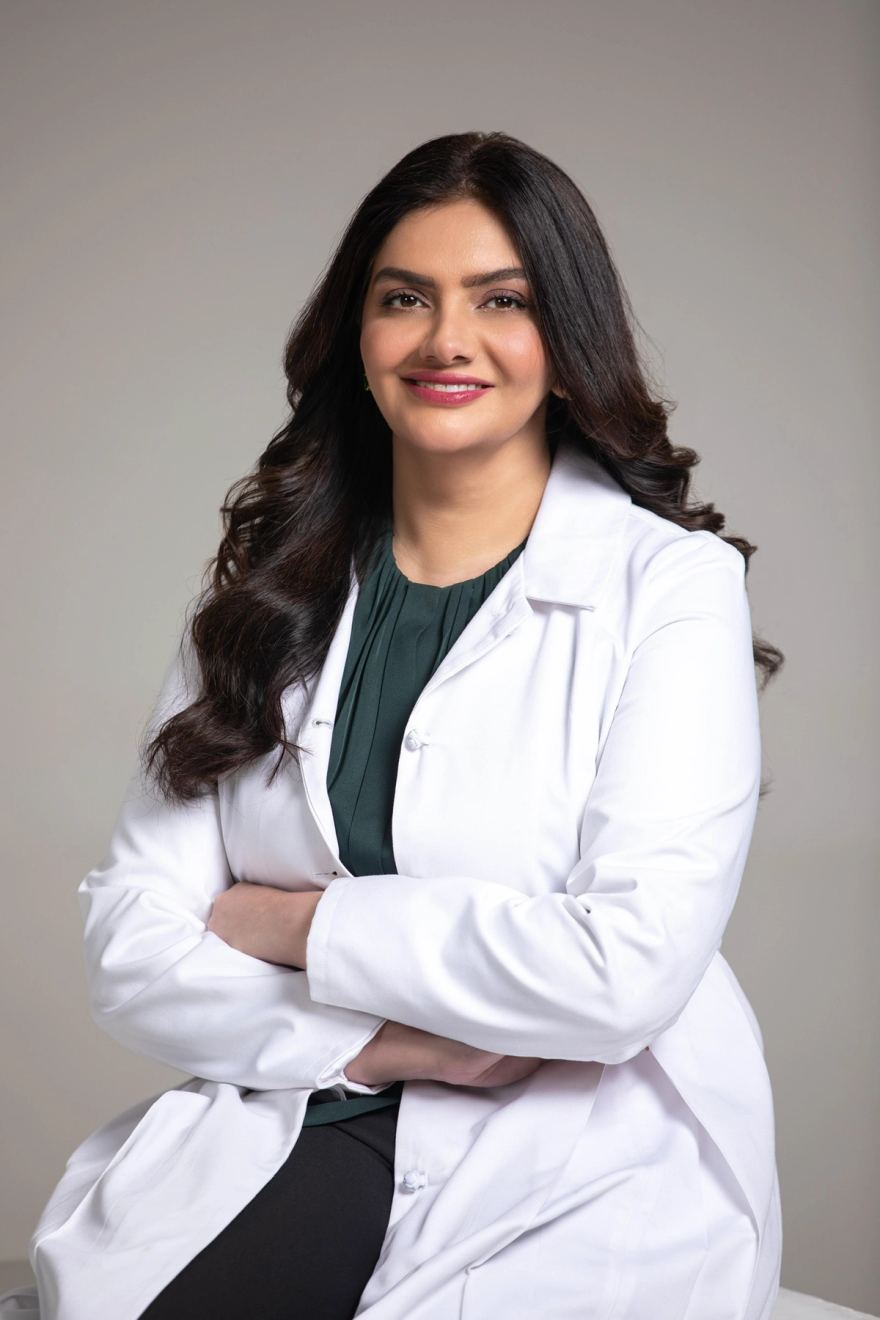
This is non-surgical hair rejuvenation for early-to-moderate thinning, where follicles are shrinking but still present, not a scalp where the follicle is already gone. We treat in Irvine and see hair loss patients from across Orange County, Newport Beach, and nearby. Dr. Sabeen Munib, MD reads the cause of the loss before any exosomes go in.
The Spectrum approach
Why patients come to Dr. Munib for exosome hair treatment
Exosomes signal the follicle; they do not replace it. That distinction sets the whole plan, because a scalp with live, shrinking follicles responds and a bald scalp does not. Dr. Munib sorts one from the other at the scalp before anything is placed.
Hair loss has hormonal, genetic, nutritional, and inflammatory causes. Dr. Munib works up the cause first, then decides whether exosomes lead, support a prescription, or wait. One protocol applied to every scalp is how density gets promised and not delivered.
Dr. Sabeen Munib, MD performs the microneedling and the exosome treatment herself. In California an esthetician cannot perform this, and here it is not delegated regardless. The physician who assesses your scalp is the one who treats it.
Dr. Munib, MD
Cause first
3 to 4 sessions
AnteAGE
Before & After
Laser Skin Resurfacing Before and After
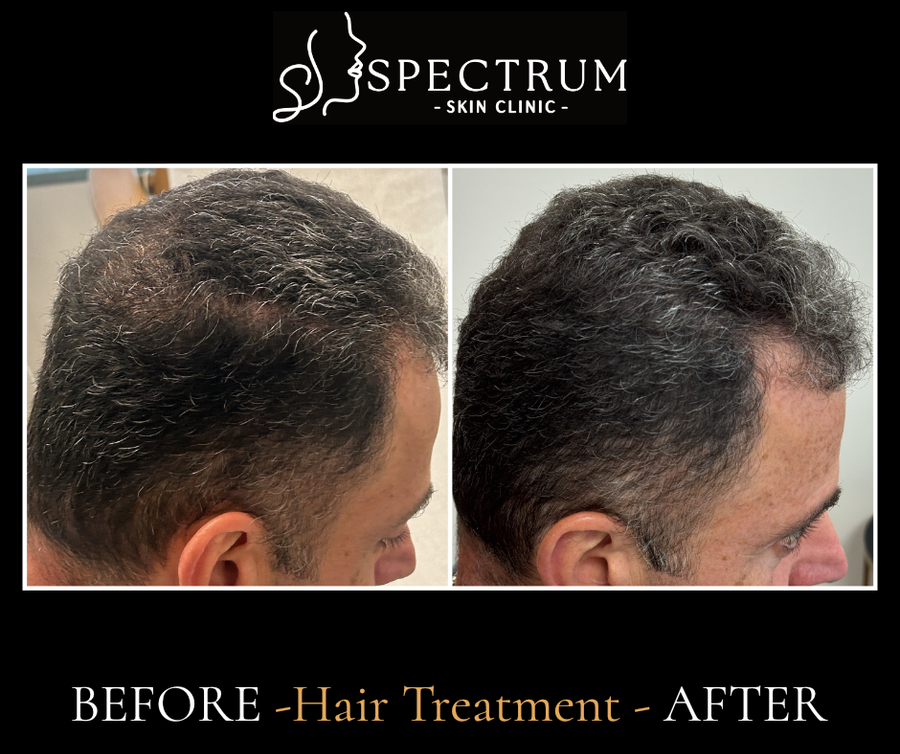
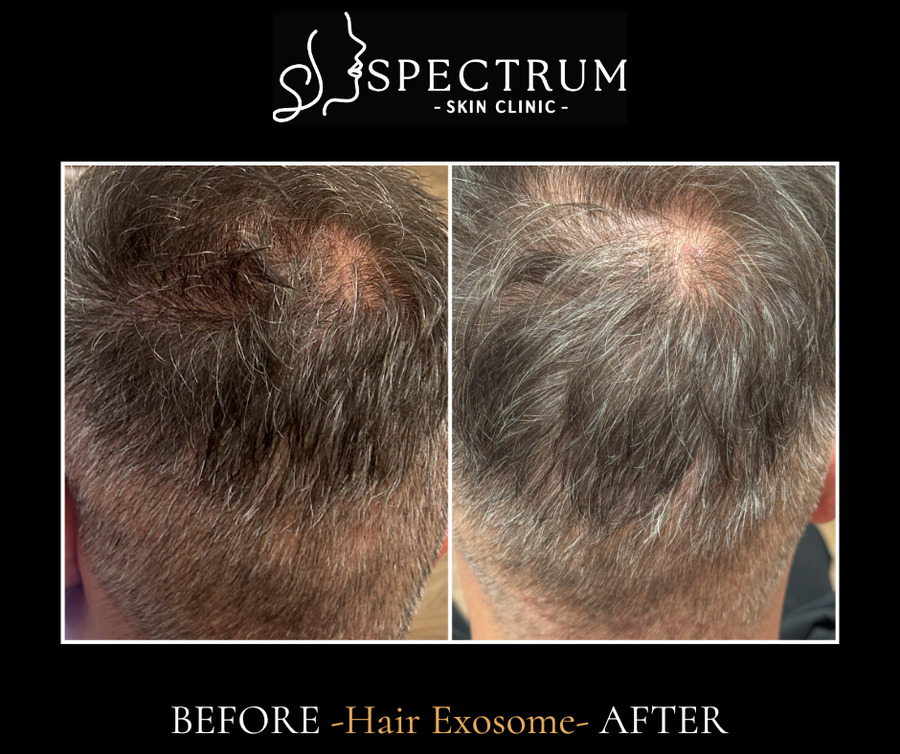
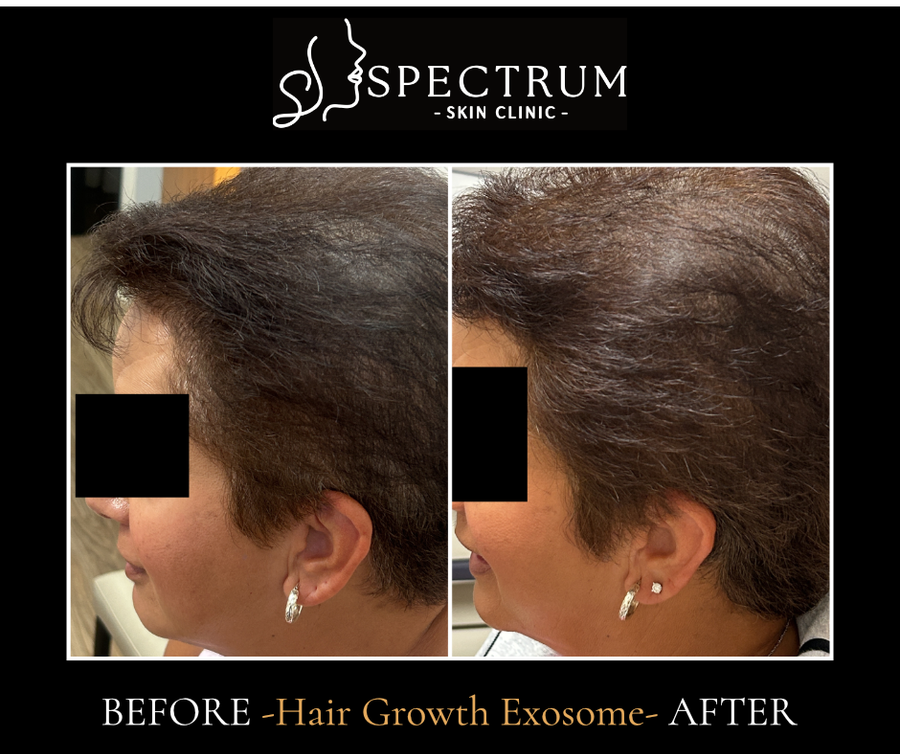
Density builds over months, not days. The honest way to read exosome hair results is one scalp photographed under the same light across a full series, not a single dramatic frame.
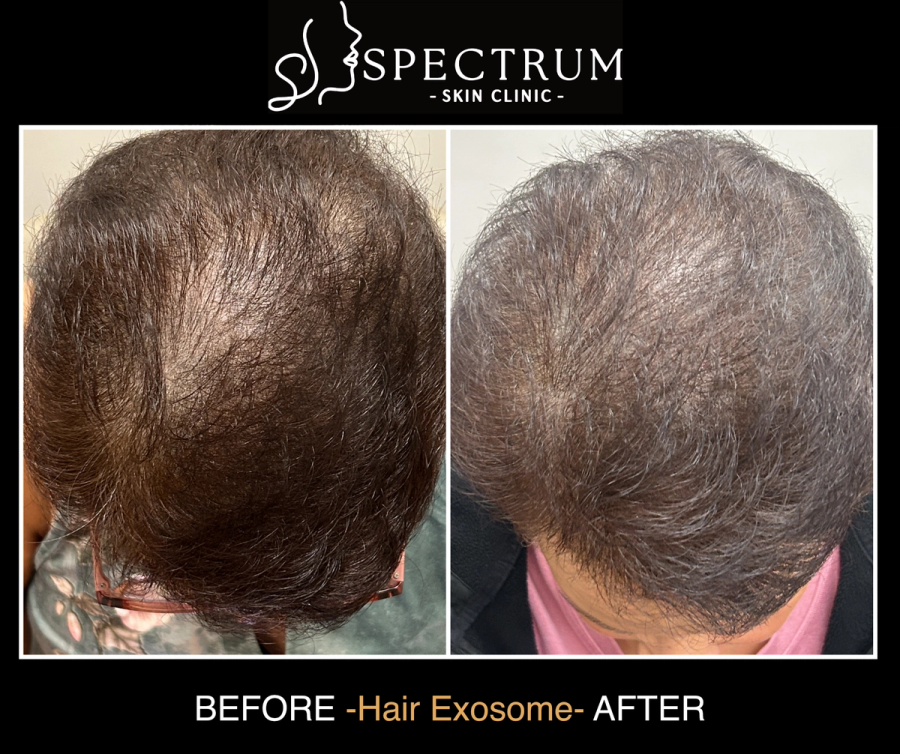
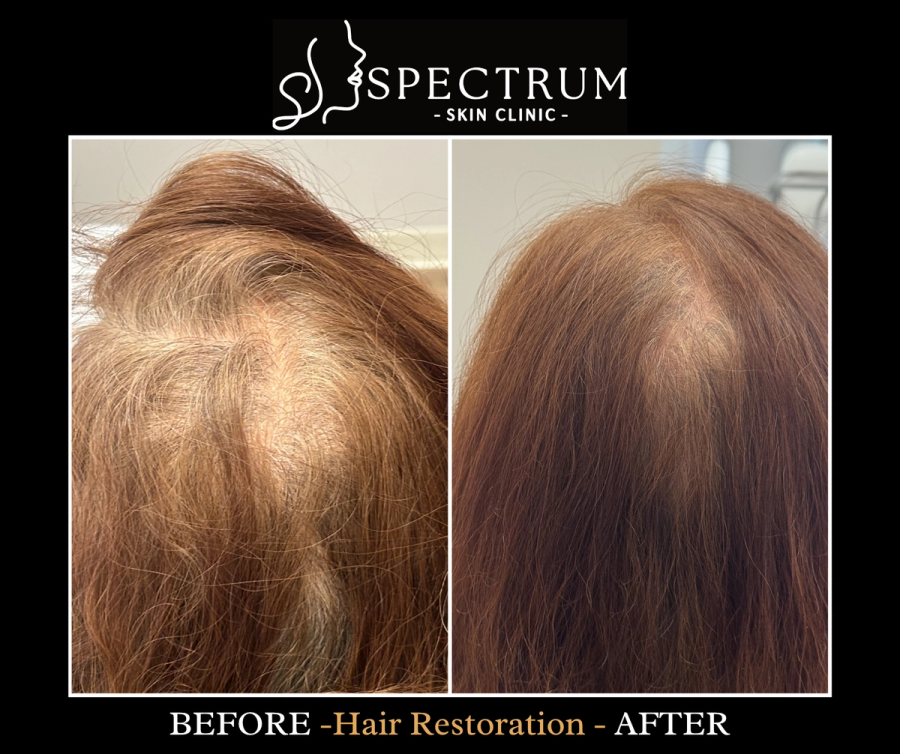
How exosome hair treatment works
Exosomes are vesicles released by cells, including mesenchymal stem cells. They ferry growth factors, peptides, and signaling RNA from one cell to the next. Microneedling opens micro-channels in the scalp so the vesicles reach the follicle, and the exosomes are injected when the depth of loss calls for it.
The aim is a longer growth phase, better blood supply around the follicle, and less of the low-grade inflammation that thins hair.
Exosomes do nothing for a follicle that is already gone. They signal follicles that still exist and are miniaturizing, so the response builds over the hair cycle rather than after one visit. A single session rarely holds. That is why exosome hair treatment runs as a series rather than a one-time appointment.
How each scalp is dosed
The cause of hair loss decides the plan, not a fixed protocol. Pattern loss, diffuse shedding, thyroid, iron, and medication each read differently on the scalp, and each points to a different foundation under the exosomes.
Dr. Munib places the exosomes topically after microneedling in most sessions and injects when the pattern and depth call for it. Where another tool fits better, she says so before a series begins.
Exosomes, PRF/PRFM, or a prescription
Which approach fits which scalp
Exosomes, PRP, PRF or PRFM, and a prescription all signal the follicle differently. Which leads depends on the cause and stage of your hair loss.
Combined approaches
What exosomes pair with
Who may be a candidate
Exosome hair treatment is aimed at loss where the follicle is thinning but alive. That most often means early androgenetic alopecia, male-pattern and female-pattern thinning, diffuse shedding, and post-partum or stress-related thinning.
How Dr. Munib decides
She examines the scalp and the pattern of loss, reviews what is driving it, and confirms exosomes fit before a series starts. Persistent or patchy loss is evaluated by a physician first, because some causes need medical treatment before any restorative plan will take.
May be a good candidate
Early-to-moderate thinning, a widening part, or reduced density at the crown, with follicles still present and a realistic view of a staged result built over several months.
May not be the right choice
A scalp with complete follicle loss points to a hair transplant, not exosomes. Scarring alopecia, active scalp infection, or loss driven by thyroid, iron, or medication is worked up and treated first.
What to expect
Timeline across a series
Results build over a series of three to four sessions, four to six weeks apart, and vary between patients.
Documented risks
What to weigh before a series
The procedure is microneedling plus an exosome application, so the short-term effects come from the needling, and the larger point is regulatory.
Redness and pinpoint bleeding
The microneedling leaves the scalp pink with pinpoint spots for a day. Tenderness settles quickly.
Transient shedding
Some scalps shed briefly as the follicle cycle resets before new growth appears. It is expected, not a sign the treatment failed.
No FDA-approved product
No exosome product is FDA-approved for hair loss. The treatment is offered as a regenerative option under a physician, which is why the decision is made case by case.
Variable response
Results depend on the cause and stage of loss and differ between patients. A live, miniaturizing follicle responds; a lost one does not.
Dr. Munib reviews your health history and the status of exosome therapy with you, and you decide together whether to proceed.
How the risk is kept low
The scalp is numbed and the microneedling is done under sterile technique, so most patients tolerate the session and return to routine the same day.
Products are sourced from established suppliers and handled by the physician who performs the treatment.
Aftercare
What affects your cost
What exosome hair treatment costs
What exosome hair treatment costs depends on how many sessions the plan holds and whether exosomes run with microneedling, PRF or PRFM, or a prescription. A single session rarely delivers a lasting result, so the treatment is priced as a series, not a one-time visit.
After Dr. Munib assesses the scalp and the pattern of loss, you leave the consultation with a plan and a price. New patients take fifteen percent off a first treatment.
New patients: 15% off your first treatment.
Pay monthly with


Will this actually regrow hair?
What exosomes can and cannot do
Exosomes support follicles that still exist. They will not regrow hair where the follicle is lost, and they are not a cure for ongoing thinning. Density builds slowly across a series and varies from one scalp to the next.
There are no FDA-approved exosome products. Exosome hair treatment is offered here as a regenerative treatment, decided case by case under a physician, with no promise of a given outcome. Dr. Munib tells you plainly when it is not the right choice.
Yes, the exosomes are injected when the depth of loss calls for it, not only laid on the surface. The plan follows the follicle, not a package.
Explore
Related Treatments
PRFM Hair Restoration
A growth signal drawn and spun from your own blood, when you would rather use your platelets than a standardized exosome.
Selphyl PRFM
The Selphyl PRFM system, for a slower-release platelet matrix as part of a hair plan.
Hair Loss Treatment
The overview of every hair option, for matching the tool to the cause of your loss.
Female Pattern Hair Loss
Widening part or post-partum shedding in women, worked up before any exosome series.
Male Hair Loss
Pattern thinning at the hairline or crown in men, where a prescription often leads.
Rx Hair
The prescription foundation, finasteride and minoxidil, that exosomes layer onto.
Skin Exosomes
The same exosome signal used on facial skin rather than the scalp.
Rejuran PDRN | Orange County | Irvine, CA
A polynucleotide skin treatment, for patients asking how it differs from exosomes.
BiotinLixer
Nutritional support for hair and nails when a deficiency is part of the picture.
NAD+ Injections
Cellular support offered at the clinic, sometimes discussed alongside a hair plan.
Patient reviews
What Patients Say
4.97★ across 441 verified Boulevard patient reviews.

Deepak Jadhav

Ahmad Niazi

Mahjabeen Saeed
Questions
Frequently Asked Questions
Cost depends on the number of sessions in the series and whether it is combined with other therapies. Exact pricing is shared at consultation after the scalp is assessed.
Reduced shedding often appears within the first weeks, with new growth and density building over three to six months across a series.
No. PRP and PRF/PRFM are drawn and spun from the patient's own blood; exosomes are concentrated growth-signal vesicles. They have a similar goal and are sometimes combined.
Most plans use a series of sessions spaced weeks apart, followed by periodic maintenance, because hair thinning is an ongoing process.
No. Exosomes support follicles that are still present and miniaturizing. Areas with complete follicle loss are better addressed by a hair transplant.
The scalp is numbed and most patients tolerate the microneedling and application well, with brief tenderness afterward.
Most patients return to routine the same day. The scalp is left undisturbed for several hours and harsh products are avoided briefly.
Treatment is physician-supervised by Dr. Sabeen Munib, MD, who assesses the cause of hair loss before recommending exosomes, PRF/PRFM, or another approach.
There is currently no FDA-approved exosome product for hair loss. Exosome therapy is offered as an investigational regenerative treatment under physician supervision, and Dr. Munib reviews the current evidence with you before recommending it.
Yes. Exosome therapy is often layered onto proven hair-loss treatments such as topical or oral minoxidil, and for pattern hair loss a prescription like finasteride when appropriate. The combination is built around the cause of your hair loss.
Exosomes target early-to-moderate thinning where follicles are still present, such as androgenetic (pattern) hair loss, diffuse shedding, and post-partum thinning. They are not used for scarring alopecia or areas of complete follicle loss.