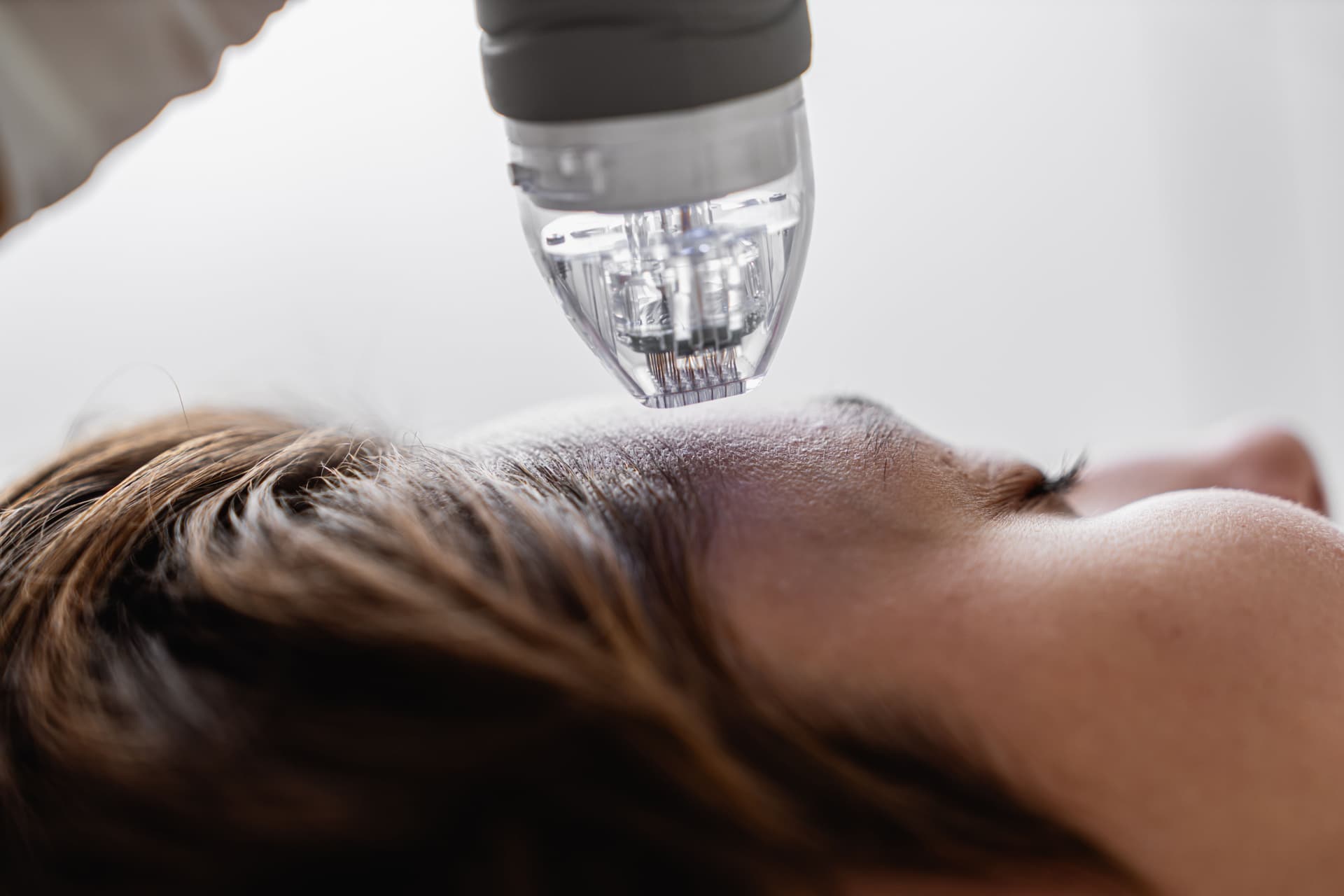
Large Pore Treatment in Irvine, CA with Microneedling
Large pore treatment in Irvine using collagen-induction microneedling, performed by Sabeen Munib, MD.
Large Pore Treatment in Irvine, CA with Microneedling
Microneedling is a collagen-induction treatment that reduces the appearance of enlarged pores. Fine needles create controlled micro-injuries in the skin, prompting new collagen and elastin to rebuild around the pore walls. As that support firms up, the opening is held tighter and pores appear smaller and less noticeable.
For enlarged pores specifically, Sabeen Munib, MD typically uses radiofrequency (RF) microneedling. It delivers the same micro-channeling with controlled heat at depth, which tightens the skin around each pore more than needling alone. Whether RF or standard microneedling fits a given patient depends on the skin, the cause of the pores, and the downtime that suits them.
Microneedling does not erase pores, since pores are tiny openings every skin has. The realistic goal is refined skin texture and a more even complexion over a series of sessions. Every plan at Spectrum Skin Clinic is assessed personally by Sabeen Munib, MD.

Spectrum at a glance
| Starting price | Google rating | Patient reviews | Physician-performed | Experience |
|---|---|---|---|---|
| From $400 / session | 5.0★ Google | 441+ across platforms | 100% by Sabeen Munib, MD | 15+ years |
Spectrum Skin Clinic — Irvine
114 Pacifica, Suite 280, Irvine, CA 92618 · (949) 259-4790
Why Patients Choose Spectrum Skin Clinic for Enlarged Pore Treatment
Enlarged pores have more than one cause, and treating them well starts with naming the right one. The first step at Spectrum is reading the skin, oil production, sun damage, age-related collagen loss, or simply genetics. That reading determines how much microneedling can realistically refine the pores.
For most enlarged-pore plans, Dr. Munib favors RF microneedling, because the added radiofrequency heat firms the skin around the pore more than needling alone. Professional treatment reaches a controlled depth, which is what separates a clinical result from an at-home derma roller. Sessions are matched to skin type and the severity of pore enlargement, with care taken to limit post-inflammatory pigment in darker skin.
The honest goal is visible improvement, smoother skin texture, a more refined complexion, and pores made less noticeable over a series of sessions. Where standard microneedling, a peel, laser, or medical skincare routine fits better, that recommendation is given plainly.
Medically reviewed by Sabeen Munib, MD.

How Microneedling Reduces the Appearance of Pores
Pores look larger when the skin around them loses support. Sun damage and age break down collagen and elastin, so the pore walls sag and the opening widens. Excess oil production and trapped dead skin cells stretch pores further, and clogged pores read as larger and more uneven across the complexion.
Microneedling uses a microneedling device to create controlled micro-injuries that trigger the body's healing response. New collagen and elastin production rebuilds the skin around each pore, firming the pore walls so the opening is supported and pores appear smaller. The same cell turnover that follows helps keep pores clear, which is why texture and tone improve together.
RF microneedling adds radiofrequency energy at the tip of each needle, heating the dermis as it channels. That heat causes existing collagen to contract immediately and drives a stronger collagen response over the following weeks, which is why Dr. Munib often prefers it for pore laxity. Whether RF or standard needling is used, the remodeling is gradual, so results build over several months rather than at once.

Why Treatment Depth Matters for Pores
Collagen forms in the dermis, so the needle has to reach below the surface to stimulate the support that firms pore walls. Treatment depth is set to the area and skin type, enough to provoke a real collagen response without over-treating thin or reactive skin.
This is also why professional microneedling differs from an at-home roller. Controlled depth, sterile technique, and even coverage are what make the collagen response consistent, while a shallow home device mostly affects the surface and can irritate skin without refining pores.
Which Pores Respond Best
Pores enlarged by oil production, sun damage, and collagen loss respond best. RF microneedling works directly on the collagen and elastin that support the opening, and adds heat to firm it. Visible pores across the nose, cheeks, and the central face are the most common concern treated.
Pores that are simply large by genetics still improve in appearance, though the change is more modest. Microneedling cannot reduce the number of pores or the size of the sebaceous glands beneath them, so the plan is built around refining how pores look rather than removing them.
What Microneedling Pairs With for Pores
| Pairing | How it is used | Why it matters |
|---|---|---|
| Chemical peels | Exfoliation directed between sessions | Clears dead skin cells and sebum so pores look less clogged and more refined |
| Topical retinoids | Physician-directed skincare routine | Support cell turnover and collagen production that keep pores clear |
| PRP or PRFM | The patient's own growth factors applied with the needling | May support the collagen response for stubborn pore laxity |
| Medical skincare | Gentle cleanser plus targeted actives | Manages oil production and maintains the result between treatments |
Microneedling vs Lasers vs Skincare for Pores
| Approach | What it targets | When a physician considers it |
|---|---|---|
| RF microneedling | Collagen contraction plus new collagen, with heat at depth | Dr. Munib's usual choice for pores, especially where laxity widens the opening |
| Standard microneedling | Collagen and elastin around the pore walls | Lighter cases or thinner skin where added heat is not needed |
| Laser resurfacing | Surface texture, sun damage, and collagen at depth | Marked sun damage or texture where added energy is worth the recovery |
| Chemical peels and skincare | Dead skin cells, sebum, and oil production over time | Oily or congested skin, and maintenance between in-office treatments |

Who May Be a Candidate
Microneedling may suit patients whose pores look enlarged from oil production, sun damage, or early collagen loss, and anyone wanting a minimally invasive option before considering lasers. Healthy skin without active infection or heavy active acne in the treatment area is important.
It tends to be a poor fit over active breakouts, rashes, or recent significant sun exposure. A history of keloids or poor healing also makes microneedling unsuitable, and the right plan is determined at consultation rather than assumed.

What to Expect and Timeline
A microneedling session takes about thirty to sixty minutes depending on the area, after topical numbing. Most plans use a series of sessions spaced four to six weeks apart, and many patients are guided toward around six sessions for visible pore refinement.
Expect redness and mild swelling for a day or two, similar to a light sunburn that fades. Because new collagen matures slowly, the appearance of pores improves over the weeks after each treatment, and the full result is assessed once the skin has had time to rebuild.

Safety and Who May Not Be a Candidate
Microneedling is minimally invasive, but darker skin types carry a higher risk of post-inflammatory hyperpigmentation, so settings are kept conservative and skin type is assessed first. Treatment is deferred over active infection, inflamed or broken skin, and during pregnancy.
A history of keloids, poor wound healing, or active cystic acne in the area may make microneedling unsuitable. In those cases Dr. Munib will recommend an alternative approach or medical skincare instead.
The Honest Limits, and the Real Risks
Microneedling refines enlarged pores, but a clear-eyed view of its limits and risks is part of a responsible plan.

It refines, it does not close pores
Microneedling makes pores appear smaller by firming the skin around them, but it cannot remove pores or permanently change pore size. Expecting poreless skin from any treatment is the most common disappointment.

Oil and genetics still set the baseline
Pores tied to high oil production or genetically large openings improve more modestly, and benefit from ongoing skincare to manage sebum. Microneedling refines the look but does not shrink the sebaceous glands beneath.

At-home rolling carries real risk
Home derma rollers lack controlled depth and sterile technique, which can cause infection, irritation, or post-inflammatory pigment, especially in darker skin. Professional microneedling is the safer route to a real collagen response.

Aftercare and Recovery
- Keep the skin clean with a gentle cleanser and avoid heavy sweating for the first day or two
- Apply broad-spectrum SPF 50 daily to protect new collagen and prevent pigment change
- Use a bland moisturizer and pause retinoids and exfoliating actives until cleared
- Avoid heavy makeup over the treated skin for the first day
- Expect redness to settle within a few days; report anything unusual promptly

What Affects Your Cost
Cost depends on the treatment area, the number of sessions, and whether microneedling is paired with peels, RF, or medical skincare. Pore refinement is a series rather than a single visit, so most patients are quoted around a plan.
A consultation establishes the realistic number of sessions before any commitment, and sets honest expectations for how much the pores will change.

Does Microneedling Actually Shrink Pores?
It reduces how large pores appear, which is the honest way to put it. RF microneedling is the form Dr. Munib uses for pores. It rebuilds collagen and elastin around the pore walls and adds heat that tightens the skin, so the opening is supported and pores look smaller. It works on a real cause of enlarged pores, which is why the refinement lasts.
What it does not do is permanently shrink pore size or close pores, because pores have no muscle and every skin needs them. Genetics and oil production still set a baseline, and several sessions are needed for a visible change. Honest expectations, refinement, not removal, are part of every plan.
Related Treatments
Microneedling at Spectrum treats more than pores. The broader microneedling overview explains collagen-induction therapy, and RF microneedling adds radiofrequency depth for pore laxity and texture.
For surface refinement and oil control, a Glass Skin Facial deep-cleans congested pores, while the Secret Pro RF platform, Fractional CO2 laser, and Nordlys IPL resurface deeper sun damage.
For textural concerns that overlap with pores, see microneedling for acne scars and microneedling for melasma. Selphyl PRFM supplies growth factors that pair with microneedling.
Book Microneedling for Pores in Irvine, CA
A consultation with Sabeen Munib, MD establishes what is enlarging the pores and how many sessions a realistic plan needs.
Patient Reviews
4.97★ · 441 Patient Reviews

I had an amazing experience with Dr. Munib, who performed my aesthetic treatments including Pico laser, Botox, a glassy facial, Botox for migraine, and HIFU. Every procedure was done with great care, precision, and professionalism, and the results exceeded my expectations. Dr. Munib is incredibly knowledgeable and takes the time to explain everything, making me feel comfortable and confident throughout the process. Her expertise truly shows in her work. The staff was extremely accommodating, friendly, and professional, which made the entire experience even better. On top of that, the prices were very reasonable for the quality of service provided. I highly recommend Dr. Munib to anyone looking for outstanding aesthetic treatments and excellent patient
Mahjabeen Saeed
4 months ago

I had an excellent experience with Dr. Sabeen Munib at Spectrum Skin Clinic in Irvine. I visited her for acne scar treatment and underwent three subcision sessions spaced six weeks apart. Throughout my treatment, I was consistently impressed by her expertise, attention to detail, and compassionate approach. Dr. Munib took the time to carefully evaluate my scars, explain the procedure, and answer all of my questions before starting. During each procedure, she made sure I was comfortable and informed every step of the way. Her technique, skill and experience with acne scar subcision gave me complete confidence that I was in capable hands. The entire team at Spectrum Skin Clinic was professional, friendly, and supportive throughout the process. Although acne scar improvement takes time and healing, I appreciate that Dr. Munib focuses on achieving the best possible long-term results rather than making unrealistic promises. She explained what to expect during recovery and emphasized that collagen remodeling happens gradually. If you're looking for a knowledgeable and caring physician for acne scar treatment or subcision, I highly recommend Dr. Sabeen Munib Spectrum Skin Clinic, Irvine. I truly appreciate the care, professionalism, and dedication I received and would not hesitate to recommend her to anyone seeking advanced scar treatment.
Deepak Jadhav
3 months ago

After several aesthetic nurses told me I was allergic to filler dissolver, Dr. Munib took a careful, evidence-based approach. She used ultrasound to locate my migrated lip filler, tested a small area first, and explained I was reactive—not allergic. She dissolved a small test area before safely treating my upper lip. Throughout the process she was gentle, thorough, and educational. It’s a long drive for me, but her knowledge and expertise make it absolutely worth it.
Jamel Neill
2 months ago

Thank GOD for Dr. Munib. She is the angel of dissolver!!! I had HA nodules and Sculptra nodules from previously going to Dermfx and I went to Dr. Munib for ultrasound guided dissolving. She is gentle, patient, knowledgeable, kind and funny. I feel like she is the last of the good ones in this business. If you are interested in natural looking aesthetic results that aren’t botched and don’t cause you years of facial pain go to her. I would try to see her as my primary doc if I wasn’t moving out of the area. I would travel to go see her though.
Siena Viencek-Walsh
3 months ago
Related Blogs
Personalized Aesthetic & Regenerative Solutions Designed to Heal, Enhance & Restore Naturally









Frequently Asked Questions
Got questions? We’re here to help! Find out what we offer, how to book an appointment, where we’re located, and more. We treat all age groups and offer skincare products too.