
Non-surgical
Several months
Minimal
Ongoing
Overview
Female pattern hair loss
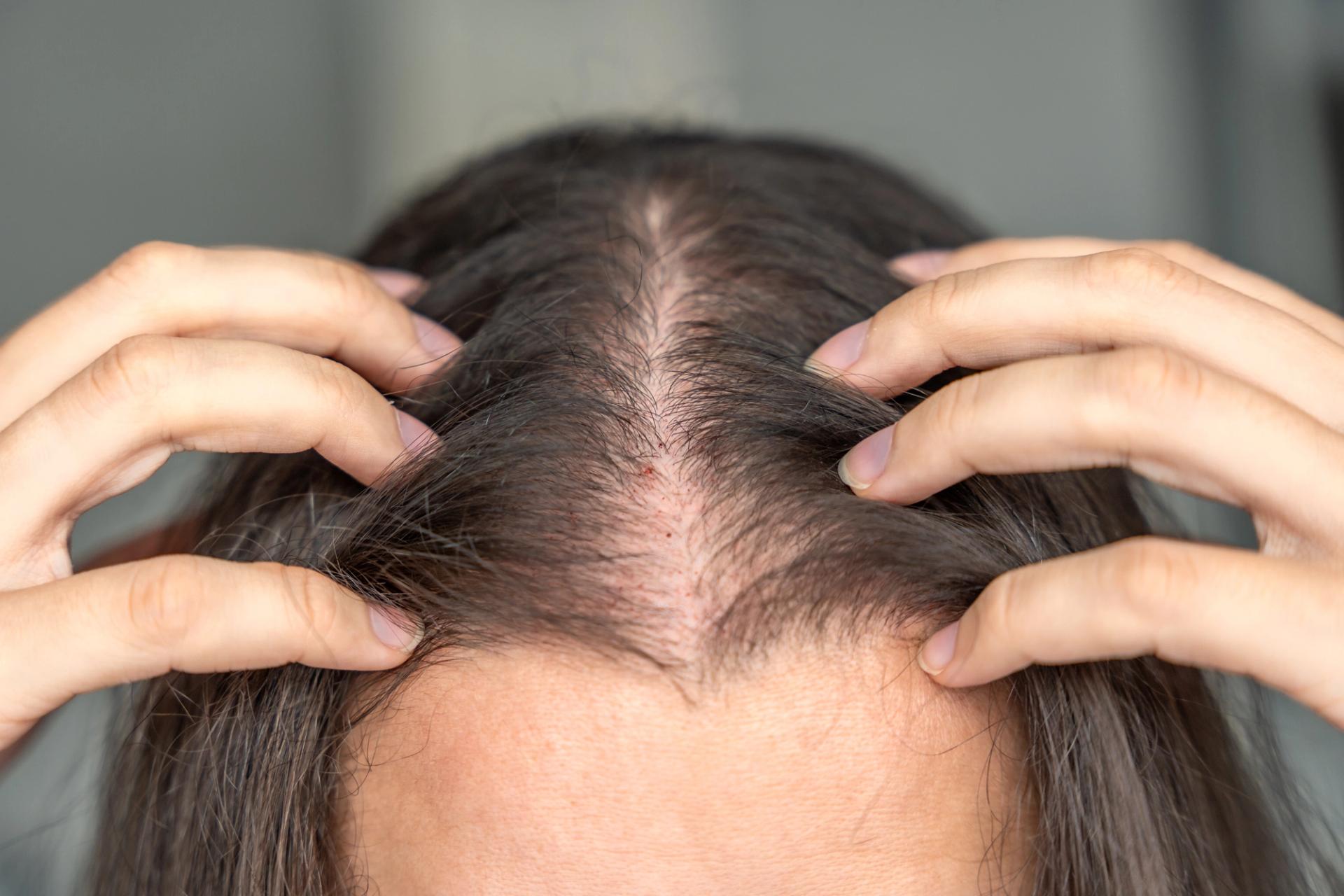
Hair loss in women is common and treatable. Female pattern hair loss is the most common cause, and it thins the hair gradually along the part and crown rather than carving out sudden bald spots. The frontal hairline usually stays.
At Spectrum Skin Clinic in Irvine, Dr. Sabeen Munib, MD examines the scalp, identifies what is driving the thinning, and builds a non-surgical plan. Women come from across Orange County and the greater Los Angeles area, including Newport Beach, Costa Mesa, Tustin and Laguna Hills.
The plan can combine prescription care, over-the-counter minoxidil and in-office regenerative treatment. The wording a woman uses for it, thinning, female pattern baldness or androgenetic alopecia, does not change the exam. The pattern on the scalp does.
The Spectrum approach
Why women choose Spectrum for hair loss
Persistent thinning in a woman deserves a medical workup, not a shelf product. Dr. Sabeen Munib, MD treats female hair loss as a specialist does, examining the scalp and the pattern of loss before recommending anything, because the care that helps androgen-driven miniaturization does nothing for shedding that thyroid disease is driving.
Spectrum is both a medical and an aesthetic practice. That lets the plan combine prescription care with in-office regenerative options under one physician, and it keeps the message honest: some thinning slows, some holds steady, and some needs ongoing maintenance.
Spectrum does not perform surgical hair transplantation. When a follicle is gone rather than miniaturized, no in-office treatment rebuilds it, and the right route is a referral to a surgeon.
Physician led
Cause first
Non surgical
Honest results
Before & After
Laser Skin Resurfacing Before and After
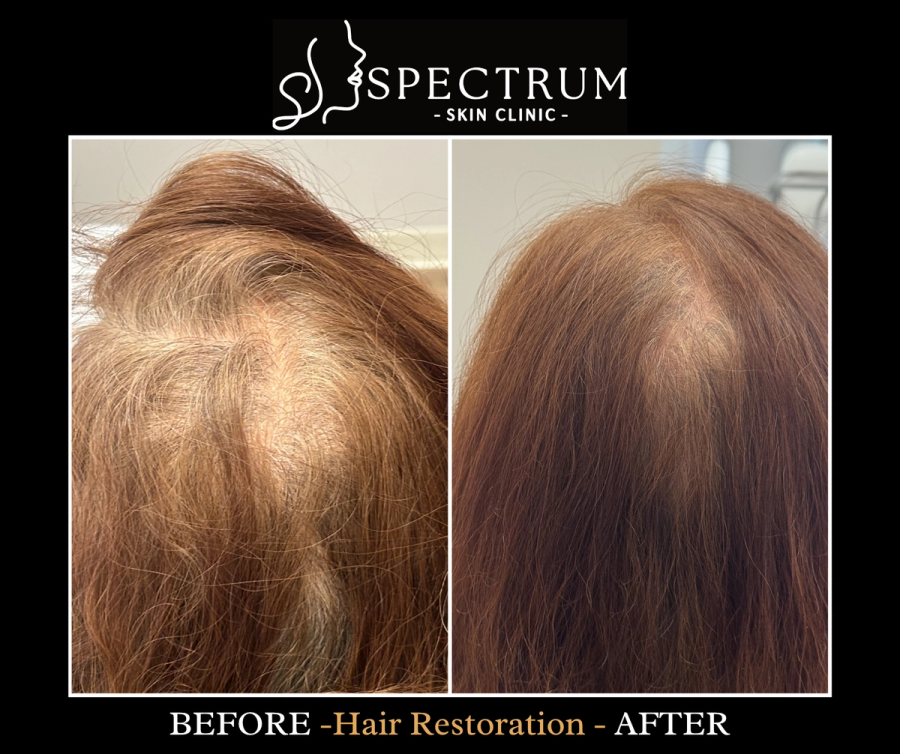
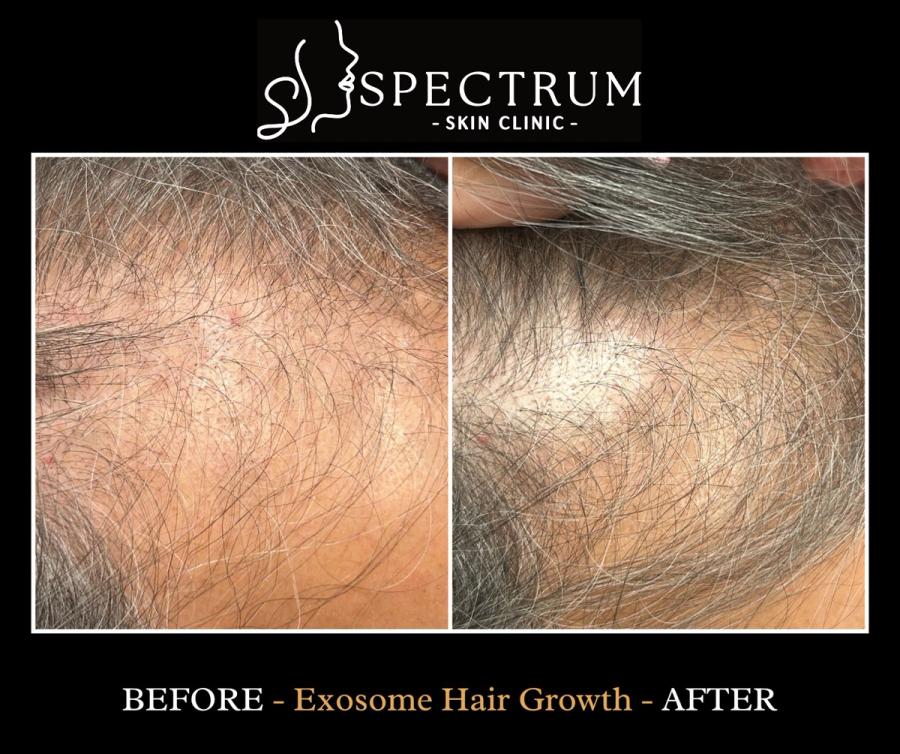
Before-and-after photos are read over months, not weeks. Hair grows in cycles, so density at the part and crown is compared across a longer arc rather than at the first visit.
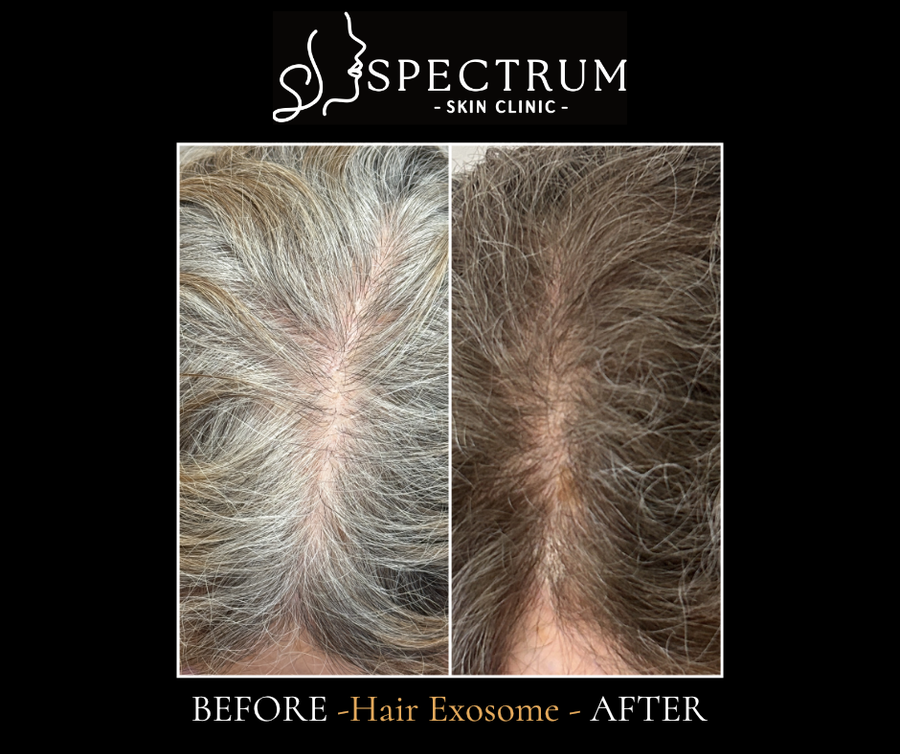
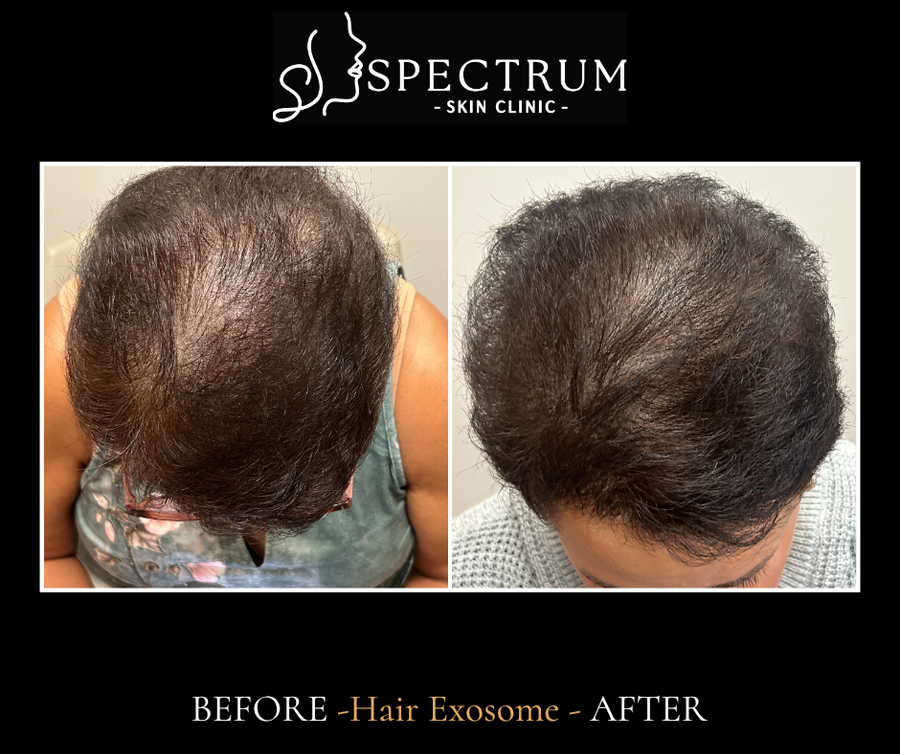
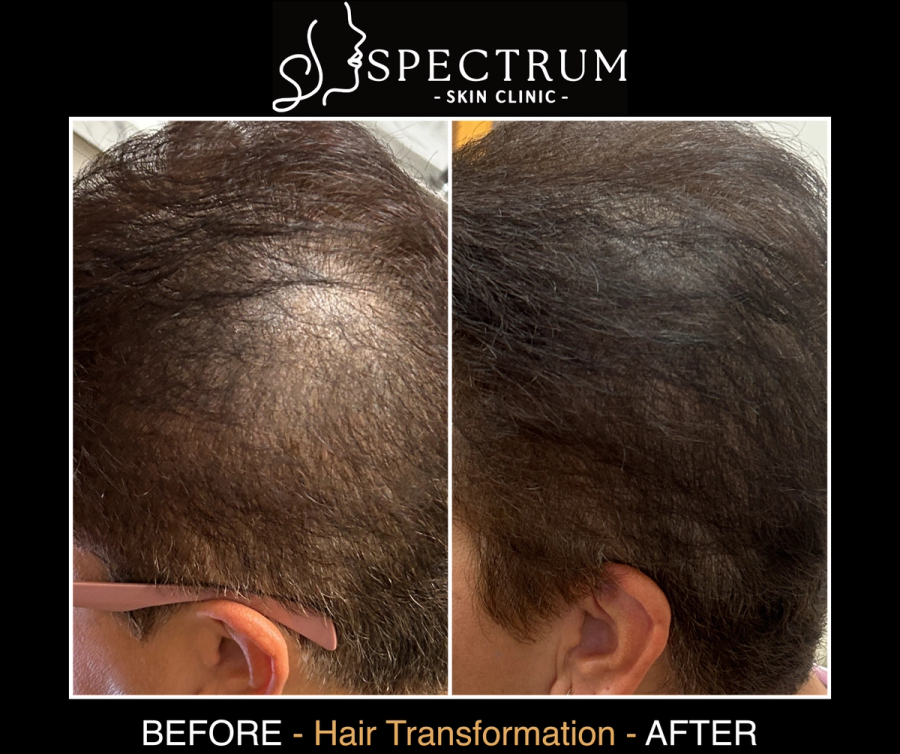
How the hair cycle changes
Female pattern hair loss is the most common cause of thinning in adult women. The hair cycle runs through a growth phase and a resting phase. In female pattern hair loss the growth phase shortens, so each follicle spends less time producing hair and more time at rest.
The follicle itself narrows in a process called miniaturization. Terminal hairs are slowly replaced by fine, vellus-like strands, and the dermal papilla at the base of the follicle thins with them. Over successive cycles the scalp shows through at the part and the crown rather than in patchy bald spots.
Losing roughly a hundred hairs a day is normal. A shift in hormones, thyroid function, iron stores or general health can push more follicles into shedding at once, which looks similar but has a different cause.
What the exam has to separate first
The pattern tells the story. Diffuse thinning that spares the frontal hairline points to female pattern hair loss, graded on the Ludwig scale from an early widening of the part to broad thinning across the crown. Dr. Munib examines the scalp at the part and crown, takes a history, and orders blood work when thyroid disease or low iron is possible.
A smooth patch of sudden loss is not this condition. Telogen effluvium, the shedding that follows illness, childbirth, rapid weight change or stress, recovers on its own once the trigger resolves. Alopecia areata leaves discrete bare patches. The diagnosis decides whether a follicle needs stimulation or whether a different driver needs treating first.
Which path fits which pattern
Which approach fits which pattern of loss
The pattern on the scalp, not the word a woman uses for it, decides what to do and whether this is even the right plan.
Combined approaches
Approaches that pair well
Who may be a candidate
Female pattern hair loss is partly genetic, so a family history raises the odds. It can begin in a woman's thirties and is most common around and after menopause. The follicles are still alive at that stage, producing finer hair rather than none, which is why early treatment holds more terminal hair than late treatment.
How the plan is decided
A scalp exam, a history and sometimes blood work confirm the diagnosis before any treatment. The plan is matched to the pattern and the driver, not picked from a menu.
A good fit
Women with diffuse thinning from female pattern hair loss, especially when treatment starts while the follicles are only miniaturized and still cycling. Women from Irvine, Costa Mesa, Newport Beach and across Orange County and the greater Los Angeles area are seen here.
Where it does less
Thinning driven by thyroid disease, low iron, a recent pregnancy or a new medication is treated at its source first. A smooth scalp where follicles are long gone will not respond to stimulation, and pregnancy limits some options.
What to expect
What to expect and when
Minoxidil is applied twice a day and usually needs at least about four months before results show. Results vary by person, and consistency matters more than any single session.
What to know before starting
What to know before starting
Hair-loss treatment works slowly and does not work for everyone. Knowing that before you start keeps the first few months from being discouraging.
Early shedding
As follicles reset toward the growth phase, shedding can briefly increase before regrowth shows. This is expected and settles.
It does not work for everyone
Regrowth varies from woman to woman, and minoxidil will not restore density for every patient. Progress is judged over months, not weeks.
Mild scalp redness
In-office treatment leaves little downtime. Scalp redness is usually mild, settles within a day, and normal washing and styling resume quickly.
Benefits, limits and the likely time course are reviewed at the consultation so the decision to start is an informed one.
How care is kept safe
Dr. Sabeen Munib, MD performs the in-office treatments and oversees the medical plan. Spectrum is both a medical and an aesthetic practice.
Sudden, patchy or rapidly progressing loss, or a scalp that is scarring, red or itching, is examined promptly, since some causes need more immediate care. Shedding that lasts beyond six months, new patchy baldness, or loss that follows a new medication is worth a physician visit and sometimes blood work.
Aftercare and day to day
What affects your cost
What affects your cost
Cost depends on which treatments the plan uses and how many in-office sessions it needs. Dr. Munib sets out the pricing at the consultation once the diagnosis and plan are clear.
Finasteride, when it is prescribed, is filled at your pharmacy and typically runs about $20 a month. It may be covered by insurance, though at the hair-loss dose it is often treated as cosmetic, so coverage varies by plan. Minoxidil is sold over the counter and needs no prescription. In-office treatments are quoted separately. Cost is rarely the barrier.
New patients: 15% off your first treatment.
Pay monthly with


Will my hair come back
Will my hair actually come back?
Female pattern hair loss can often be slowed and partly reversed, and the earlier it is treated the more there is to work with. Minoxidil and in-office care stimulate follicles that are still cycling, so density at the part and crown improves gradually over months.
How much returns depends on how long the follicles have been miniaturizing. Stimulation cannot replace a follicle that is already gone. Female pattern hair loss is a long-term condition, so a response is held with periodic maintenance rather than a single course.
When the thinning turns out to be telogen effluvium instead, regrowth is often fuller once the trigger resolves.
Explore
Related Treatments
Exosome Hair Treatment
AnteAGE exosomes deliver growth signals to miniaturizing follicles, applied after microneedling and injected when appropriate. The right route for diffuse thinning where follicles are still alive.
PRFM Hair Restoration
A platelet preparation from your own blood, placed in the scalp to stimulate the follicle. Considered when a regenerative in-office option fits the pattern of loss.
Rx Hair
Prescription finasteride and over-the-counter minoxidil, managed medically. The starting point when androgen-driven thinning calls for daily at-home care.
Hair Loss Treatment
An overview of every non-surgical hair restoration option at Spectrum, for comparing where to begin.
AnteAGE Growth Factors
Drug- and hormone-free growth factor stimulation, for women who prefer to avoid prescription medication.
Patient reviews
What Patients Say
4.97★ across 441 verified Boulevard patient reviews.

Mahjabeen Saeed

Deepak Jadhav

Jamel Neill
Questions
Frequently Asked Questions
Women with diffuse thinning from female pattern hair loss are typical candidates, especially when treatment starts early. Dr. Munib confirms the diagnosis before recommending a plan.
Treatment is reconsidered when another condition, such as a thyroid disorder, is the real cause. That underlying issue is addressed first, and pregnancy may limit some options.
The visit includes a scalp exam, a history, and sometimes blood work. If treatment proceeds, exosome therapy or a platelet preparation is applied, often with microneedling.
In-office care has little downtime. Mild scalp redness usually settles within a day, and normal washing and styling resume quickly.
Cost depends on the therapy and the number of sessions. Dr. Munib gives transparent pricing at the consultation once the plan is set.
Yes. Minoxidil, in-office exosome or platelet therapy, and medical management are often combined, and the mix depends on the diagnosis.
Female pattern hair loss is ongoing, so results are maintained with periodic sessions. Stopping treatment usually allows gradual thinning to resume over time.
Hair regrowth is gradual, usually over several months as follicles cycle. Early shedding can occur first, and density is judged over the longer arc.
Yes. Spectrum Skin Clinic is in Irvine and treats women from across Orange County and the greater Los Angeles area, including Newport Beach, Tustin, Costa Mesa, and Laguna Hills. Call (949) 259-4790 to check candidacy.
Female pattern hair loss is a form of alopecia called androgenetic alopecia. Other forms, such as telogen effluvium (stress shedding) or alopecia areata, look different and are treated differently, so an accurate diagnosis comes first.
Spectrum provides non-surgical hair restoration including PRP/PRFM and exosome-based hair treatment. Whether it is appropriate depends on your presentation, your history and an in-person evaluation with Dr. Sabeen Munib.
Published peer-reviewed literature describes this approach for this indication. Evidence describes what has been reported in studied groups, not a predicted result for any individual. In selected patients it may be appropriate; that judgement is made at consultation.
Yes. Non-surgical only. Spectrum does NOT perform surgical hair transplantation. Anything outside that is discussed at consultation, and a referral is made where it is more appropriate.