$750
45–90 min
2–7 days
1–5
4.97
Overview
Erbium Laser Resurfacing in Irvine: Precise, Lower-Downtime Skin Renewal, Physician-Performed
Erbium laser resurfacing at Spectrum Skin Clinic uses a Fotona Er:YAG laser at 2940 nm to ablate precise micro-layers of surface skin and stimulate new collagen. It renews texture, softens fine lines, and improves photodamage with a shorter recovery than deeper ablative CO2. Every treatment is performed personally by Dr. Sabeen Munib, MD.
The Er:YAG wavelength is absorbed more superficially by water in the skin, so it removes thin layers with limited heat spread. That makes erbium the gentler, more precise resurfacing tool, well suited to early and moderate concerns where a patient wants meaningful renewal without the longer downtime of a fuller CO2 treatment.
Patients in Irvine and across Orange County come to Spectrum for physician-led resurfacing that is matched to the skin rather than applied at one fixed setting. Fine lines, sun damage, uneven texture, enlarged pores, dullness, and shallow acne scars are the concerns erbium addresses best. Deep laxity is a different problem and a different conversation.
Who treats you
Why Patients Choose Spectrum Skin Clinic for Erbium Resurfacing
Resurfacing outcomes are set by depth, density, and skin-type judgment more than by the device alone. Treating too aggressively risks prolonged redness and pigment change; treating too lightly under-delivers. Choosing the right depth for the concern and the skin tone is the standard of care, and it is a physician decision at this practice.
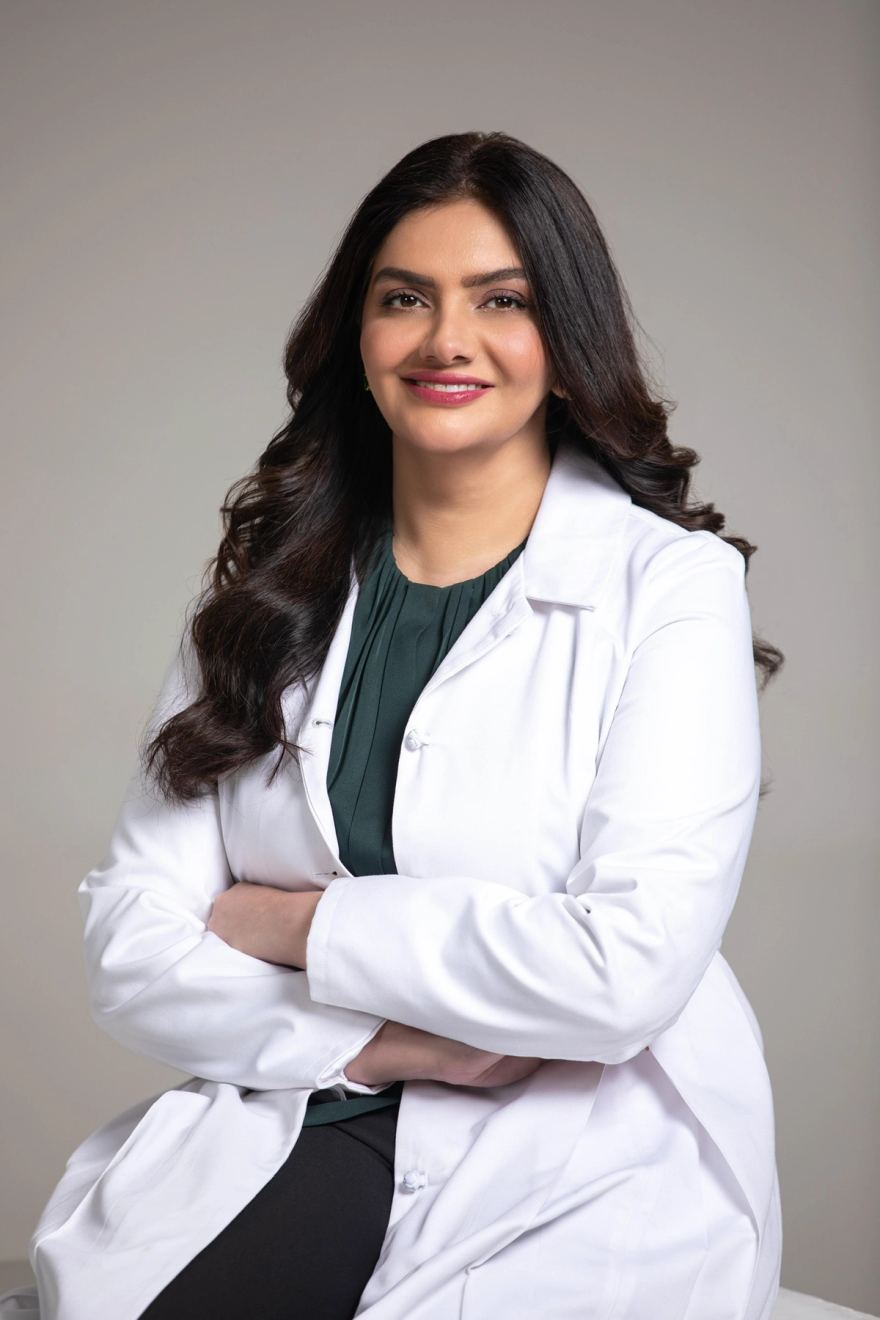
Dr. Sabeen Munib assesses skin type, the depth of the concern, and pigment risk before selecting settings. She separates surface texture and photodamage, which resurfacing treats, from laxity, which it does not, and she calibrates the pass to the individual rather than to a fixed protocol.
Every erbium resurfacing treatment at Spectrum Skin Clinic is performed by Dr. Munib personally. It is a physician procedure, not a delegated one, and there is no fixed-setting template applied across every patient.
Patients searching for erbium or Er:YAG laser resurfacing in Irvine book directly with the physician who treats them, a physician with 15+ years in cosmetic dermatology and aesthetic medicine.
MD
100%
4.97★
2940 nm
Actual patient · Featured case
What Laser Resurfacing Looks Like
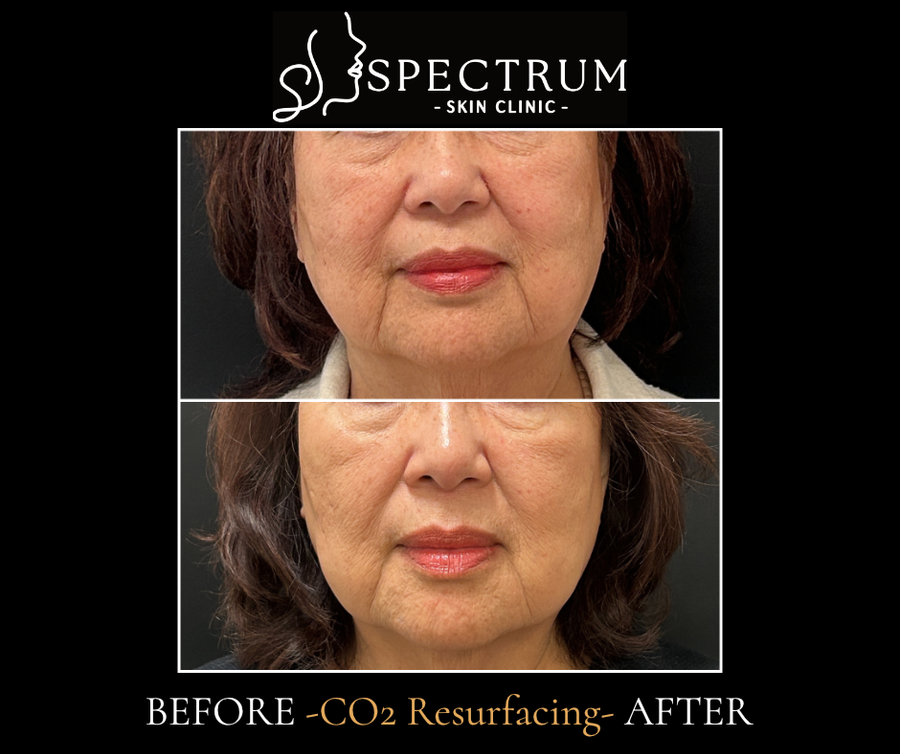
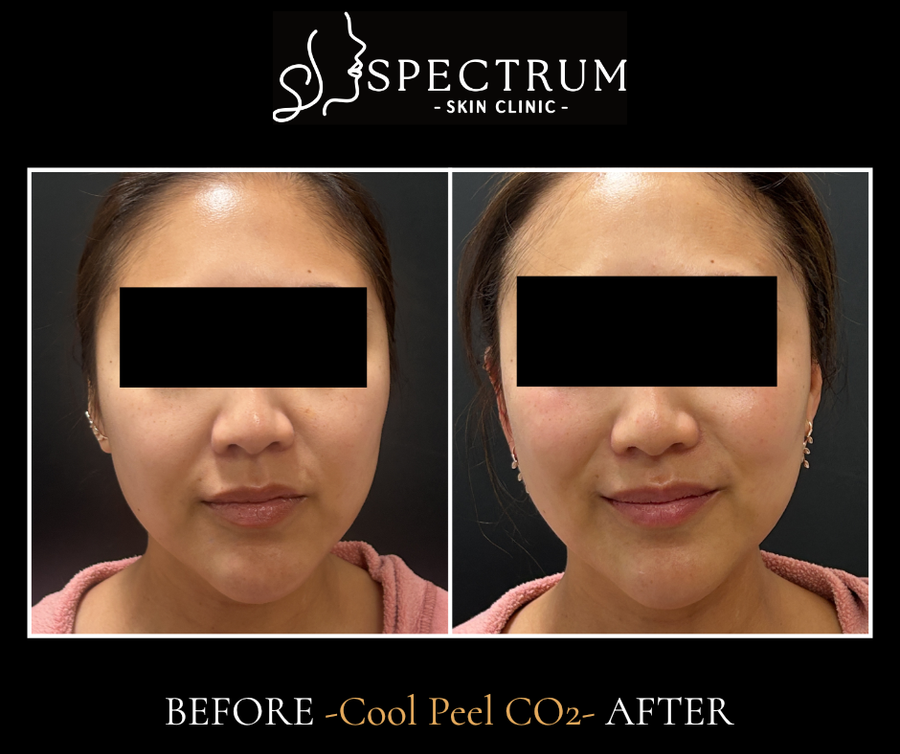
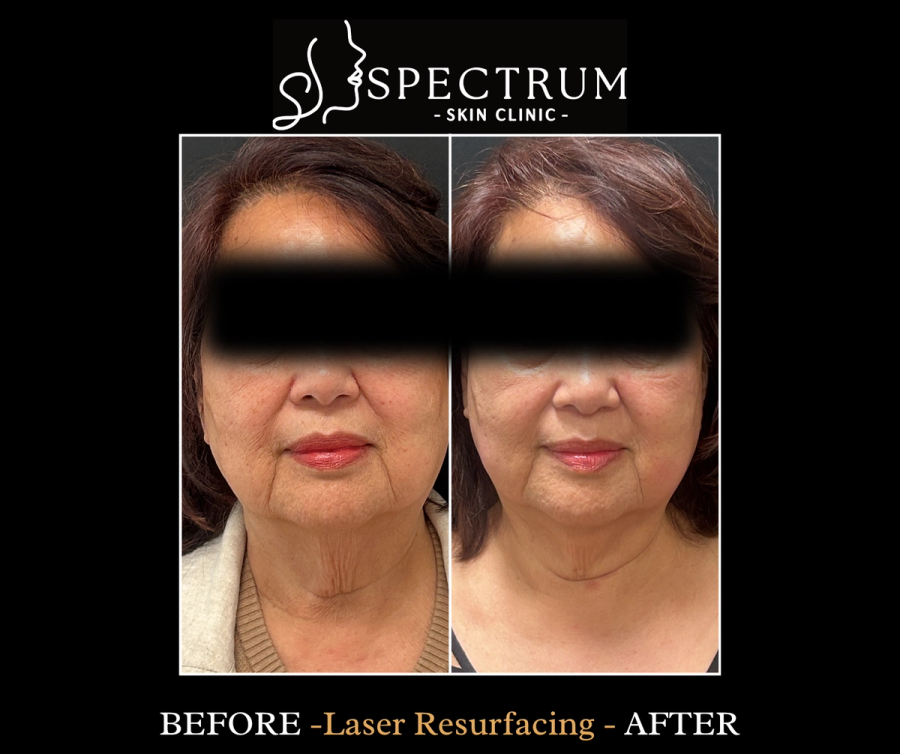
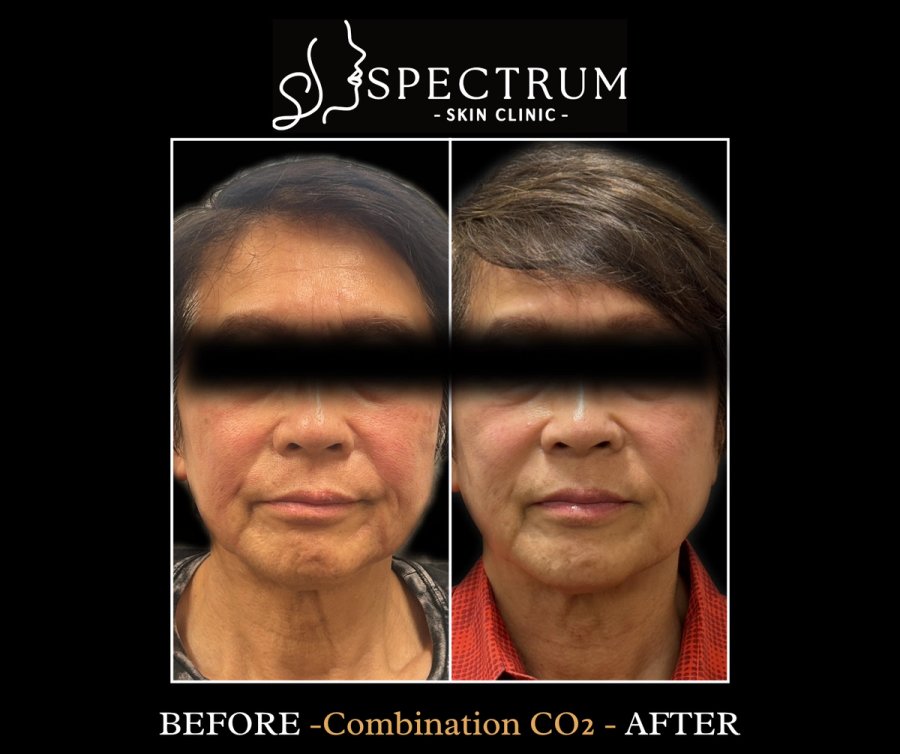
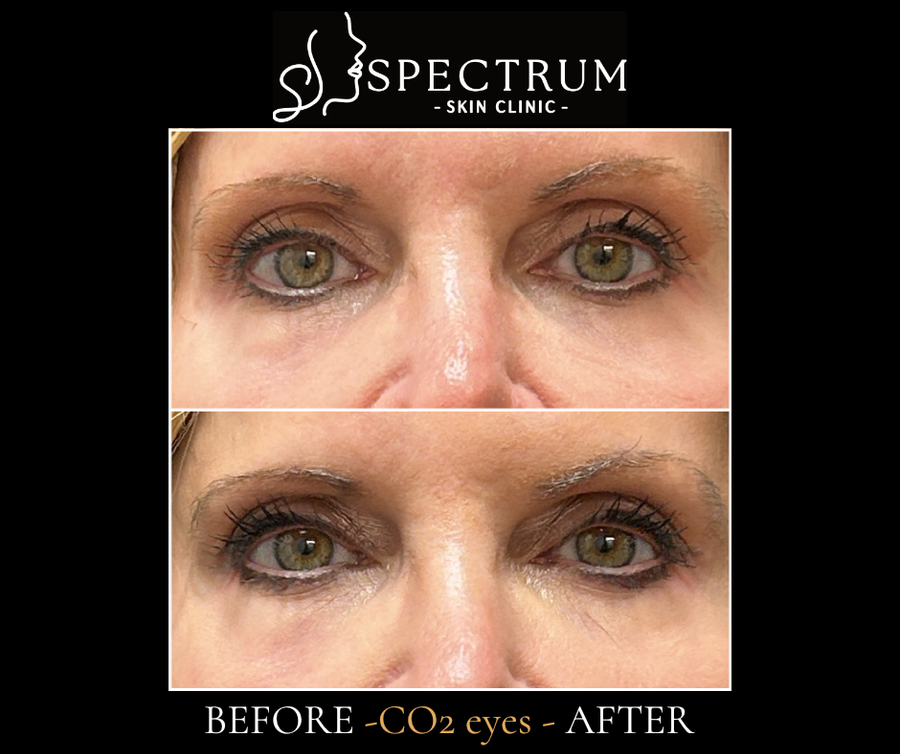
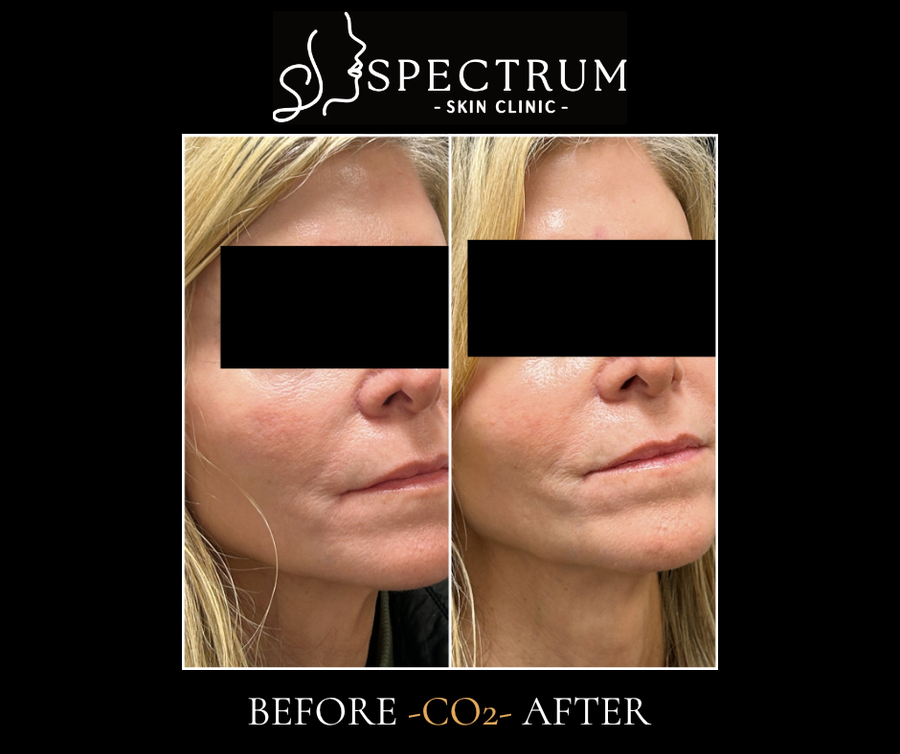
Texture and tone renewal from laser skin resurfacing at Spectrum Skin Clinic, Irvine. This case was treated on the clinic's CO2 platform; erbium targets the same surface concerns with a gentler, lower-downtime profile.
Read the surface, not the lighting. The pores look finer and the tone reads more even, while the underlying facial structure is unchanged. Resurfacing renews the skin's surface; it does not lift or reshape the face.
See All Results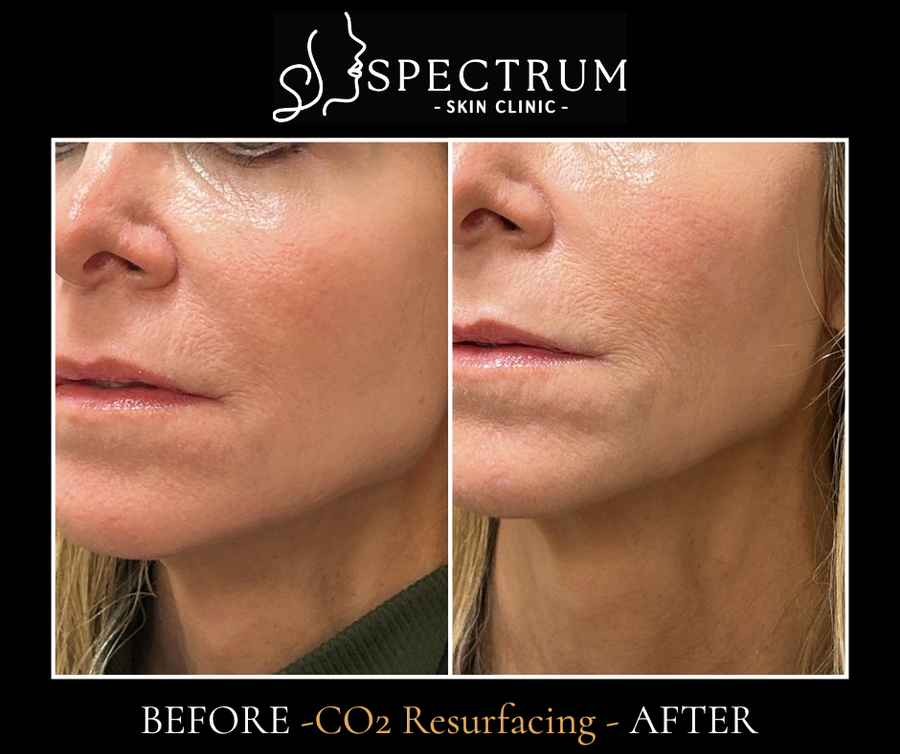
Technique
How the Resurfacing Is Tailored
Erbium resurfacing is not one fixed setting. Dr. Munib sets four things per treatment, in sequence, to match the concern and the skin type. The same laser can deliver a light fractional refresh or a fuller ablative resurfacing depending on how these are chosen.
Depth selection
Sets how much surface skin is ablated, from a light fractional pass to a fuller ablative resurfacing.
Coverage and density
Controls how much of the surface is treated in a pass and how aggressive the renewal is.
Cooling and recovery planning
Protects surrounding tissue during treatment and sets the healing timeline before the first pass.
Skin-type adjustment
Lowers the risk of post-treatment pigment change in deeper or pigment-prone skin.
45–90 min
Including numbing time. Deeper ablative settings take longer in the chair and carry a longer recovery than a light fractional pass.
Before & After
Laser Resurfacing Before and After: Real Patient Results
Every result below was treated personally by Dr. Sabeen Munib at Spectrum Skin Clinic, Irvine. These cases were treated with laser skin resurfacing, with the device selected per skin; erbium addresses the same texture, line, and photodamage concerns with a gentler, lower-downtime profile. Each opens the full case with its treatment noted.
How Erbium (Er:YAG) Laser Resurfacing Works
Erbium resurfacing delivers energy at 2940 nm, a wavelength strongly absorbed by water in the skin. That energy ablates precise micro-layers of the surface and creates a controlled healing response. As the skin repairs, it builds new collagen, which is what smooths texture, softens fine lines, and evens tone over the weeks and months that follow.
Depth and density decide the result more than anything else. A light fractional pass treats a fraction of the surface at a time for a gradual, lower-downtime refresh. A fuller ablative pass resurfaces a larger portion of the surface for a stronger change and a longer recovery. The concern and the skin type set which end of that range is appropriate.
Erbium is chosen when precision and a shorter recovery matter. Because the wavelength is absorbed superficially, it removes thin layers with limited heat spread into surrounding tissue. Dr. Munib selects erbium over a deeper laser when the concern is early to moderate and the patient wants meaningful renewal without the downtime of a fuller CO2 treatment.
Why the Er:YAG Wavelength Is More Precise
The 2940 nm erbium wavelength sits near the peak absorption of water, so almost all of its energy is spent ablating a thin surface layer rather than heating deeper tissue. CO2 at 10600 nm is absorbed less avidly by water and penetrates further, spreading more heat. That difference is why erbium generally means cleaner, more controlled micro-layer removal and a shorter recovery.
Precision is also what protects the result. Limited heat spread reduces the collateral thermal injury that can drive prolonged redness and pigment change, particularly in deeper skin tones. It is not risk-free, but the more superficial absorption gives the physician a more controlled tool for early and moderate concerns.
Is this the right tool?
Erbium vs. CO2 vs. Waiting: Which Fits Which Skin
Not every texture or aging concern is an erbium concern. Some are better served by a deeper laser, and some are not resurfacing concerns at all. This is how Dr. Munib sorts them at consultation.
Treatment planning
Combined Approaches
Candidacy
Who May Be a Candidate
Erbium resurfacing may suit patients with early to moderate fine lines, sun damage, uneven texture, enlarged pores, dullness, mild pigment irregularity, or shallow atrophic acne scars, who want meaningful renewal with a manageable recovery.
Whether it is appropriate depends on the depth of the concern and the skin type. Whether it should be a light fractional series or a fuller single resurfacing depends on the goal and the patient's tolerance for downtime and pigment risk.
How Dr. Munib decides
Assessment of skin type and pigment risk, the depth of the concern, whether the issue is surface texture or structural laxity, and a depth-and-density plan calibrated to the individual with a conservative approach in pigment-prone skin.
Good fit
Early to moderate fine lines, photodamage, uneven texture, enlarged pores, dullness, and shallow acne scars in a patient who can accommodate a few days of redness and flaking.
Usually not the right tool
Significant laxity or jowling, which resurfacing does not lift. Also weighed carefully: deep or firm scars that may need CO2, and active melasma or a strong tendency to hyperpigment, where a non-ablative route is sometimes safer.
Recovery
What to Expect & Timeline
Downtime tracks depth: roughly two to four days for a light fractional pass and five to seven for a fuller ablative resurfacing. Results build gradually over weeks to months as collagen remodels, and many patients return for maintenance over time.
Informed consent
Documented Risks of Laser Resurfacing
Ablative laser resurfacing has a well-described risk profile. Understanding it is part of an informed consultation, and settings are chosen to keep these risks low.
Prolonged Redness and Swelling
Redness and swelling are expected after resurfacing and usually settle within days. In some patients redness lingers for weeks, more often after deeper ablative settings. Conservative depth selection and diligent aftercare reduce, but do not eliminate, this risk.
Temporary or Lasting Pigment Change
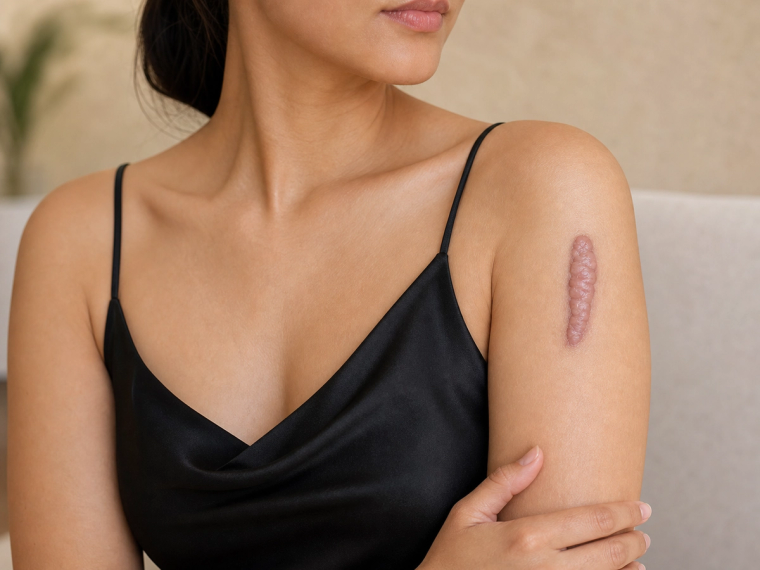
Ablative lasers can cause post-inflammatory hyperpigmentation, a darkening of the treated skin, particularly in deeper skin tones and in melasma-prone skin. Lightening can also occur. Risk is lowered with conservative settings, priming skincare, and strict sun protection, and pigment change is usually temporary but can persist. Candidacy is assessed individually for this reason.
Infection and Scarring (Rare)
Any procedure that disrupts the skin surface carries a small risk of infection, including reactivation of oral herpes, which is why patients with a history of cold sores are pre-treated with antiviral medication. Scarring is rare and is minimized by appropriate settings and by following aftercare. Spreading redness, pus, fever, or severe pain should be reported promptly.
Honest consent names the trade-off. Resurfacing renews the surface and stimulates collagen, but it asks for real downtime and carries a pigment-change risk that is higher in deeper skin tones. A patient who understands the recovery and the risk can decide well. A patient promised a no-downtime miracle is a patient who feels misled when the skin flakes and stays pink for days.
Safety and Who May Not Be a Candidate
Laser resurfacing is generally deferred in pregnancy and while breastfeeding. Patients with a history of oral herpes (HSV) are pre-treated with antiviral medication, as surface trauma can trigger an outbreak. Recent isotretinoin use, active infection, or a tendency to keloid scarring are all evaluated case by case.
Deeper skin tones and melasma-prone skin are treated with extra caution because of the higher risk of pigment change. In some of these patients a non-ablative approach is the safer first step, and Dr. Munib will say so at the consultation rather than proceed with resurfacing that carries avoidable risk.
Sun exposure before and after treatment raises the risk of pigment complications. A period of sun avoidance and daily broad-spectrum protection is part of the plan, not an optional add-on.
Aftercare & Recovery
Pricing
What Affects Your Cost
Erbium resurfacing at Spectrum Skin Clinic starts at $750 for a single area, with course-of-three packages available. Pricing is set by the area treated, whether eyes, face, neck, chest, or hands, and the depth of resurfacing. Dr. Sabeen Munib confirms your exact plan and quote at your consultation.
The total depends on three things. First: the area treated, whether it is a targeted zone or the full face. Second: the depth of resurfacing, since a fuller ablative pass takes more time and recovery than a light fractional one. Third: whether the plan combines other treatments such as IPL or focal scar work.
A short fractional series is priced by session, so staging the treatment across visits gives a decision point between sessions rather than committing to everything at once. Dr. Munib confirms the estimate at the consultation once she has assessed the skin.
Patients comparing laser resurfacing pricing across Irvine and Orange County are often comparing different depths and different providers. At Spectrum the fee covers a physician-performed procedure, planned and delivered by Dr. Munib herself.
Pay monthly with

Results
Will My Skin Look Overdone?
Resurfacing done well looks like better skin, not different skin. The goal is renewed texture, softer lines, and more even tone, while the face keeps its own character. That comes from choosing a depth the skin can heal from cleanly rather than pushing for a dramatic single-session change.
The result also builds gradually. Collagen remodels over weeks to months, so the improvement appears over time rather than all at once. Patients who want more after seeing a light series settle can add depth at a later session, which is a safer path than an aggressive first treatment.
Dr. Munib calibrates the first treatment to what the skin and skin type can tolerate, with a conservative approach in pigment-prone skin. Most patients who describe a past resurfacing as overdone were treated too aggressively for their skin, which is the exact outcome a physician-set depth is designed to avoid.
Explore
Related Treatments
Fractional CO2 Laser
When photodamage or scarring runs deeper than erbium is built to treat, CO2 resurfacing reaches further, with more downtime.
Laser Skin Resurfacing
The overview page comparing the clinic's laser resurfacing options if you are still deciding which device fits.
CO2 Laser Under Eyes
For crepey lower-eyelid skin specifically, where a focused CO2 approach is often used.
Sublative Resurfacing
A radiofrequency resurfacing option for texture and tone when a non-laser route is preferred, including some pigment-prone skin.
Fotona 4D Laser Skin Tightening
When mild laxity is part of the concern, a tightening-focused laser protocol may fit better than surface resurfacing.
Microneedling for Acne Scars
For atrophic acne scars, microneedling can complement or substitute for laser resurfacing depending on scar type.
Laser and Energy Devices
The full laser and energy roster, and which platform suits which concern.
Patient reviews
What Patients Say
4.97★ across 441 verified Boulevard patient reviews.

Mahjabeen Saeed

Deepak Jadhav

Jamel Neill

Questions
Frequently Asked Questions
For early to moderate concerns, erbium resurfacing offers a favorable trade of result for downtime. It renews texture, softens fine lines, and improves photodamage with a shorter recovery than deeper ablative CO2. Whether it is the right choice depends on the depth of the concern and the skin type, which is what the consultation assesses. Results build gradually as collagen remodels and vary from person to person.
Both are ablative resurfacing lasers, but they are absorbed differently. The Er:YAG erbium wavelength at 2940 nm is absorbed more superficially by water in the skin, so it removes precise micro-layers with less heat spread, which generally means less downtime. CO2 penetrates deeper and delivers more thermal effect, so it reaches deeper photodamage and firmer scars at the cost of a longer recovery. Erbium is the gentler, more precise tool; CO2 is the more aggressive one.
It depends on depth. Lighter fractional resurfacing is often done as a short series of two to five sessions spaced weeks apart. A deeper, fuller ablative resurfacing is sometimes a single session. Dr. Munib sets the plan after assessing the skin and the goal, and results continue to develop between sessions as collagen builds.
Erbium resurfacing stimulates new collagen, which can give a modest firming and smoothing of the surface over time. It is not a treatment for significant laxity or jowling. Loose skin is a structural problem that surface resurfacing does not lift, and a tightening-focused device or a surgical consult is the more honest route for that concern.
Erbium resurfacing at Spectrum Skin Clinic starts at $750 for a single area, with course-of-three packages available. The total depends on the area treated, whether eyes, face, neck, chest, or hands, and the depth of resurfacing. Dr. Sabeen Munib confirms the figure at your consultation.
Downtime tracks the depth. A lighter fractional pass typically involves redness and flaking for about two to four days. A fuller ablative resurfacing runs closer to five to seven days of redness, peeling, and pinkness that fades gradually. Sun avoidance and daily protection during healing are essential.
Topical numbing is applied for 30 to 60 minutes before treatment, and most patients describe the sensation during treatment as heat with a prickling feeling. Lighter fractional settings are more comfortable than deeper ablative passes. Aftercare focuses on keeping the skin protected and moist while it heals.
Erbium resurfacing is used for fine lines, sun damage and photodamage, uneven texture, dullness, tone and mild pigment irregularity, enlarged pores, and shallow atrophic acne scars. It is not a treatment for deep laxity, which is a structural concern rather than a surface one.
Ablative lasers carry a higher risk of post-inflammatory hyperpigmentation in deeper skin tones, so settings are chosen conservatively and priming skincare is sometimes used beforehand. Erbium's more superficial absorption can make it a comparatively controlled option, but candidacy is assessed individually, and for melasma-prone skin a non-ablative route is sometimes safer.
Dr. Sabeen Munib, MD performs every erbium resurfacing treatment personally. It is a physician procedure, not delegated to a technician. She is a physician with 15+ years in cosmetic dermatology and aesthetic medicine, and she sets the depth and settings for each patient herself.
Resurfacing does not stop aging or future sun exposure. The renewed texture and tone can last for years with good sun protection and skincare, but ongoing photodamage and the natural aging process continue. Many patients return for maintenance resurfacing over time. Results vary and are not guaranteed.
Erbium resurfacing can improve shallow, atrophic acne scars by renewing the surrounding surface. Deeper or firmer scars often respond better to CO2 resurfacing or to focal tools such as microneedling with TCA CROSS on individual scars. The scar type drives the choice, which is assessed at consultation.
Er:YAG stands for erbium-doped yttrium aluminum garnet, the crystal that produces the erbium laser's 2940 nm wavelength. That wavelength is strongly absorbed by water at the skin surface, which is why erbium ablates thin, precise layers with limited heat spread compared with deeper lasers.
Yes. Spectrum Skin Clinic is at 114 Pacifica, Suite 280, Irvine, CA 92618, near the Irvine Spectrum, and patients travel from Newport Beach, Tustin, Costa Mesa, Lake Forest, and across Orange County for laser resurfacing performed by a physician.