Fotona 4D Cost in Irvine, CA: What to Expect and What Drives the Price
Medically advised by Dr. Sabeen Munib, MD.
If you are researching Fotona 4D cost in Irvine, you have probably noticed that published prices are all over the map. One clinic lists a single session near seven hundred dollars, another quotes a package of three for well over three thousand, and a few list nothing at all and simply ask you to book a consultation. That spread is confusing, and it is fair to want a straight answer before you commit.
This guide explains the typical Fotona 4D price range, what you are actually paying for, and the specific factors that move the number up or down. We treat pricing the way we treat everything else at our Irvine practice: honestly, without hype, and grounded in what the treatment can and cannot do.
What Fotona 4D Actually Is
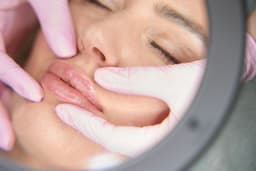
The Fotona 4D facelift is a non-surgical treatment that uses an Er:YAG and Nd:YAG laser platform to work across four modes in a single full-face session. Each mode targets a different layer of the skin. One mode works from inside the mouth to warm the tissue around the nasolabial folds and cheeks, another delivers deep bulk heating for lifting and collagen stimulation, a third addresses pigment and vascular concerns on the surface, and the final SMOOTH mode resurfaces the outer skin to soften fine lines.
The goal is gradual collagen remodeling that may lead to firmer, tighter skin with very little downtime. Because it is a laser treatment rather than surgery, results build slowly over weeks and months, and maintenance sessions are usually part of the plan. The same Fotona laser platform is also used for other services such as laser hair removal, which is one reason its pricing structure can look complex.
The Typical Fotona 4D Cost Range
Across the United States, a single Fotona 4D session that covers the full face commonly falls somewhere between seven hundred and two thousand dollars. Like most laser treatments, the price reflects the time, the platform, and the provider. Many clinics price a single facelift session in the eight hundred to fifteen hundred dollar band, and packages of three sessions often land between two thousand five hundred and four thousand dollars. Prices in higher-cost metro areas tend to sit toward the upper end, while treatments that add the neck or combine Fotona 4D with laser hair removal or other services carry their own line items.
We want to be clear that we are giving you ranges, not a fixed number. Any clinic that quotes an exact price sight unseen is guessing, because the right plan depends on your skin, your goals, and how many treatments you actually need. The only accurate Fotona 4D cost for you comes from an in-person consultation.
What Drives the Price Up or Down
Several factors explain why one Fotona 4D quote looks so different from another.
Number of sessions. A single session and a package of three are very different investments. Collagen remodeling is cumulative, so many patients see the best results from a short series spaced several weeks apart. Packages usually lower the per-session price, which is why the total looks larger while the value per treatment improves.
Treatment area. A full-face session costs more than a single targeted area, and adding the neck, chest, or a specific concern such as wrinkles around the mouth increases both time and price. Some patients also ask to add laser hair removal on the same platform or to focus on volume loss and skin laxity, and each add-on carries its own line item. The more of the face and body we treat, the longer the session runs.
Provider and setting. This is the factor most price comparisons ignore. A treatment performed and overseen by a physician is priced accordingly, and that difference reflects training, judgment, and the ability to screen for skin conditions that change the plan. Dr. Sabeen Munib is a family medicine physician who oversees care at our Irvine practice, and we think medical oversight is worth understanding when you compare a spa price against a physician-led one.
Your skin and your goals. Skin tone, laxity, pigment, and the results you are hoping for all shape how many sessions make sense. Someone treating early laxity and dull skin may need fewer sessions than someone addressing deeper concerns, and that changes the total.
Geography. Irvine and the surrounding Orange County market sit in a higher cost-of-living area than many parts of the country, so local pricing often reflects that. Comparing an Irvine quote to a national average is not always apples to apples.
Why We Route You to a Consultation
We do not publish a single flat price for Fotona 4D because doing so would be misleading. The responsible way to quote this treatment is to see your skin first, talk through your goals, confirm you are a good candidate, and then build a plan with a real number attached. During a consultation we assess your skin, explain how many sessions we would recommend, describe the expected recovery, build a treatment plan, and give you a personalized quote you can actually plan around. If Fotona 4D is not the right fit, we will tell you that too.
What Results and Downtime to Expect
This facial treatment is popular in part because most patients return to normal activity quickly. Side effects are usually mild, and you may notice temporary redness or a warm, flushed feeling for a few hours to a day or two after treatment. Visible improvement in skin tightening and texture tends to appear gradually over the weeks that follow as new collagen forms, and the effect often continues to develop across several months. Many patients describe a reduction in the look of fine lines and a firmer feel to the face. Because collagen naturally declines with age, maintenance treatments help preserve the outcome over time. Individual results vary, and no laser treatment offers a permanent or guaranteed effect. We would rather set an honest expectation than promise something the technology cannot deliver.
Is Fotona 4D Worth the Money?
Whether Fotona 4D is worth it depends on what you want. For patients seeking non-surgical skin tightening and facial rejuvenation with minimal downtime, and who understand that results are gradual and build over a series, many find the treatment a reasonable option. It is not a substitute for surgery when significant laxity is present, and it will not stop the aging process. Understanding the cost, the plan, and the realistic results in advance is the best way to decide whether it fits your goals and your budget.
Frequently Asked Questions
Is the Fotona 4D worth the money?
For the right candidate, many patients find Fotona 4D worthwhile because it offers non-surgical skin tightening and rejuvenation with little downtime. It works best when you understand that results are gradual, build over a series of sessions, and need maintenance. It is not a replacement for surgery when laxity is advanced.
How long does Fotona 4D last?
Results are not permanent. Many patients see improvement that develops over several months and may last around a year or so before maintenance is considered, though this varies with age, skin, and lifestyle. Because collagen continues to decline naturally, periodic maintenance sessions help preserve the effect.
What is better, Fotona 4D or Morpheus8?
They work differently. Fotona 4D is a laser treatment often chosen for early laxity and overall rejuvenation with little recovery, while Morpheus8 uses radiofrequency energy and may be preferred for texture and scarring. The better choice depends on your skin and goals, which is what a consultation is for.
Which is better, Fotona 4D or Ultherapy?
Both aim at non-surgical tightening but use different energy. Fotona 4D uses laser across four modes, while Ultherapy uses focused ultrasound to reach deeper layers. Neither is universally better, and the right option depends on your concerns and an in-person assessment.
Is Fotona better than microneedling?
Fotona and microneedling target the skin differently. The laser can address pigment and deeper tissue heating, while microneedling has its own strengths for texture. Many treatment plans use one approach or the other based on the specific goal rather than one being better overall.
How much does Fotona 4D cost in Irvine?
Pricing depends on the number of sessions, the area treated, and your plan. A single full-face session commonly falls within a range rather than a fixed number, and packages change the total. The most accurate cost comes from a consultation at our Irvine practice.