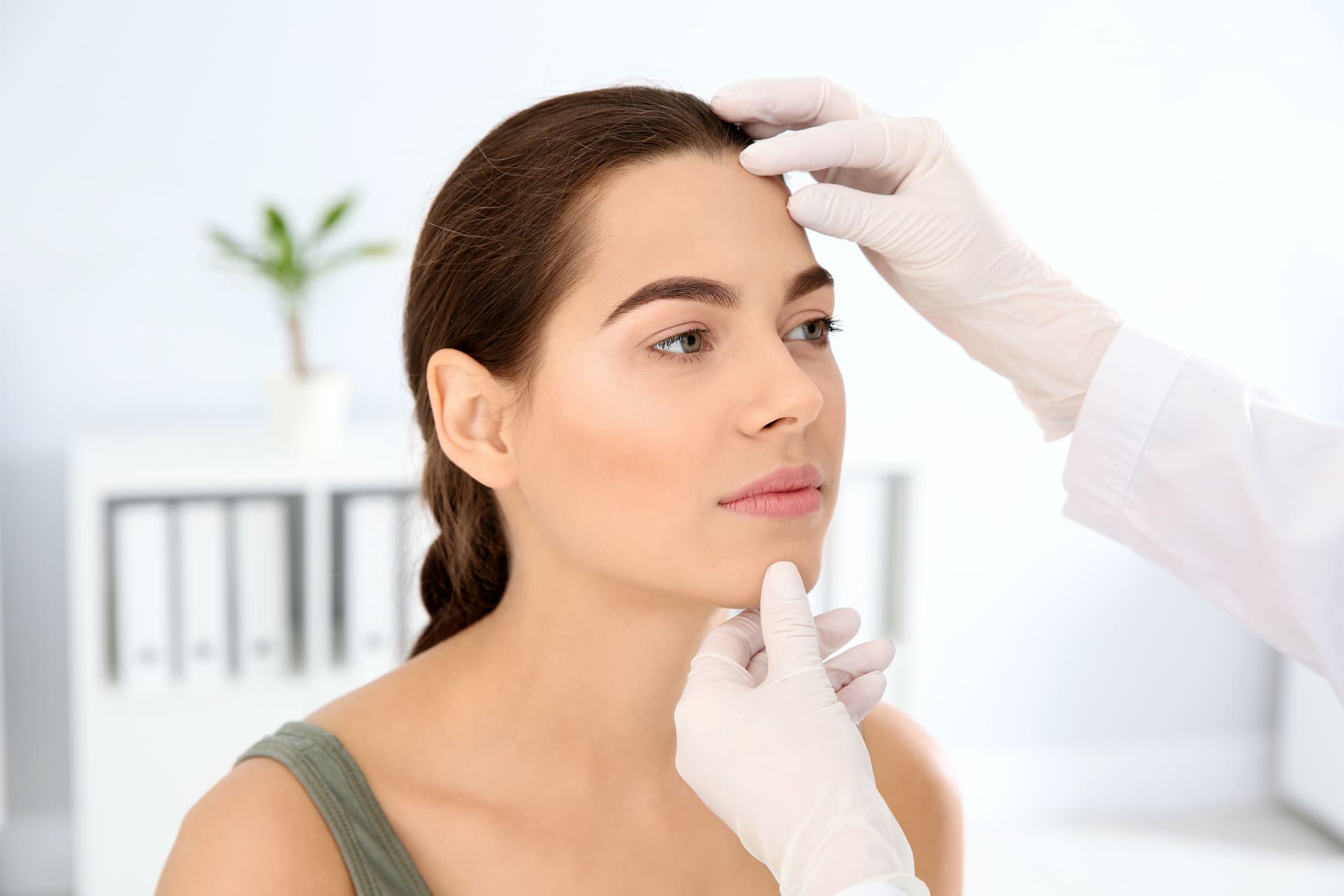
Temple Filler in Irvine, CA
Temple filler in Irvine, CA — FDA approved dermal filler (Juvéderm Voluma XC, Sculptra) for hollow temples. Performed by Dr. Sabeen Munib, MD.
Temple Filler in Irvine, CA: Restoring Hollow Temples, Brow Support & Midface Lifting
Temple filler at Spectrum Skin Clinic restores volume to hollow temples with conservative, anatomy-led dosing performed personally by Dr. Sabeen Munib, MD. The temple is a high-risk zone, the superficial and middle temporal arteries run through it, and an injection placed wrong can affect vision. Cannula technique is the standard of care.
Patients in Irvine and across Orange County come to Spectrum for physician-led temple treatment that respects the vascular anatomy while restoring the lateral facial frame.

Spectrum at a glance
| Starting price | Google rating | Patient reviews | Physician-performed | Experience |
|---|---|---|---|---|
| From $850 / syringe | 5.0★ Google | 441+ across platforms | 100% by Dr. Sabeen Munib, MD | 15+ years |
Spectrum Skin Clinic — Irvine
114 Pacifica, Suite 280, Irvine, CA 92618 · (949) 259-4790
Why patients choose Spectrum Skin Clinic for Temple Filler
The temple is one of the highest-risk zones on the face for filler. The superficial temporal artery runs across the temporal fossa under thin skin, and the middle temporal artery runs deeper. Both connect to the retinal circulation through retrograde flow. An aggressive bolus placed into either vessel can cause permanent vision loss. Conservative dosing with a blunt cannula at the supraperiosteal plane is the standard of care.
Dr. Sabeen Munib palpates the temporal fossa, identifies the temporal crest, and marks vascular landmarks before any injection. She accounts for prior filler in adjacent areas (cheek, brow, forehead), the depth of the existing hollow, and the patient's bone structure rather than dosing to a fixed protocol.
Every Temple Filler treatment at Spectrum Skin Clinic is performed by Dr. Munib personally. No delegation, no nurse-injector protocol, no spa-style dose templates.
Medically advised by Dr. Sabeen Munib, MD.

How Temple Filler Works
Temple filler replaces volume in the temporal fossa, the concave area between the lateral brow and the hairline. As the face ages, fat pads in the deep and superficial temporal compartments atrophy, and bone resorption reduces the underlying frame. The result is a hollow that pulls the lateral brow down and tilts the eye area into a tired look.
Placement at the supraperiosteal plane, directly on the bone, deep to all vasculature, restores frame volume while minimizing the risk of vascular injury. Hyaluronic acid fillers (Juvéderm Voluma XC, Restylane Lyft, RHA 4) integrate with tissue over 4 to 6 weeks. Sculptra stimulates collagen over 3 to 6 months. The choice depends on hollow depth, skin quality, and how much frame restoration is needed.
Why Precision Matters at the Temple
The temporal anatomy concentrates more vascular risk per square centimeter than any other facial filler zone. The superficial temporal artery and its frontal branch sit just under the skin. The middle temporal artery sits deeper, between the temporalis muscle layers. Both have retrograde connections to the ophthalmic artery, and a high-pressure bolus into either has been reported to cause blindness.
Cannula technique reduces vascular risk by displacing rather than piercing vessels, and supraperiosteal placement keeps the product deep to the vasculature. Conservative initial dosing (typically 0.5 to 1 mL per side at first session) with a planned 4-to-6-week recheck is the safer path for a first-time temple patient. Aggressive single-session dosing raises the risk of bolus-related complications and over-correction.
Where Temple Filler Is Injected
Temple filler is placed at one to three points per side along the supraperiosteal plane of the temporal fossa. Entry sits one to two centimeters lateral and superior to the lateral canthus. Cannula entry is from a single distal point that avoids the path of the superficial temporal artery.
Typical first-session dosing is 0.5 to 1 mL per side, with total starting volume of 1 to 2 mL. Filler choice depends on the hollow's depth and the patient's response to prior treatments. Juvéderm Voluma XC and Restylane Lyft are common HA choices for moderate hollows. Sculptra is used when collagen stimulation over months is preferred to immediate volume.

Combined Approaches
| Concern | Often pairs with | Why |
|---|---|---|
| Hollow temple with brow descent | Temple Filler + lateral brow Botox | Restoring temporal volume supports the lateral brow; Botox relaxes brow depressors so the brow can sit higher |
| Hollow temple with midface flattening | Temple Filler + lateral cheek filler | Both areas form the lateral facial frame; treating one without the other can create a step-off |
| Hollow temple with thin skin and visible vasculature | Sculptra + collagen-stimulator protocol | HA fillers under thin skin can show as Tyndall blue; biostimulators may be preferred when skin transparency is the limiting factor |
| Hollow temple with prior cheek over-filling | Reassessment and possible dissolve before adding | Excess lateral cheek filler can create the illusion of a hollow temple; treating the temple without correcting the cheek can worsen the imbalance |

Who May Be a Candidate
Temple filler may suit patients with visible temporal hollowing, lateral brow descent from frame loss, or a tired upper-face appearance that is not corrected by under-eye or brow treatments alone.
Whether it is appropriate, and whether it should be combined with other treatments, depends on individual anatomy, vascular history, and the depth of the existing hollow.
Good fit: age-related volume loss with intact bone structure, mild to moderate temporal concavity, no history of prior temple filler complications.
Usually not enough on its own: severe global midface volume loss where the temple is one of many areas needing restoration. Also limited: significant brow ptosis driven by skin laxity rather than volume loss.
How Dr. Munib decides: palpation of the temporal fossa, identification of the temporal crest and vascular landmarks, review of prior filler history, and a conservative first-dose calibration with a 4-to-6-week recheck.

What to Expect & Timeline
A temple filler appointment at Spectrum Skin Clinic takes 20 to 30 minutes. Dr. Munib palpates the temporal fossa, marks vascular landmarks, and places topical anesthesia. A blunt cannula is introduced at a single distal entry point per side, and the filler is deposited at the supraperiosteal plane in small, slow increments.
Immediate volume restoration is visible at the end of the session. Mild swelling resolves within 48 to 72 hours. Hyaluronic acid integrates with tissue over 4 to 6 weeks; the final temple shape is in place by week 6. Sculptra results build gradually over 3 to 6 months as collagen forms.
Duration depends on product: HA fillers last 12 to 18 months at the temple; Sculptra results last 18 to 24 months. With consistent maintenance, the dose required at each subsequent session tends to decrease as the temporal compartments remain partially supported.

Safety and Who May Not Be a Candidate
Temple filler is avoided in pregnancy and is generally deferred during breastfeeding. Patients with active autoimmune disease, recent dental work in the upper jaw, or active skin infection at the injection site are not candidates until those conditions resolve. Patients with a history of vascular events from prior filler are referred for vascular consultation before any further treatment.
The most serious adverse outcome specific to temple filler is vascular occlusion of the superficial or middle temporal artery. Retrograde flow from either to the ophthalmic artery has been reported to cause vision loss in rare cases. Cannula technique, supraperiosteal placement, and slow injection markedly reduce but do not eliminate this risk. All staff at Spectrum carry hyaluronidase for immediate dissolve in the event of vascular compromise.
Patients with a history of facial trauma, prior temple surgery, or significant asymmetry of the temporal anatomy are evaluated case-by-case. A consultation also confirms whether temple filler is appropriate for patients with very thin temporal skin, where the Tyndall effect or product visibility may limit results.
When Temple Filler Goes Wrong — Documented Risks
The temple has more vascular risk per square centimeter than any other filler zone. These three categories of complications are documented in the literature; understanding them is part of an informed consultation.

Vision Loss from Vascular Embolism
Retrograde embolization from the superficial or middle temporal artery to the ophthalmic artery has been reported to cause partial or complete vision loss. Most documented cases involve a high-pressure bolus delivered through a sharp needle. Cannula technique, slow injection, and supraperiosteal placement markedly reduce, but do not eliminate, this risk. Immediate recognition and hyaluronidase administration may reverse partial vascular events.

Bruising, Swelling, and Tyndall Effect
The temporal fossa has a rich superficial vascular plexus. Bruising at the cannula entry or along the deposition path is common and typically resolves within 7 to 14 days. The Tyndall effect, a blue-grey discoloration through thin skin, can appear when HA filler is placed too superficially. Both are addressable with hyaluronidase if persistent.
Overcorrection and Convex Temple
A feminine temple should generally remain flush to mildly concave. Convexity through the temple can change facial character in ways that are difficult to reverse without dissolve. Conservative first-session dosing with a 4-to-6-week recheck is the safer path; aggressive single-session correction raises the risk of over-volumizing the lateral frame.

Aftercare & Recovery
No downtime. Most patients return to normal activity the same day.
First few hours: stay upright; avoid pressing or massaging the treated area; do not lie flat or face-down.
First 48 hours: skip strenuous exercise, saunas, and alcohol to limit swelling and bruising.
First 2 weeks: report any vision changes, severe pain, skin blanching, or unusual bruising immediately. These may indicate vascular involvement and require prompt evaluation.
Full result: HA results settle by week 6; Sculptra results build over 3 to 6 months.

What Affects Your Cost
Priced per syringe. Temple filler typically uses 0.5 to 1 mL per side at the first session, with total volumes of 1 to 2 mL across both temples.
Total depends on three factors. First: which filler is selected (HA vs collagen-stimulator). Second: how much volume is needed bilaterally. Third: whether the plan includes combination with another area such as lateral brow Botox or cheek filler.
First-time patients are started at the lower end of the volume range with a 4-to-6-week recheck before any additional product is placed. Dr. Munib confirms the estimate at the consultation.

Can Temple Filler Lift the Brow and Open the Eye Area?
Restoring temporal volume supports the lateral brow at its frame, which can produce a mild but real lift of the lateral brow and a less hooded upper-eye appearance. The effect is most visible in patients whose lateral brow descent is driven by temporal volume loss rather than skin laxity.
The lift is anatomical, not surgical. It restores the support the brow had before the temporal compartments atrophied, rather than physically pulling tissue upward. Patients with significant brow ptosis from dermatochalasis or skin laxity may need additional treatment (Botox, RF tightening, or surgical referral) for full correction.
Dr. Munib evaluates the brow-temple relationship at consultation and discusses realistic expectations for the lateral lift effect based on the patient's anatomy.
Related Treatments
Temple filler is one of several lateral-frame and midface volume treatments at Spectrum Skin Clinic. Cheek filler restores the midface frame and often pairs with temple work for full lateral support. Brow Botox supports brow position when the temporal volume restoration is paired with a brow lift effect. Under-eye filler addresses the tear trough when periorbital hollowing is part of the upper-face concern.
When a different volume strategy is preferred, Sculptra uses biostimulator chemistry to build collagen over months rather than placing volume immediately. When temporal hollowing is part of a broader volume-loss pattern, facial balancing may be the appropriate scope. View Spectrum's before-and-after gallery for results across the dermal-filler menu.
Book Temple Filler in Irvine, CA
Schedule a consultation with Dr. Sabeen Munib to assess temporal hollowing, vascular landmarks, and prior filler history before any treatment plan is built. Cannula technique and conservative first-session dosing are standard.
Patient Reviews
4.97★ · 441 Patient Reviews

I had an amazing experience with Dr. Munib, who performed my aesthetic treatments including Pico laser, Botox, a glassy facial, Botox for migraine, and HIFU. Every procedure was done with great care, precision, and professionalism, and the results exceeded my expectations. Dr. Munib is incredibly knowledgeable and takes the time to explain everything, making me feel comfortable and confident throughout the process. Her expertise truly shows in her work. The staff was extremely accommodating, friendly, and professional, which made the entire experience even better. On top of that, the prices were very reasonable for the quality of service provided. I highly recommend Dr. Munib to anyone looking for outstanding aesthetic treatments and excellent patient
Mahjabeen Saeed
3 months ago

I had an excellent experience with Dr. Sabeen Munib at Spectrum Skin Clinic in Irvine. I visited her for acne scar treatment and underwent three subcision sessions spaced six weeks apart. Throughout my treatment, I was consistently impressed by her expertise, attention to detail, and compassionate approach. Dr. Munib took the time to carefully evaluate my scars, explain the procedure, and answer all of my questions before starting. During each procedure, she made sure I was comfortable and informed every step of the way. Her technique, skill and experience with acne scar subcision gave me complete confidence that I was in capable hands. The entire team at Spectrum Skin Clinic was professional, friendly, and supportive throughout the process. Although acne scar improvement takes time and healing, I appreciate that Dr. Munib focuses on achieving the best possible long-term results rather than making unrealistic promises. She explained what to expect during recovery and emphasized that collagen remodeling happens gradually. If you're looking for a knowledgeable and caring physician for acne scar treatment or subcision, I highly recommend Dr. Sabeen Munib Spectrum Skin Clinic, Irvine. I truly appreciate the care, professionalism, and dedication I received and would not hesitate to recommend her to anyone seeking advanced scar treatment.
Deepak Jadhav
2 months ago

After several aesthetic nurses told me I was allergic to filler dissolver, Dr. Munib took a careful, evidence-based approach. She used ultrasound to locate my migrated lip filler, tested a small area first, and explained I was reactive—not allergic. She dissolved a small test area before safely treating my upper lip. Throughout the process she was gentle, thorough, and educational. It’s a long drive for me, but her knowledge and expertise make it absolutely worth it.
Jamel Neill
a month ago

Truly an amazing experience with Dr. Munib! She really listened to my concerns with my nose filler and was such an expert on mapping out where the old filler was. I’ve have dissolver before and was promised results that were never met. I wish I went here sooner! She knew exactly where it was and feel so confident in her hands. Thank you for getting my confidence back.
Jessica napoles
a month ago
Related Blogs
Personalized Aesthetic & Regenerative Solutions Designed to Heal, Enhance & Restore Naturally



Frequently Asked Questions
Got questions? We’re here to help! Find out what we offer, how to book an appointment, where we’re located, and more. We treat all age groups and offer skincare products too.