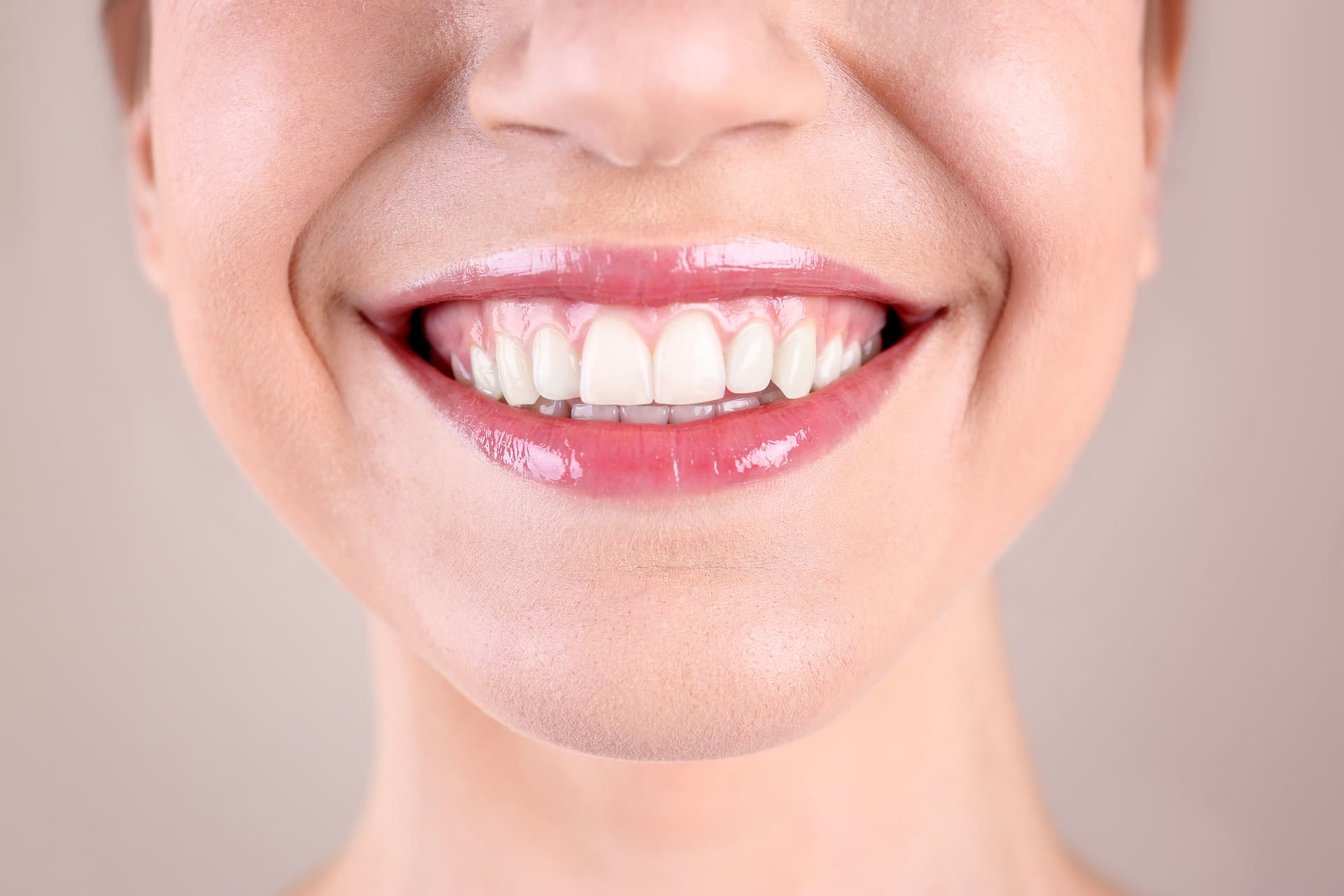
Gummy Smile Botox in Irvine, CA — Reducing Excess Gum Show
Gummy smile Botox in Irvine, CA — relaxing the lip-elevator muscles to reduce gum show. Sabeen Munib, MD.
Gummy Smile Botox in Irvine, CA: Reducing Excess Gum Show
Gummy smile Botox uses neuromodulator placed into the levator labii superioris alaeque nasi (LLSAN), the small muscle that pulls the upper lip up and exposes more than 3 mm of gum tissue on smile. By partially relaxing this muscle, the upper lip rests slightly lower when you smile, reducing visible gum show without changing the gums themselves.
At Spectrum Skin Clinic in Irvine, Sabeen Munib, MD treats the cause of muscular gummy smiles, not skeletal ones, not gum tissue overgrowth, not short tooth crowns. Whether Botox will work for you depends on whether the gum show is muscular in origin, which is established at consultation, on dynamic smile.
Every gummy smile injection is performed personally by Sabeen Munib, MD.

Spectrum at a glance
| Patient rating | Reviews | Performed by | Treatment | Approach |
|---|---|---|---|---|
| 5.0★ (441 verified reviews) | 441 | Sabeen Munib, MD | Botulinum toxin, 4–6 units typical | 100% physician-performed |
Spectrum Skin Clinic — Irvine
114 Pacifica, Suite 280, Irvine, CA 92618 · (949) 259-4790
Free parking. Physician-led practice. By appointment only.
Why patients choose Spectrum Skin Clinic for gummy smile Botox
Patients choose Spectrum Skin Clinic for gummy smile Botox because every injection is performed personally by Sabeen Munib, MD, a physician with 15+ years in aesthetic medicine in Orange County. The LLSAN sits a few millimeters above the upper lip border, paired symmetrically across the midline, and it sits very close to the other elevators of the upper lip. A small change in injection depth or placement shifts which muscle is treated and which is not. The difference between a balanced gummy smile reduction and an asymmetric, frozen, or elongated upper lip is anatomical precision, not product.
Dr. Munib's approach starts with what type of gummy smile you actually have. A muscular gummy smile responds to Botox; a skeletal gummy smile (vertical maxillary excess) does not and is referred to maxillofacial surgery; and a dental-tissue gummy smile (excess gingival coverage or short clinical crowns) is referred to periodontal gum contouring or restorative crown lengthening. When Botox is appropriate, dosing is split conservatively across the LLSAN at the Yonsei point, results are reassessed at two weeks, and any asymmetry is touched up before it settles. Gummy smile Botox is not delegated at Spectrum because the muscle the needle is aiming at is millimeters from two adjacent muscles that should not be treated; that decision is made under the needle, not in advance.
What this rules out: pushing the largest dose your budget allows; treating both gummy smile and lip flip on the first visit before knowing how the LLSAN responds in your anatomy; over-correcting to chase a celebrity reference. Conservative, additive treatment with photographs and a two-week assessment is the practice posture.
Medically reviewed by Sabeen Munib, MD.

Gummy Smile Botox vs. Lip Flip: How They Differ
| What it treats | Gummy Smile Botox | Botox Lip Flip |
|---|---|---|
| Target muscle | LLSAN (lifts upper lip) | Orbicularis oris (border of the lip) |
| Effect on smile | Lip rests slightly lower; less gum show | Upper lip rolls outward; more pink lip shows |
| Best for | Gum show >3 mm on dynamic smile | Thin-appearing upper lip on smile |
| Units (typical) | 2–3 per side; 4–6 total | 2–4 total |
| Duration | 3–4 months | 2–3 months |
| Can they combine? | Yes, in selected patients | Yes, in selected patients |
How Gummy Smile Botox Works
Botulinum toxin temporarily blocks the chemical signal that tells the LLSAN to contract. When the LLSAN is partially relaxed, the upper lip is not pulled as high during smile, so less gum tissue is exposed. The gum tissue itself does not change; only the muscle activity does.
The injection sits superficially at the Yonsei point, a landmark roughly 1 cm lateral to the nasal ala and about 3 mm above the gum line on each side, where the LLSAN, the levator labii superioris, and the zygomaticus minor converge. Dosing is small: 2 to 4 units of botulinum toxin per side is usually enough. Higher doses do not produce a better lift, they produce a longer, thinner, sometimes asymmetric upper lip.
Onset begins around day 3, with the full effect visible at days 10 to 14. Duration is typically 3 to 4 months, after which the gum show gradually returns and retreatment is planned at the appropriate interval.

The Anatomy: Why Three Muscles Matter
Three small muscles converge at the upper lip and are responsible for lifting it during smile. The levator labii superioris alaeque nasi (LLSAN) attaches on the frontal process of the maxilla beside the nose and runs down into the upper lip and the wing of the nostril; when it fires hard, it pulls the upper lip up centrally and tends to expose gum tissue. The levator labii superioris sits lateral and slightly below the LLSAN and lifts the upper lip a bit more laterally. The zygomaticus minor runs from the cheekbone down to the upper lip and contributes to a wider, more lateral smile. The orbicularis oris forms the border of the lip itself and is the target of a separate procedure called a lip flip, not gummy smile Botox.
The three elevators sit close together, a few millimeters apart, which is why precision matters. Treating only the LLSAN softens the gum-show pull without affecting how the upper lip moves laterally during speech or full animation. Treating too deeply or too laterally drifts product into the zygomaticus minor, which can flatten the smile or create asymmetry, the most common complication patients describe as 'uneven results.' Treating too widely or too superficially can affect the levator labii superioris and produce an elongated upper lip that reads as a thin upper lip in photographs.
This is the anatomical reasoning behind conservative, two-point dosing at the Yonsei landmark rather than a higher-dose, broader-coverage pattern. The goal is to reduce the gum-show pull while preserving the natural smile vector, not to immobilize the upper lip.
Injection Sites, Where Gummy Smile Botox Goes
Dr. Munib uses a two-point Yonsei pattern: one injection on each side of the nose, approximately 1 cm lateral to the ala and 2–3 mm above the gum line. The needle is superficial, under the skin, into the upper portion of the LLSAN, not deep into the maxilla or oral cavity.
In selected patients with a wider smile arc or with significant pre-existing asymmetry, a small third midline point may be added to address the central LLSAN attachment, or the injection plane is shifted slightly higher to spare the zygomaticus. The choice depends on resting lip position, where your smile starts and ends, and how the upper lip moves during animated speech.
Numbing cream is applied beforehand. The injection itself takes a few minutes. Most patients describe the sensation as a brief pinch.
How Many Units of Botox for a Gummy Smile?
| Pattern | Units / side | Total units | Best for |
|---|---|---|---|
| Standard two-point Yonsei | 2–3 | 4–6 | Symmetric, focal LLSAN pull |
| Conservative starter | 1–2 | 2–4 | First-time patient or thin upper lip |
| Wide-smile three-point | 2 + 1 midline | 5–7 | Asymmetric or wide smile arc |
| Combined with lip flip | 2–3 LLSAN + 2 orbicularis | 6–10 | Thin-appearing upper lip plus gum show |

Who May Be a Candidate
Gummy smile Botox tends to suit patients who show more than 3 mm of upper gum tissue on a full, dynamic smile; whose gum show appears on smile rather than at rest; who have not had prior treatment that altered upper-lip mobility; and who want a non-surgical, minimally invasive option lasting 3 to 4 months.
It is less likely to help patients whose gum show comes from skeletal vertical maxillary excess (the upper jaw is positioned too low, so gum is exposed even at rest), from short clinical crowns (the teeth themselves are shorter than the gum line allows), or from excessive gingival tissue covering the tooth (altered passive eruption). These causes are evaluated by maxillofacial surgery, restorative dentistry, or periodontal gum contouring, not by Botox.
Candidacy is determined in person, on dynamic smile, with photos taken at rest and at full animation for comparison.

Safety Considerations
Gummy smile Botox is considered safe when performed by an experienced physician at conservative doses on the correct muscle. The complications patients report most often are not toxin reactions. They are anatomic ones: an asymmetric smile if dose distributes unevenly between sides, an elongated upper lip if dosing is too high, and a flattened smile if product drifts into the zygomaticus minor.
These are reasons to start conservatively, reassess at two weeks, and add small touch-ups rather than overshoot the first time. Reversal is not possible, Botox effects wear off over weeks, they do not unbind. The two-week touch-up window also matters because the toxin's effect is not fully visible until day 10 to 14; treating a perceived asymmetry at day 4 risks compounding a difference that would have resolved on its own.
For 24 hours after injection: do not lie flat, do not rub or massage the upper-lip area, and do not have facial treatments that involve heat (sauna, hot yoga, intense sun exposure). For 48 hours: avoid alcohol and vigorous exercise, which can increase bruising risk. Light makeup and normal activity are fine immediately.
Patients with neuromuscular conditions affecting the face (myasthenia gravis, Lambert-Eaton syndrome, ALS), active infection at the injection site, current pregnancy, breastfeeding, or a known allergy to botulinum toxin products should not have this treatment. Patients on aminoglycoside antibiotics or other drugs that affect neuromuscular transmission should be evaluated case by case. Full medical history is reviewed at consultation.

What to Expect at Your Visit
Consultation (about 10 minutes): Dr. Munib evaluates your smile dynamically, measures gum show, photographs the resting and animated positions, and confirms whether you are a candidate.
Numbing (about 10 minutes): topical anesthetic cream applied to the injection area.
Injection (about 5 minutes): 2 to 4 superficial points using a fine needle. Most patients describe the sensation as a brief pinch per point.
After: light pressure is applied at each injection site to minimize bruising. You can resume normal activity immediately, but avoid touching the area for 4 hours and avoid lying flat for 4 hours.
Follow-up: a two-week touch-up visit is offered for asymmetry; this is included in the first-visit price.
Gummy Smile Botox Results Timeline
| When | What you'll see |
|---|---|
| Day 1–2 | Possible pinpoint redness at injection points; mild tenderness; no visible smile change yet. |
| Day 3–4 | First subtle reduction in gum show on full smile. |
| Day 7 | Most of the effect visible; the smile begins to feel balanced. |
| Day 10–14 | Full effect. Touch-up assessed at this point if asymmetry remains. |
| Month 1–3 | Steady effect; gum show reduced on dynamic smile. |
| Month 3–4 | Effect begins to fade; retreatment planned at the appropriate interval. |
What Gummy Smile Botox Costs
Gummy smile Botox is priced per unit at Spectrum Skin Clinic. A typical first visit uses 4 to 6 units of botulinum toxin across both sides, the toxin charge plus a per-visit fee. Combined treatments (gummy smile Botox plus a lip flip, or plus another upper-face area) are quoted by total units.
Pricing is given exactly at consultation, once your dosing pattern is confirmed. The right dose for your anatomy is not the same as the cheapest dose: under-dosing produces a partial result that wears off faster, and over-dosing produces the long-upper-lip complication patients dislike. A touch-up at two weeks is included in the first-visit fee.
When Botox Won't Be Enough: Skeletal vs. Muscular Gummy Smile
Not every gummy smile responds to Botox. Three things produce excess gum show, and only one is muscular.
Muscular: the LLSAN pulls the upper lip up too far on smile. Botox helps.
Skeletal: the upper jaw (maxilla) is positioned vertically too low, exposing gum tissue at rest as well as on smile. This is called vertical maxillary excess and is managed by an oral and maxillofacial surgeon. Orthognathic surgery is the treatment that addresses the underlying cause when surgery is appropriate.
Dental or gingival: the gum tissue covers more of the tooth crown than it should (altered passive eruption), or the clinical crowns themselves are short. Gum contouring or crown lengthening, performed by a periodontist or restorative dentist, addresses these.
A patient with a mixed picture may benefit from Botox alongside one of these other treatments, sequenced appropriately. Dr. Munib will tell you plainly if Botox is not the right tool for your gummy smile.
Related Treatments
Explore other Botox and lip treatments at Spectrum Skin Clinic in Irvine: Lip Flip with Botox, Botox (overview), Glabella Botox, Forehead Botox, Crow's Feet Botox, Bunny Lines Botox, DAO Botox, Chin Botox, Botox Brow Lift, Masseter Botox, Nefertiti Lift, and Lip Filler.
Reference
Botulinum toxin treatment of the LLSAN at the Yonsei point has been described in peer-reviewed dental and aesthetic medicine literature. See Mostafa, D. (2018). "An Approach for Gummy Smile Treatment Using Botulinum Toxin Type A." PMC9941039 for the published technique on which conservative dosing is based.
Book a Gummy Smile Botox Consultation in Irvine
Schedule a consultation to find out whether a muscular gummy smile is what you have, and whether Botox is the right tool. Sabeen Munib, MD evaluates your smile dynamically, confirms the muscle, and tells you plainly if Botox will not be enough.
Spectrum Skin Clinic · 114 Pacifica, Suite 280, Irvine, CA 92618 · (949) 259-4790
Patient Reviews
4.97★ · 441 Patient Reviews

I had an amazing experience with Dr. Munib, who performed my aesthetic treatments including Pico laser, Botox, a glassy facial, Botox for migraine, and HIFU. Every procedure was done with great care, precision, and professionalism, and the results exceeded my expectations. Dr. Munib is incredibly knowledgeable and takes the time to explain everything, making me feel comfortable and confident throughout the process. Her expertise truly shows in her work. The staff was extremely accommodating, friendly, and professional, which made the entire experience even better. On top of that, the prices were very reasonable for the quality of service provided. I highly recommend Dr. Munib to anyone looking for outstanding aesthetic treatments and excellent patient
Mahjabeen Saeed
4 months ago

I had an excellent experience with Dr. Sabeen Munib at Spectrum Skin Clinic in Irvine. I visited her for acne scar treatment and underwent three subcision sessions spaced six weeks apart. Throughout my treatment, I was consistently impressed by her expertise, attention to detail, and compassionate approach. Dr. Munib took the time to carefully evaluate my scars, explain the procedure, and answer all of my questions before starting. During each procedure, she made sure I was comfortable and informed every step of the way. Her technique, skill and experience with acne scar subcision gave me complete confidence that I was in capable hands. The entire team at Spectrum Skin Clinic was professional, friendly, and supportive throughout the process. Although acne scar improvement takes time and healing, I appreciate that Dr. Munib focuses on achieving the best possible long-term results rather than making unrealistic promises. She explained what to expect during recovery and emphasized that collagen remodeling happens gradually. If you're looking for a knowledgeable and caring physician for acne scar treatment or subcision, I highly recommend Dr. Sabeen Munib Spectrum Skin Clinic, Irvine. I truly appreciate the care, professionalism, and dedication I received and would not hesitate to recommend her to anyone seeking advanced scar treatment.
Deepak Jadhav
3 months ago

After several aesthetic nurses told me I was allergic to filler dissolver, Dr. Munib took a careful, evidence-based approach. She used ultrasound to locate my migrated lip filler, tested a small area first, and explained I was reactive—not allergic. She dissolved a small test area before safely treating my upper lip. Throughout the process she was gentle, thorough, and educational. It’s a long drive for me, but her knowledge and expertise make it absolutely worth it.
Jamel Neill
2 months ago

Thank GOD for Dr. Munib. She is the angel of dissolver!!! I had HA nodules and Sculptra nodules from previously going to Dermfx and I went to Dr. Munib for ultrasound guided dissolving. She is gentle, patient, knowledgeable, kind and funny. I feel like she is the last of the good ones in this business. If you are interested in natural looking aesthetic results that aren’t botched and don’t cause you years of facial pain go to her. I would try to see her as my primary doc if I wasn’t moving out of the area. I would travel to go see her though.
Siena Viencek-Walsh
3 months ago
Related Blogs
Personalized Aesthetic & Regenerative Solutions Designed to Heal, Enhance & Restore Naturally



Frequently Asked Questions
Got questions? We’re here to help! Find out what we offer, how to book an appointment, where we’re located, and more. We treat all age groups and offer skincare products too.