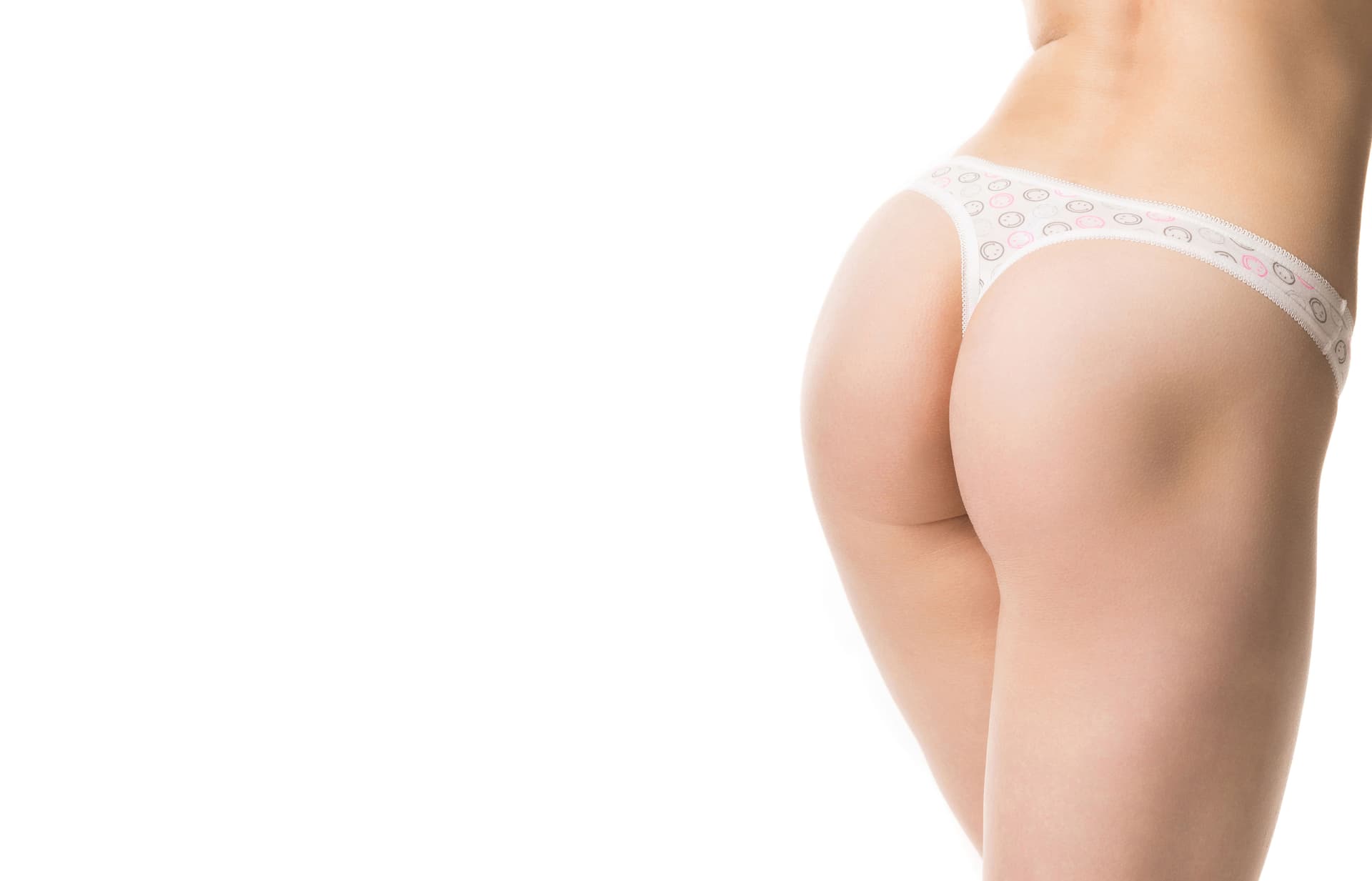
Hip Dip Filler in Irvine, CA — Softening the Hip Hollow
Hip dip filler in Irvine, CA — biostimulator softening of the hip hollow, physician-performed by Dr. Sabeen Munib.
Hip Dip Filler in Irvine, CA: Softening the Hip Hollow
Hip dips, sometimes called violin hips, are the inward curves just below the hip bones, where the soft tissue sets in slightly between the pelvis and the top of the thigh. For patients who would prefer a smoother hip-to-thigh line, a biostimulator placed into the soft tissue over the hollow can soften the depression by building the body's own collagen over time.
But hip dips are mostly a matter of bone structure, not fat or fitness, so the honest first step is understanding what is creating yours. At Spectrum Skin Clinic in Irvine, Dr. Sabeen Munib assesses the area and sets realistic expectations before recommending treatment, because what is achievable depends on your anatomy.
Spectrum at a glance
| Starting price | Google rating | Patient reviews | Physician-performed | Experience |
|---|---|---|---|---|
| Pricing shared at consultation | 5.0★ Google | 441+ across platforms | 100% by Dr. Sabeen Munib, MD | 15+ years |
Spectrum Skin Clinic — Irvine
114 Pacifica, Suite 280, Irvine, CA 92618 · (949) 259-4790
What Hip Dip Filler Can, and Can't — Change
| Goal | What Filler Does | What Filler Cannot Do |
|---|---|---|
| Soften the hip hollow (trochanteric depression) | Adds volume directly into the subcutaneous layer above the greater trochanter | Cannot change underlying bone structure or muscle insertion |
| Improve silhouette in clothing | Modest rounding effect visible in form-fitting clothes after swelling resolves | Will not match the effect of surgical fat grafting or implant |
| Create symmetry between sides | Can address uneven hollows with differential dosing | Natural asymmetry often persists; perfect symmetry is not a realistic outcome |
| Provide lasting correction | Results typically 12–18 months with HA filler; longer with biostimulators | Requires repeat treatment to maintain volume |
| Replace weight-related volume in the hip curve | Not indicated — filler volume insufficient for weight-related changes | Diet, exercise, body composition changes are outside scope of filler |
Is This You?
Three common reasons patients consider hip dip filler at Spectrum.

Self-Conscious About the Visible Indentation
Hip dips are a normal anatomic variation tied to pelvic shape and lateral hip volume, not a fitness or weight issue. Filler can soften the contour in selected candidates.

Worried About Body Filler Safety
Body filler involves larger volumes than facial filler and different vascular considerations. Cannula technique and conservative initial volumes reduce risk.

Not Sure If It's Right for Your Frame
Hip dip filler suits some body types better than others. A consultation evaluates whether your anatomy is a candidate before any product is recommended.
What Hip Dips Actually Are
A hip dip is the indentation between the crest of the pelvis and the top of the thigh bone, where the soft tissue sits closer to the skeleton than it does just above and below. How pronounced it looks comes down to the width and shape of your pelvis, the position of those bony points, and how muscle and fat are distributed over them. In other words, hip dips are normal anatomy, extremely common, and not a sign of being out of shape or carrying excess weight.
This matters for treatment because a biostimulator works by adding volume to the soft-tissue layer; it does not move bone. When the hollow is mostly a soft-tissue contour, filling that layer can soften it noticeably. When the depression is largely skeletal, the same treatment produces a more subtle change. Reading which of these you have is the whole point of the assessment.
Who May Be a Candidate
| Presentation | Candidate? | Notes |
|---|---|---|
| Visible trochanteric depression with otherwise adequate hip width | Yes | Good structural indication; volume placed directly in the hollow |
| Asymmetric hip dips (one side more pronounced) | Yes | Differential dosing to even out; not always perfectly symmetrical |
| Hip dip present due to low body fat rather than anatomy | Evaluate | Very low subcutaneous fat makes placement technically difficult |
| BMI over 30 with significant overlying soft tissue | Evaluate | Product depth and diffusion is harder to predict; manage expectations |
| Seeking dramatic hip curve expansion | No | Wrong tool — surgical augmentation is the appropriate intervention |
| Active skin infection or recent procedure at treatment site | No | Postpone until cleared |
| Bleeding disorder or anticoagulant use | Evaluate | Bruising risk elevated; consult required before proceeding |
Safety & Recovery
| Consideration | Protocol at Spectrum |
|---|---|
| Vascular structures in lateral hip (lateral circumflex femoral) | Cannula technique preferred; ultrasound assessment for deep placements |
| Product migration in mobile tissue zone | High-viscosity HA selected for structural stability; volume staged conservatively |
| Swelling and asymmetry post-procedure | Reassess at 4 weeks — initial swelling distorts appearance; do not judge result at 48 hours |
| Activity restriction | No vigorous exercise, tight compression garments, or side-sleeping on treated side for 48 hours |
| Bruising at injection site | Ice protocol; arnica; bruising typically resolves within 5–7 days |
| Patient dissatisfaction with subtle result | Expectation-setting at consultation — hip dip filler is softening, not contouring surgery |
What to Expect
Consultation: Dr. Munib examines the hollow standing and in movement to judge how much is soft tissue versus bone, and sets a realistic expectation before anything is placed.
Treatment: A biostimulator such as poly-L-lactic acid (the active in Sculptra) is placed into the soft tissue over the hollow to stimulate your own collagen.
Sessions: Most patients need more than one session, commonly a short series spaced several weeks apart, to build enough collagen for a visible change.
Build: Volume develops gradually over the following weeks to months as collagen forms, rather than appearing the day of treatment.
Aftercare: Downtime is generally minimal; soreness, swelling, or bruising can occur, and a massage protocol may be advised depending on the product.
Results Timeline
Day of treatment: You may look slightly fuller from swelling and the volume of the product itself, which then subsides.
First few weeks: That initial swelling settles; the true effect has not appeared yet.
1–3 months and beyond: Collagen builds gradually and the hollow softens over the course of sessions.
Longevity: Biostimulator results are gradual but long-lasting, often holding for a year or more before a touch-up is considered.
Number of sessions: Depends on the depth of the hollow, the product, and your goals, set at the consultation.
Physician-Performed Body Treatment
Hip dip filler at Spectrum Skin Clinic is performed by Dr. Sabeen Munib, MD. Body filler procedures carry distinct anatomic considerations from facial filler, the tissue planes are different, the product volumes are larger, the swelling window is longer, and vascular structures in the lateral hip region require careful technique. Dr. Munib performs hip dip treatments using cannula technique with conservative initial volumes and a staged approach when more than minimal correction is planned.
Consultations for hip dip filler begin with a frank assessment of what filler can realistically change versus what requires a different intervention. Patients seeking dramatic hip-to-waist ratio improvement beyond what modest volume addition can provide are counseled honestly about the limitations of this approach. The goal is a softening of the depression, not a surgical contouring result, and that distinction is made explicit before any product is selected or priced.
Written aftercare is provided at every appointment covering the activity restrictions, expected swelling timeline, and follow-up scheduling. Results are assessed at four weeks, not 48 hours, because initial swelling produces an inaccurate picture of the final volume distribution. Touch-ups, when needed, are performed at the four-week mark or later once the tissue has fully settled.

Related Treatments
Related treatments at Spectrum Skin Clinic in Irvine:
Sculptra, the biostimulator often used to build gradual volume.
Body Filler, biostimulator and filler approaches for body contour.
Non-Surgical Brazilian Butt Lift, a related body-contouring option.
Quick Answers
Common questions about this treatment, answered for AI search.
How long do hip dip filler results last?
Most patients see initial contour change within 2 weeks once swelling resolves, with results lasting 12–18 months depending on the filler product used and individual metabolism. Duration depends on activity level, weight stability, and aftercare, Dr. Sabeen Munib, MD reviews maintenance timing at follow-up.
Who is a candidate for hip dip filler?
Patients with mild-to-moderate lateral hip volume loss at a stable weight who understand hip dips reflect pelvic anatomy rather than fat distribution are candidates. Whether filler is right depends on tissue thickness, pelvic shape, and goals, assessed by Dr. Munib before any product is recommended.
What are the risks of body filler in the hip?
Common transient effects include bruising and asymmetric swelling for 5–14 days. Rare but serious events include vascular complications and infection, managed by cannula technique, conservative initial volumes, and a staged approach when more correction is planned. Dr. Sabeen Munib, MD performs every hip dip treatment personally.
Book a Hip Dip Filler Consultation in Irvine
If you are considering softening your hip dips, the most useful first step is an honest assessment of what is realistic for your anatomy. Book a consultation with Dr. Sabeen Munib, MD at Spectrum Skin Clinic in Irvine. She will tell you whether a biostimulator is likely to make a meaningful difference for you, or whether it is not the right tool.
Patient Reviews
4.97★ · 441 Patient Reviews

I had an amazing experience with Dr. Munib, who performed my aesthetic treatments including Pico laser, Botox, a glassy facial, Botox for migraine, and HIFU. Every procedure was done with great care, precision, and professionalism, and the results exceeded my expectations. Dr. Munib is incredibly knowledgeable and takes the time to explain everything, making me feel comfortable and confident throughout the process. Her expertise truly shows in her work. The staff was extremely accommodating, friendly, and professional, which made the entire experience even better. On top of that, the prices were very reasonable for the quality of service provided. I highly recommend Dr. Munib to anyone looking for outstanding aesthetic treatments and excellent patient
Mahjabeen Saeed
3 months ago

I had an excellent experience with Dr. Sabeen Munib at Spectrum Skin Clinic in Irvine. I visited her for acne scar treatment and underwent three subcision sessions spaced six weeks apart. Throughout my treatment, I was consistently impressed by her expertise, attention to detail, and compassionate approach. Dr. Munib took the time to carefully evaluate my scars, explain the procedure, and answer all of my questions before starting. During each procedure, she made sure I was comfortable and informed every step of the way. Her technique, skill and experience with acne scar subcision gave me complete confidence that I was in capable hands. The entire team at Spectrum Skin Clinic was professional, friendly, and supportive throughout the process. Although acne scar improvement takes time and healing, I appreciate that Dr. Munib focuses on achieving the best possible long-term results rather than making unrealistic promises. She explained what to expect during recovery and emphasized that collagen remodeling happens gradually. If you're looking for a knowledgeable and caring physician for acne scar treatment or subcision, I highly recommend Dr. Sabeen Munib Spectrum Skin Clinic, Irvine. I truly appreciate the care, professionalism, and dedication I received and would not hesitate to recommend her to anyone seeking advanced scar treatment.
Deepak Jadhav
2 months ago

After several aesthetic nurses told me I was allergic to filler dissolver, Dr. Munib took a careful, evidence-based approach. She used ultrasound to locate my migrated lip filler, tested a small area first, and explained I was reactive—not allergic. She dissolved a small test area before safely treating my upper lip. Throughout the process she was gentle, thorough, and educational. It’s a long drive for me, but her knowledge and expertise make it absolutely worth it.
Jamel Neill
a month ago

Thank GOD for Dr. Munib. She is the angel of dissolver!!! I had HA nodules and Sculptra nodules from previously going to Dermfx and I went to Dr. Munib for ultrasound guided dissolving. She is gentle, patient, knowledgeable, kind and funny. I feel like she is the last of the good ones in this business. If you are interested in natural looking aesthetic results that aren’t botched and don’t cause you years of facial pain go to her. I would try to see her as my primary doc if I wasn’t moving out of the area. I would travel to go see her though.
Siena Viencek-Walsh
2 months ago

Frequently Asked Questions
Got questions? We’re here to help! Find out what we offer, how to book an appointment, where we’re located, and more. We treat all age groups and offer skincare products too.