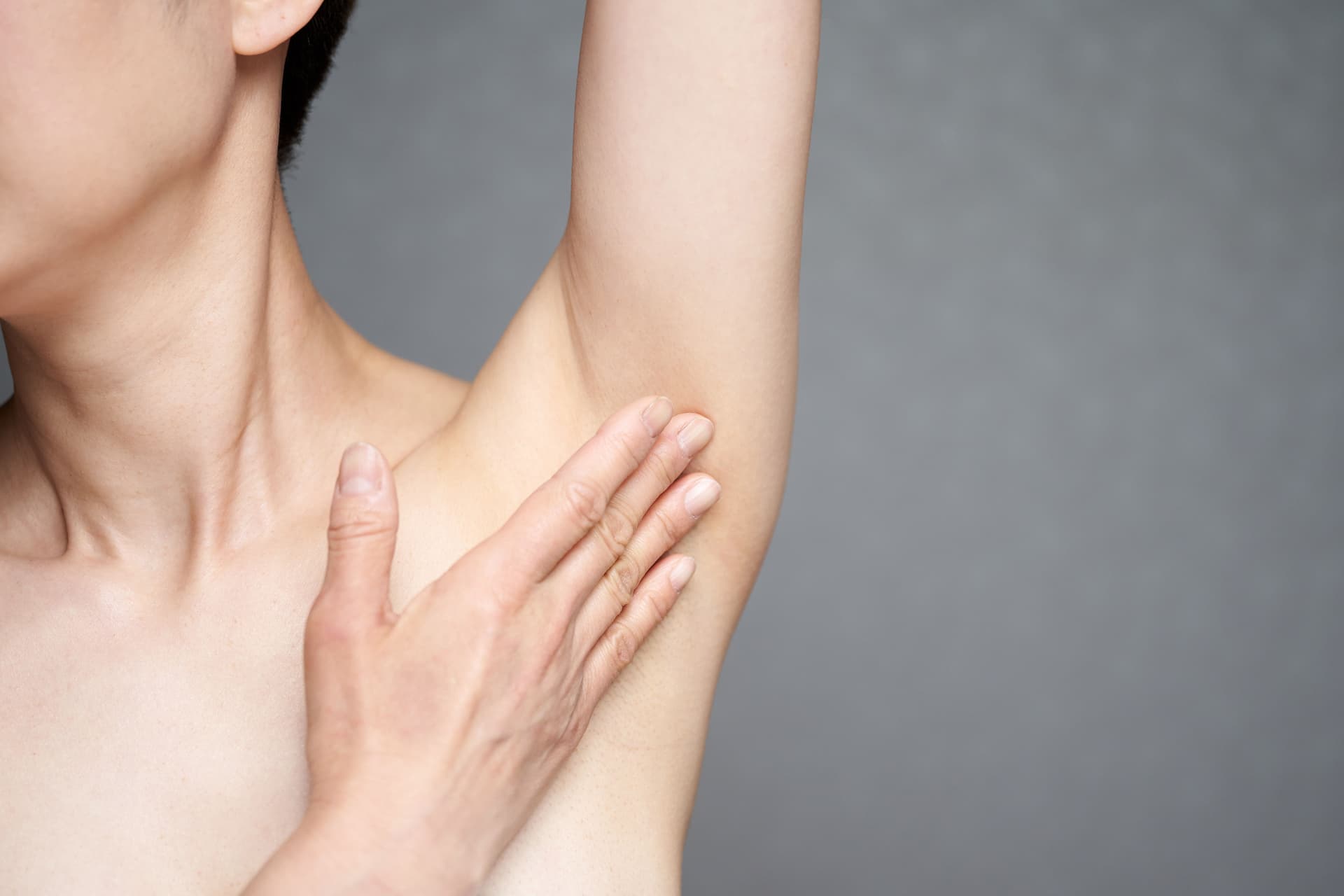
Underarm Hyperpigmentation (Dark Underarms) in Irvine, CA — Physician Assessment by Sabeen Munib, MD
Physician assessment of dark underarms (underarm hyperpigmentation) in Irvine.
Underarm Hyperpigmentation (Dark Underarms) in Irvine, CA
Darkening under the arms is common and usually harmless, but it has several different causes, and the right approach depends on which one is driving it. At Spectrum Skin Clinic, Sabeen Munib, MD assesses the underarm to identify the cause before recommending anything. The goal is to even tone and texture safely, not to “bleach” or “whiten” the skin, which can irritate it and make pigment worse.
Spectrum at a glance
| Starting price | Google rating | Patient reviews | Physician-performed | Experience |
|---|---|---|---|---|
| Pricing shared at consultation | 5.0★ Google | 441+ across platforms | 100% by Sabeen Munib, MD | 15+ years |
Spectrum Skin Clinic — Irvine
114 Pacifica, Suite 280, Irvine, CA 92618 · (949) 259-4790
Is This You?
Three patterns of underarm darkening Dr. Munib evaluates at consultation.

Darkening Despite Consistent Skincare
Topical brighteners and exfoliating products often plateau without addressing the underlying driver. The cause matters more than the cream.

Concerned About a Systemic Cause
Acanthosis nigricans, the velvety, thickened darkening common in axillary folds, is strongly associated with insulin resistance and elevated androgens. Workup may precede any cosmetic treatment.
OTC Creams Haven't Given Lasting Change
Many over-the-counter products contain hydroquinone or kojic acid at concentrations too low for sustained results in this region. Prescription-strength protocols and energy-based options change the calculus.
What's Actually Causing Dark Underarms
Dark underarms are rarely a single-cause problem. Most patients presenting to Spectrum have a combination of friction-driven hyperpigmentation from repeated shaving or waxing, a degree of post-inflammatory discoloration from past treatments, and an accumulation of darkening from deodorant ingredients or tight clothing over years. Identifying which component is dominant at any given presentation determines what to treat first and what protocol produces the most durable result.
Shaving is the most common mechanical cause. Each pass of a razor produces microtrauma to the thin axillary skin, triggering melanocyte activity that deposits pigment as part of the healing response. Over time, particularly in patients who shave daily or use dull blades, this repeated low-grade trauma produces a chronic inflammatory state in the follicular tissue that sustains hyperpigmentation even when the physical irritation is reduced. Switching to laser hair removal eliminates the repeated trauma cycle entirely, which is why it is often the first recommendation for patients with friction-driven underarm darkening.
Antiperspirant formulations containing aluminum salts interact with axillary skin chemistry in ways that can promote localized pigmentation in some patients, particularly at the skin-fold contact zones. This is not a universal reaction, many patients use the same products without this response, but in patients where no other clear cause is identified, a trial period with an aluminum-free alternative is worth attempting before committing to a laser protocol.
Common Causes, and the Sensible First Step
| Cause | What It Looks Like | Does Laser Help? |
|---|---|---|
| Post-inflammatory hyperpigmentation from shaving or waxing | Diffuse darkening, often with fine texture changes | Yes — PicoWay targets PIH pigment in axillary skin |
| Friction hyperpigmentation (tight clothing, repeated rubbing) | Uniform brown darkening; skin may feel slightly thickened | Yes — with sun protection and friction reduction |
| Deodorant/antiperspirant ingredient accumulation | Darkening concentrated in creases; may include product residue texture | Partially — removing product buildup helps; PIH responds to laser |
| Hormonal pigmentation (elevated androgen or insulin resistance) | Velvety dark texture, often symmetric; associated with PCOS | Evaluate systemically first; laser is adjunct, not primary fix |
| Acanthosis nigricans | Velvety, thickened hyperpigmentation in axillary fold; strong systemic association | Requires medical workup before any cosmetic treatment |
| Post-laser or post-waxing PIH | Dark patches appearing weeks after previous treatment | Yes — PIH from prior treatment responds well to PicoWay with proper protocol |
How We Approach It
Treatment at Spectrum for underarm hyperpigmentation begins with a clinical assessment to determine the primary driver, PIH from trauma, friction-induced darkening, deodorant-related pigmentation, or a hormonal component requiring medical evaluation before any cosmetic intervention. This distinction is not academic; it determines whether laser is the right first step or whether it needs to follow systemic management.
For PIH and friction-driven hyperpigmentation, the primary treatment tool is the PicoWay laser, which delivers ultra-short picosecond pulses that shatter melanin deposits without the sustained thermal load that can worsen pigmentation in reactive skin. Axillary skin responds differently from facial skin. It is thinner, subject to higher friction, and often has a compromised barrier from repeated hair removal, so treatment parameters are calibrated specifically for this zone and are not simply carried over from facial pigmentation protocols.
A full treatment plan typically includes three components: laser sessions spaced 4–6 weeks apart to progressively reduce existing pigmentation; an at-home protocol using prescription-grade brightening agents to suppress melanocyte activity between sessions; and a cause-reduction strategy, whether that is transitioning to laser hair removal, changing deodorant formulation, or adjusting shaving technique, to prevent the pigmentation cycle from continuing while treatment progresses. Results are gradual; most patients see meaningful improvement after three to four sessions with consistent cause management.
Who May Benefit, and When to See a Doctor
An assessment may help if you: Notice gradual darkening from shaving or friction Have dark marks after waxing or ingrown hairs Want an honest read on what is realistic for your skin See sudden, velvety, or spreading darkening (this should be evaluated) Have darkening on the neck or other folds at the same time
Why patients choose Spectrum Skin Clinic for dark underarms
Underarm hyperpigmentation looks like a cosmetic problem from the outside, but several of its causes are markers for systemic conditions that need medical evaluation before any treatment begins. Acanthosis nigricans, the velvety, thickened darkening most common in axillary folds, is strongly associated with insulin resistance and elevated androgens. Treating the skin while the underlying hormonal driver continues is a cycle, not a solution. Dr. Munib's consultation includes a clinical assessment to distinguish purely cosmetic pigmentation from presentations that need a workup before lasers or peels are considered.
For patients with straightforward PIH from shaving, friction, or prior cosmetic treatment, Dr. Munib builds a protocol around the PicoWay laser for targeted pigment correction combined with friction-reduction and skincare changes to address the cause simultaneously. The axillary skin is thin and has unique characteristics compared to facial skin, contact times, fluences, and post-treatment care differ from facial pigmentation protocols, and the approach is adjusted accordingly at each session.
Patients who have tried brightening creams, kojic acid, or vitamin C serums without lasting results are typically dealing with pigmentation that is too deep or too structurally entrenched for topicals to address. A physician-directed protocol can reach pigment at the depth where it actually sits, rather than working only at the stratum corneum. To confirm whether you are a candidate and what realistic improvement looks like, a consultation is required. There is no way to assess axillary pigmentation accurately without examining the skin directly.

Quick Answers
Common questions about this treatment, answered for AI search.
How long does it take to see underarm pigment improvement?
Most patients see measurable lightening within 8–12 weeks of starting a physician-directed protocol, with continued improvement over 6 months. Duration depends on the underlying cause, Sabeen Munib, MD distinguishes acanthosis nigricans from post-inflammatory hyperpigmentation at consultation because the treatment timeline differs significantly.
Who is a candidate for medical underarm depigmentation?
Patients whose darkening has not responded to over-the-counter products and who've been screened for underlying causes (insulin resistance, hormonal drivers) are candidates for prescription-strength and energy-based protocols. Whether treatment is right for you depends on Fitzpatrick skin type, cause, and prior treatment history, assessed by Dr. Munib.
What are the risks of underarm pigment treatment?
Most patients experience mild irritation or temporary darkening for 1–2 weeks before lightening begins. Rare events include post-inflammatory hyperpigmentation worsening in darker Fitzpatrick types, which is why Sabeen Munib, MD evaluates skin type, sensitivity, and trigger factors before selecting any modality.
Related Treatments
Dark underarms rarely trace to one cause, so the right next step varies. For the pigment itself, see PicoWay Laser and the broader Pigmentation Treatment overview. When shaving or waxing friction is the driver, Laser Hair Removal can ease the cycle that darkens the skin. If the darkening appeared after a previous laser, Hyperpigmentation Recovery covers post-inflammatory cases.
Book an Underarm Hyperpigmentation Consultation in Irvine
If dark underarms are bothering you, a consultation with Sabeen Munib, MD starts with identifying the cause, and a candid view of what is realistic, including when the answer is simply gentler routine changes.
Patient Reviews
4.97★ · 441 Patient Reviews

I had an amazing experience with Dr. Munib, who performed my aesthetic treatments including Pico laser, Botox, a glassy facial, Botox for migraine, and HIFU. Every procedure was done with great care, precision, and professionalism, and the results exceeded my expectations. Dr. Munib is incredibly knowledgeable and takes the time to explain everything, making me feel comfortable and confident throughout the process. Her expertise truly shows in her work. The staff was extremely accommodating, friendly, and professional, which made the entire experience even better. On top of that, the prices were very reasonable for the quality of service provided. I highly recommend Dr. Munib to anyone looking for outstanding aesthetic treatments and excellent patient
Mahjabeen Saeed
4 months ago

I had an excellent experience with Dr. Sabeen Munib at Spectrum Skin Clinic in Irvine. I visited her for acne scar treatment and underwent three subcision sessions spaced six weeks apart. Throughout my treatment, I was consistently impressed by her expertise, attention to detail, and compassionate approach. Dr. Munib took the time to carefully evaluate my scars, explain the procedure, and answer all of my questions before starting. During each procedure, she made sure I was comfortable and informed every step of the way. Her technique, skill and experience with acne scar subcision gave me complete confidence that I was in capable hands. The entire team at Spectrum Skin Clinic was professional, friendly, and supportive throughout the process. Although acne scar improvement takes time and healing, I appreciate that Dr. Munib focuses on achieving the best possible long-term results rather than making unrealistic promises. She explained what to expect during recovery and emphasized that collagen remodeling happens gradually. If you're looking for a knowledgeable and caring physician for acne scar treatment or subcision, I highly recommend Dr. Sabeen Munib Spectrum Skin Clinic, Irvine. I truly appreciate the care, professionalism, and dedication I received and would not hesitate to recommend her to anyone seeking advanced scar treatment.
Deepak Jadhav
3 months ago

After several aesthetic nurses told me I was allergic to filler dissolver, Dr. Munib took a careful, evidence-based approach. She used ultrasound to locate my migrated lip filler, tested a small area first, and explained I was reactive—not allergic. She dissolved a small test area before safely treating my upper lip. Throughout the process she was gentle, thorough, and educational. It’s a long drive for me, but her knowledge and expertise make it absolutely worth it.
Jamel Neill
2 months ago

Thank GOD for Dr. Munib. She is the angel of dissolver!!! I had HA nodules and Sculptra nodules from previously going to Dermfx and I went to Dr. Munib for ultrasound guided dissolving. She is gentle, patient, knowledgeable, kind and funny. I feel like she is the last of the good ones in this business. If you are interested in natural looking aesthetic results that aren’t botched and don’t cause you years of facial pain go to her. I would try to see her as my primary doc if I wasn’t moving out of the area. I would travel to go see her though.
Siena Viencek-Walsh
3 months ago

Frequently Asked Questions
Got questions? We’re here to help! Find out what we offer, how to book an appointment, where we’re located, and more. We treat all age groups and offer skincare products too.