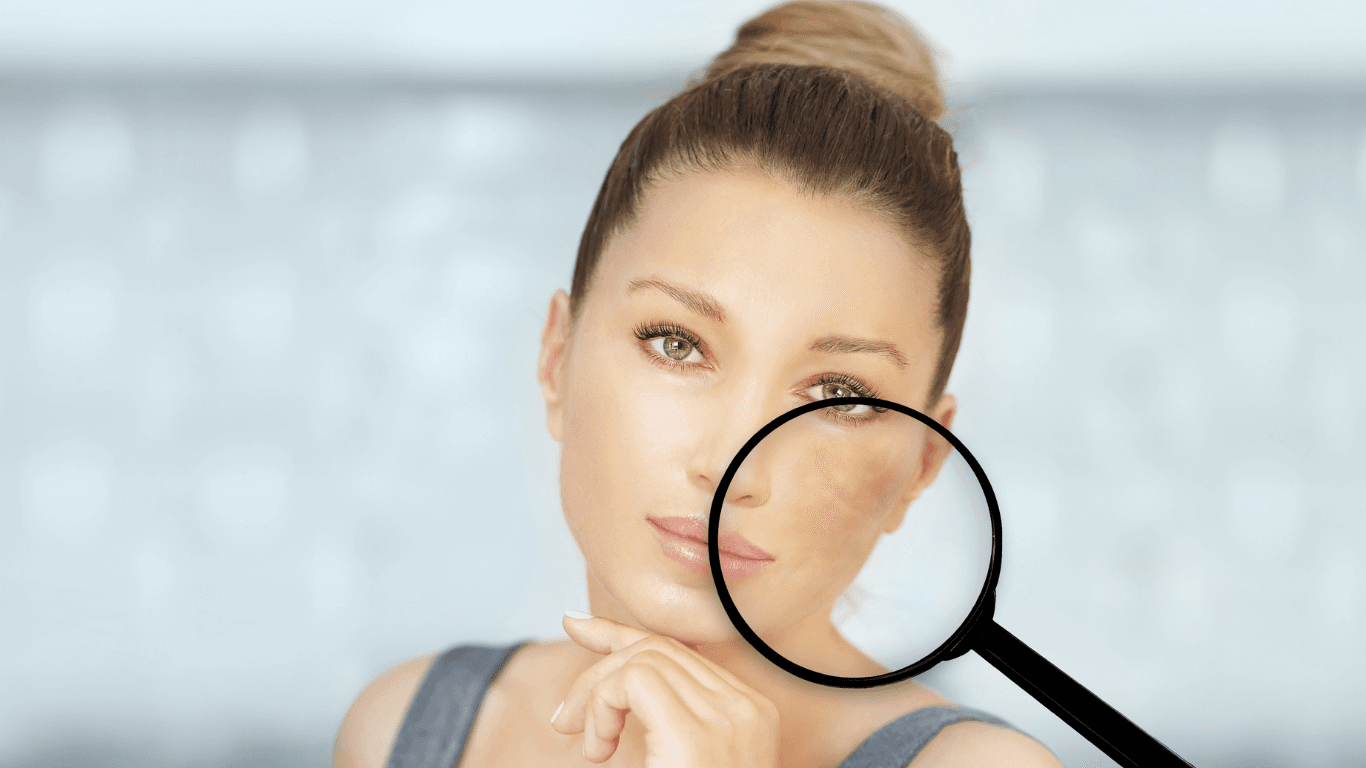
Hyperpigmentation & Skin Pigmentation Treatment in Irvine, CA — by Sabeen Munib M.D.
Physician-led pigmentation care in Irvine. Dark spots, sun damage, post-inflammatory pigmentation — diagnosed first, treated conservatively, calibrated for Fitzpatrick I–VI skin.
Hyperpigmentation & Skin Pigmentation Treatment in Irvine, Orange County, CA
Dark patches, sun spots, and uneven skin tone are among the most common concerns we see at Spectrum Skin Clinic, and the most often mistreated. The pigmentation under one patient's eyes is melasma. The pigmentation on another patient's cheeks is sun-induced. The pigmentation on a third patient's jawline is post-inflammatory, left behind from old breakouts. Each requires a different plan. A device that helps one of them can make another one worse.
At Spectrum Skin Clinic in Irvine, Sabeen Munib, MD personally diagnoses the type of pigmentation before recommending any treatment. We treat all Fitzpatrick skin types I–VI, with conservative protocols calibrated for melanin-rich skin. Many patients leave the first visit with a topical plan and a follow-up, not a laser session booked the same day.

Spectrum at a glance
| Starting price | Google rating | Patient reviews | Physician-performed | Experience |
|---|---|---|---|---|
| Pricing shared at consultation | 5.0★ Google | 441+ across platforms | 100% by Sabeen Munib, MD | 15+ years |
Spectrum Skin Clinic — Irvine
114 Pacifica, Suite 280, Irvine, CA 92618 · (949) 259-4790
What is hyperpigmentation and what causes it?
Hyperpigmentation is the umbrella term for skin that has produced more melanin than the surrounding tissue. It shows up as flat brown, gray, or red-brown patches, sometimes discrete spots, sometimes diffuse patches across the cheeks or forehead. The underlying mechanism is the same: melanocytes (the cells that make pigment) have been stimulated, and they have deposited extra melanin into the skin.
What triggers them varies, and the trigger determines the diagnosis:
- Sun damage (solar lentigines): discrete, well-defined brown spots from accumulated UV exposure. Most common on the face, hands, and chest.
- Melasma: diffuse, often symmetric patches on the cheeks, forehead, and upper lip, driven by hormones plus UV and visible light. Most common in Fitzpatrick III–V skin.
- Post-inflammatory hyperpigmentation (PIH): brown or red-brown marks left after acne, eczema, injury, or even aggressive skincare. More common and more persistent in skin of color.
- Drug-induced pigmentation: from certain medications including some antibiotics, antimalarials, and chemotherapy agents.
- Hormonal: pregnancy (mask of pregnancy), oral contraceptives, hormone replacement therapy.
Two patches that look identical to the eye can have entirely different biology. The first job at consultation is to figure out which one we are treating.
Post-Inflammatory Hyperpigmentation (PIH)
Post-inflammatory hyperpigmentation (PIH) is the flat brown or tan discoloration the skin can leave behind after it has been inflamed, by acne, eczema, a bug bite, an injury, or even a cosmetic procedure that was too aggressive for the skin. It is the pigment cell's response to inflammation, not a separate disease, which is why the first step is identifying and calming whatever triggered it.
Because PIH is driven by inflammation, treatment that adds more heat or trauma can deepen it rather than clear it, a risk that is higher in deeper skin tones. In selected patients Sabeen Munib, MD starts with the gentlest effective approach: settling the underlying trigger, daily photoprotection, and topical pigment inhibitors, with energy-based options such as Candela PicoWay considered cautiously and only when the skin is calm. How quickly PIH fades depends on its depth and how long it has been present, so realistic timelines are set at the consultation.
How quickly PIH fades depends on whether the pigment sits at the surface (epidermal) or has dropped deeper into the dermis. Epidermal PIH often softens over six to twelve months with photoprotection and a topical inhibitor. Dermal PIH can take twelve to twenty-four months or longer, sometimes never fully resolving. Heat-based devices, aggressive scrubs, picking at active lesions, and DIY chemical peels during an inflammatory phase are common ways PIH gets worse before it gets better. Calming the trigger and protecting the skin from UV is the unglamorous floor under any treatment plan.
One of the most common places PIH appears is the underarm, where shaving and friction repeatedly irritate thin skin. See our dedicated guide to dark underarms for the cause-by-cause approach.
Sun Damage & Age Spots (Solar Lentigines)
Sun damage shows up as flat brown spots, often called age spots, sun spots, or solar lentigines, on the areas that get the most cumulative UV: the face, hands, chest, and shoulders. They come from years of sun exposure rather than hormones, which is part of what distinguishes them from melasma and shapes how they are treated.
Solar lentigines are usually epidermal (surface-level) pigment, so in suitable skin types they tend to respond well to targeted treatment, topical pigment inhibitors, IPL, or selective laser including Candela PicoWay as one option among several. Diagnosis still comes first: a flat, stable brown spot is treated differently from a changing, raised, or atypical lesion, which Sabeen Munib, MD evaluates before any cosmetic treatment and refers out if anything looks concerning.
Treatment usually steps up rather than starts at the strongest option. Daily broad-spectrum mineral SPF and a topical pigment inhibitor are the floor, because new UV exposure keeps producing new spots even while old ones are being cleared. Nordlys IPL is a common next step for diffuse epidermal sun damage across the cheeks, chest, and hands; Candela PicoWay is selected for more resistant or focal spots and for Fitzpatrick IV–VI skin where picosecond pulse duration may carry less rebound risk than IPL. Most patients see meaningful clearance over two to four sessions spaced four to six weeks apart, and any spot that looks atypical is biopsied or referred before cosmetic treatment begins.
Why diagnosis comes before treatment
The biggest avoidable mistake in pigmentation care is treating before diagnosing. The same laser that clears a sun spot in two sessions can rebound melasma worse than baseline. The same chemical peel that improves post-inflammatory marks can deepen them in Fitzpatrick V–VI skin if the depth is wrong.
At consultation, Dr. Munib examines pigmentation under standard and Wood's lamp lighting. Wood's lamp uses ultraviolet light to distinguish where the pigment sits, epidermal (upper skin layer) pigment fluoresces and accentuates under UV, while dermal (deeper) pigment does not. This single examination, combined with clinical history, determines what is safe to do next.
Diagnostic categories we work from:
- Epidermal pigment: sits in the upper skin layer. Responds well to topical inhibitors and gentle picosecond laser.
- Dermal pigment: sits below the dermal-epidermal junction. Slower to respond; aggressive retreatment often worsens it.
- Mixed pigment: both layers involved. Most common in clinical practice; treatment is staged over months.
- Inflammatory pigment (active): still being produced by ongoing irritation. Must be calmed before any energy-based treatment.
Patients sometimes ask for the laser that lightens pigmentation. There isn't one universal laser. There's the right tool for the diagnosis you actually have.

Pigmentation treatments we use at Spectrum
| Treatment | Best for | Skin types | Downtime |
|---|---|---|---|
| PicoWay picosecond laser | Sun spots, age spots, well-defined epidermal pigment | I–VI (conservative settings IV–VI) | Hours of pinkness |
| Nordlys IPL | Sun damage, diffuse redness with pigment, lighter skin | I–III primarily | 1–3 days of darkened spots before they flake off |
| Topical pigment inhibitors | Melasma, PIH, maintenance | All skin types | None |
| Chemical peels (gentle) | PIH, surface texture with pigmentation | I–IV mostly; cautious in V–VI | 3–5 days of light flaking |
| Oral tranexamic acid | Resistant melasma (selected patients) | All skin types | None |
| Strict photoprotection | Required for every plan | All skin types | None |

Where PicoWay fits in pigmentation treatment
The Candela PicoWay is one option within a broader pigment-treatment framework. In selected patients, its picosecond-class pulse duration may reduce thermal diffusion compared with heat-based devices, meaningful because heat is what triggers melanocyte rebound in inflammatory pigmentation patterns.
Where PicoWay tends to work well:
- Well-defined sun spots and solar lentigines in patients with stable photoprotection habits
- Post-inflammatory hyperpigmentation that has stopped actively producing new pigment
- Selected melasma cases, at low fluence, after topical and lifestyle measures have stabilized the skin
Where PicoWay is not the answer:
- Active inflammatory pigmentation
- Pregnancy and breastfeeding
- Within 4–6 weeks of significant unprotected sun exposure
- Predominantly dermal melasma in Fitzpatrick V–VI skin
Learn more about the device on our PicoWay Laser page.

What topical pigment inhibitors do (and don't do)
Topical pigment inhibitors are the backbone of every pigmentation plan we build, including the ones that also involve laser. The two are not alternatives; the topicals make the laser sessions work and reduce rebound risk.
Prescription-strength tools we use:
- Tranexamic acid (topical and selected oral): suppresses melanocyte activity and reduces vascular contribution to melasma. Topical is well-tolerated; oral requires clotting-risk screening.
- Hydroquinone: the gold-standard topical for melanocyte suppression, used in carefully limited courses to avoid ochronosis.
- Kojic acid, azelaic acid: gentler tyrosinase inhibitors, well-tolerated in maintenance.
- Medical-grade vitamin C: antioxidant support and mild pigment-lightening adjunct.
- Tinted mineral sunscreen: the single most important product. Visible light from screens, daylight through windows, and reflected light drives pigmentation in Fitzpatrick III–VI skin. Standard chemical sunscreens don't block visible wavelengths.
What we don't recommend: unregulated bleaching creams (particularly compounded products of unknown provenance, which can contain mercury), high-strength over-the-counter peels used without supervision, and kitchen chemistry approaches like lemon juice or aspirin masks.
Pigmentation treatment for Fitzpatrick IV–VI skin
Most older laser platforms were designed and parameterized on Fitzpatrick I–III skin. The mismatch, wrong device, wrong settings, or wrong patient selection, is the most common pathway to laser-induced pigment worsening in skin of color.
What changes for Fitzpatrick IV–VI patients at Spectrum:
- Test spots before any first treatment. A small area is treated and reviewed at 2–4 weeks before proceeding with the full session.
- Lower starting fluence. We start conservative and escalate slowly based on response, not on a generic protocol.
- Longer interval spacing. Six to eight weeks between sessions allows inflammation to fully resolve.
- Picosecond preference over heat-based devices. Photomechanical mechanisms with shorter pulse durations may carry less rebound risk than nanosecond or IPL approaches in melanin-rich skin.
- Stricter pre-treatment requirements. No unprotected sun for four weeks, an established pigment-inhibitor regimen, and confirmed photoprotection habits before laser is considered.
If you are Fitzpatrick IV–VI and have had a bad experience at another clinic, read our pigmentation recovery guide before booking another laser session.
What to expect at a pigmentation consultation
The first visit is diagnostic, not promotional. We do not commit to a laser session on the same visit unless the diagnosis is unambiguous, which, in pigmentation, it usually isn't.
The consultation covers:
- History: triggers (sun exposure, pregnancy, hormonal medications, skincare history), prior treatments and how the skin responded, current routine and medications
- Examination: standard lighting, dermatoscopy, Wood's lamp to classify pigment depth
- Diagnosis: sun damage, melasma, PIH, mixed, or other; epidermal vs dermal vs mixed depth
- Plan: a 3-to-6-month staged approach starting with topical and photoprotective measures, with laser introduced only after the skin has stabilized
- Honest framing: if your goal is realistic and your timing is appropriate, we say so. If you are best served by topicals only and time, we say that too.
Downtime, aftercare, and what to expect after sessions
Downtime depends on the modality:
- Topical-only plans: no downtime; mild irritation possible in the first 2 weeks of a new prescription.
- Low-fluence PicoWay session: faint pinkness for a few hours; some patients see discrete pigment darken briefly before flaking off over 5–10 days.
- Nordlys IPL session: treated sun spots darken visibly for 1–3 days, then flake off as the skin renews. Mild redness for 24 hours.
- Gentle chemical peels: light flaking for 3–5 days.
Aftercare is the same across modalities and non-negotiable: rigorous tinted mineral SPF 30+ daily, no exfoliation for 5–7 days post-session, no heat exposure (sauna, hot yoga, intense cardio) for 48 hours. Heat during the healing window can trigger pigment rebound.
Realistic results and timeline
Pigmentation responds at different rates depending on diagnosis:
- Sun spots and solar lentigines: often visible improvement after 1–2 sessions of PicoWay or Nordlys IPL, with full clearance over 2–3 sessions.
- Post-inflammatory hyperpigmentation: 3–6 months of combined topical and gentle laser care, depending on depth.
- Melasma: longer-term management. Initial lightening at 4–6 weeks; meaningful clearance over 3–4 months. Maintenance is permanent.
- Mixed-depth pigment: the longest course, 6 to 18 months, with patient, multi-modality care.
What we do not promise: complete elimination, single-session clearance, or results that will hold without maintenance. Pigmentation has a recurrence pattern built into the underlying melanocyte biology. The patients who keep their skin clear are the ones who treat photoprotection and trigger management as permanent habits.
Learn more about treatment options for melasma.
When the Discoloration Is Vascular Rather Than Pigment
Some marks patients describe as discoloration are vascular rather than pigmented. Redness that blanches briefly under pressure is usually a dilated vessel, and pigment treatments will not clear it. Broken capillaries on the face covers how those are identified and treated. Where the concern is surface texture alongside uneven tone, non-ablative fractional laser resurfacing treats both in the same session.
Book a pigmentation consultation in Irvine
Every pigmentation plan at Spectrum Skin Clinic is created and performed by Sabeen Munib, MD. We treat patients from across Irvine, Newport Beach, Tustin, Orange County, and Los Angeles.
If you have been told by another provider that your pigmentation needs an aggressive laser, or you have already had a bad result from one, schedule a physician-led diagnostic consultation before deciding what to do next. Bring whatever information you have about prior treatments, device name, dates, settings if available, and products you were given.
You can also contact the clinic or meet Sabeen Munib, MD before your visit.
Patient Reviews
4.97★ · 441 Patient Reviews

I had an amazing experience with Dr. Munib, who performed my aesthetic treatments including Pico laser, Botox, a glassy facial, Botox for migraine, and HIFU. Every procedure was done with great care, precision, and professionalism, and the results exceeded my expectations. Dr. Munib is incredibly knowledgeable and takes the time to explain everything, making me feel comfortable and confident throughout the process. Her expertise truly shows in her work. The staff was extremely accommodating, friendly, and professional, which made the entire experience even better. On top of that, the prices were very reasonable for the quality of service provided. I highly recommend Dr. Munib to anyone looking for outstanding aesthetic treatments and excellent patient
Mahjabeen Saeed
4 months ago

I had an excellent experience with Dr. Sabeen Munib at Spectrum Skin Clinic in Irvine. I visited her for acne scar treatment and underwent three subcision sessions spaced six weeks apart. Throughout my treatment, I was consistently impressed by her expertise, attention to detail, and compassionate approach. Dr. Munib took the time to carefully evaluate my scars, explain the procedure, and answer all of my questions before starting. During each procedure, she made sure I was comfortable and informed every step of the way. Her technique, skill and experience with acne scar subcision gave me complete confidence that I was in capable hands. The entire team at Spectrum Skin Clinic was professional, friendly, and supportive throughout the process. Although acne scar improvement takes time and healing, I appreciate that Dr. Munib focuses on achieving the best possible long-term results rather than making unrealistic promises. She explained what to expect during recovery and emphasized that collagen remodeling happens gradually. If you're looking for a knowledgeable and caring physician for acne scar treatment or subcision, I highly recommend Dr. Sabeen Munib Spectrum Skin Clinic, Irvine. I truly appreciate the care, professionalism, and dedication I received and would not hesitate to recommend her to anyone seeking advanced scar treatment.
Deepak Jadhav
3 months ago

After several aesthetic nurses told me I was allergic to filler dissolver, Dr. Munib took a careful, evidence-based approach. She used ultrasound to locate my migrated lip filler, tested a small area first, and explained I was reactive—not allergic. She dissolved a small test area before safely treating my upper lip. Throughout the process she was gentle, thorough, and educational. It’s a long drive for me, but her knowledge and expertise make it absolutely worth it.
Jamel Neill
2 months ago

Thank GOD for Dr. Munib. She is the angel of dissolver!!! I had HA nodules and Sculptra nodules from previously going to Dermfx and I went to Dr. Munib for ultrasound guided dissolving. She is gentle, patient, knowledgeable, kind and funny. I feel like she is the last of the good ones in this business. If you are interested in natural looking aesthetic results that aren’t botched and don’t cause you years of facial pain go to her. I would try to see her as my primary doc if I wasn’t moving out of the area. I would travel to go see her though.
Siena Viencek-Walsh
3 months ago
Real Patient Results
All treatments performed personally by Sabeen Munib, MD at Spectrum Skin Clinic, Irvine.

Frequently Asked Questions
Got questions? We’re here to help! Find out what we offer, how to book an appointment, where we’re located, and more. We treat all age groups and offer skincare products too.