Lip Filler in Irvine, CA
Natural, physician-performed lip filler — because your lips should still look like yours
Lip Filler in Irvine, CA: Subtle Definition, Natural Projection, Physician-Performed
Lip filler at Spectrum Skin Clinic restores volume and definition with conservative, anatomy-led dosing performed personally by Dr. Sabeen Munib, MD. The vermilion border, philtral columns, and oral commissures each take filler differently, and a single dose template applied to all three creates the overdone look most patients want to avoid.
Patients in Irvine and across Orange County come to Spectrum for physician-led lip treatment that respects the existing anatomy while addressing thin vermilion, asymmetry, downturned corners, or age-related volume loss.

Spectrum at a glance
| Starting price | Google rating | Patient reviews | Physician-performed | Experience |
|---|---|---|---|---|
| Starting at $650 | 5.0★ Google | 441 (4.97★) | 100% — Dr. Sabeen Munib, MD | 15+ years |
Spectrum Skin Clinic — Irvine
114 Pacifica, Suite 280, Irvine, CA 92618 · (949) 647-5234
Why patients choose Spectrum Skin Clinic for Lip Filler
Lip anatomy is read at four landmarks: the vermilion border, the body of the lip, the philtral columns above the cupid's bow, and the oral commissures at the corners. Each takes filler with a different goal and a different dose. Dosing the body when the patient wants definition produces an overfilled look; dosing the border when the patient wants volume produces a flat result.
Dr. Sabeen Munib palpates the lip, marks the vermilion border, identifies prior filler if present, and chooses cannula or needle technique by zone. She calibrates volume to the existing lip rather than to a fixed protocol, and she starts conservative on first-time patients.
Every Lip Filler treatment at Spectrum Skin Clinic is performed by Dr. Munib personally. No delegation, no nurse-injector protocol, no spa-style dose templates.
Medically advised by Dr. Sabeen Munib, MD.

How Lip Filler Works
Lip filler uses hyaluronic acid gel placed in the lip tissue. The product holds water, integrates with surrounding tissue over 4 to 6 weeks, and gradually metabolizes over 9 to 12 months. Different HA products have different stiffness, swelling profiles, and integration patterns, so product choice is matched to the patient's lip structure and goal.
Placement decisions drive the result more than dose. Filler at the vermilion border sharpens definition. Filler in the body adds projection. Filler at the philtral columns lifts the cupid's bow. Filler at the oral commissures supports downturned corners. The right combination depends on what the patient is asking the lip to do.
Why Precision Matters at the Lip
The labial arteries run along the vermilion border, generally just deep to the wet-dry line. A high-pressure bolus into either can cause vascular occlusion, skin necrosis, and rare cases of distant embolization. Cannula technique displaces rather than pierces vessels and is the safer approach in most cases.
Conservative dosing protects the lip's natural ratio. The upper to lower lip ratio is generally 1:1.6 on the natural face. Filler that overshoots upper-lip volume creates the muffled, shelf-like look patients describe as overdone. Dosing to maintain the ratio is how a result reads as natural.

Where Lip Filler Is Injected
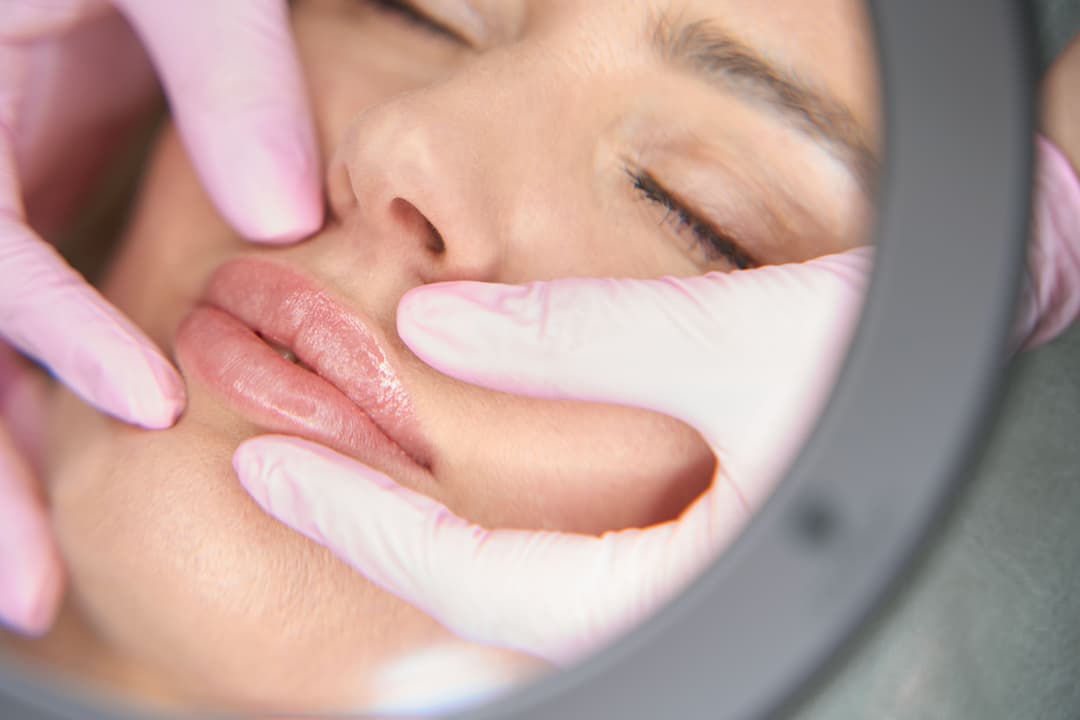
Lip filler is placed at one or more of four landmarks per session. The vermilion border sharpens definition and is approached with small-bore needle or microcannula. The body of the lip adds projection and is approached with cannula in most cases. The philtral columns lift the cupid's bow and are dosed in microaliquots. The oral commissures support downturned corners with placement at the modiolus.
Typical first-session dosing is 0.5 to 1 mL total. Patients with significant volume loss may need 1 mL at first session with a 4-to-6-week recheck. Aggressive single-session dosing of 2 mL or more on a virgin lip is not standard at Spectrum and tends to produce migration over time.
Combined Approaches
| Concern | Often pairs with | Why |
|---|---|---|
| Thin upper lip with rolled-in vermilion | Lip filler at the border + lip flip Botox | Filler defines the border; Botox at the upper orbicularis relaxes the muscle so the upper lip rolls outward |
| Asymmetric lip (one side fuller than the other) | Targeted unilateral filler + ultrasound check if prior product is suspected | Asymmetry is dosed to the smaller side rather than added to the fuller side; ultrasound confirms whether prior product is present |
| Downturned corners with sagging modiolus | Filler at the oral commissures + DAO Botox | Filler lifts and supports the corner; relaxing the depressor anguli oris prevents the muscle from pulling the corner back down |
| Migration from prior filler (shelf above the lip line) | Ultrasound-guided dissolve first, wait 2 weeks, then re-treat | Layering new product on migrated filler worsens the appearance; a dissolve-and-reset sequence is the correct order |
| Lip-line wrinkles (perioral lines) with thin lip | Lip filler at the body + microneedling or fractional laser on the perioral skin | Filler restores lip projection; the lines themselves are a skin-quality issue and need a skin-surface treatment, not more filler |
Who May Be a Candidate
Lip filler may suit patients with thin vermilion, age-related lip volume loss, asymmetric lips, downturned corners from frame loss, or a flat lip line that has lost definition over time.
Whether it is appropriate depends on existing lip anatomy and prior filler history. Whether it should be combined with other treatments depends on the broader plan and the patient's tolerance for repeat maintenance every 9 to 12 months.
Good fit: thin vermilion in a patient who wants subtle definition, age-related volume loss with intact lip border, mild asymmetry, downturned corners from frame loss.
Usually not enough on its own: significant perioral aging where lip-line wrinkles are part of the concern. Also limited: patients who want a dramatic size increase from a small natural lip. A natural-projection plan rather than a maximal-volume plan tends to age better.
How Dr. Munib decides: palpation of the lip, identification of prior filler if present, assessment of the vermilion border quality, and a conservative first-dose calibration with a 4-to-6-week recheck for first-time patients.
What to Expect & Timeline
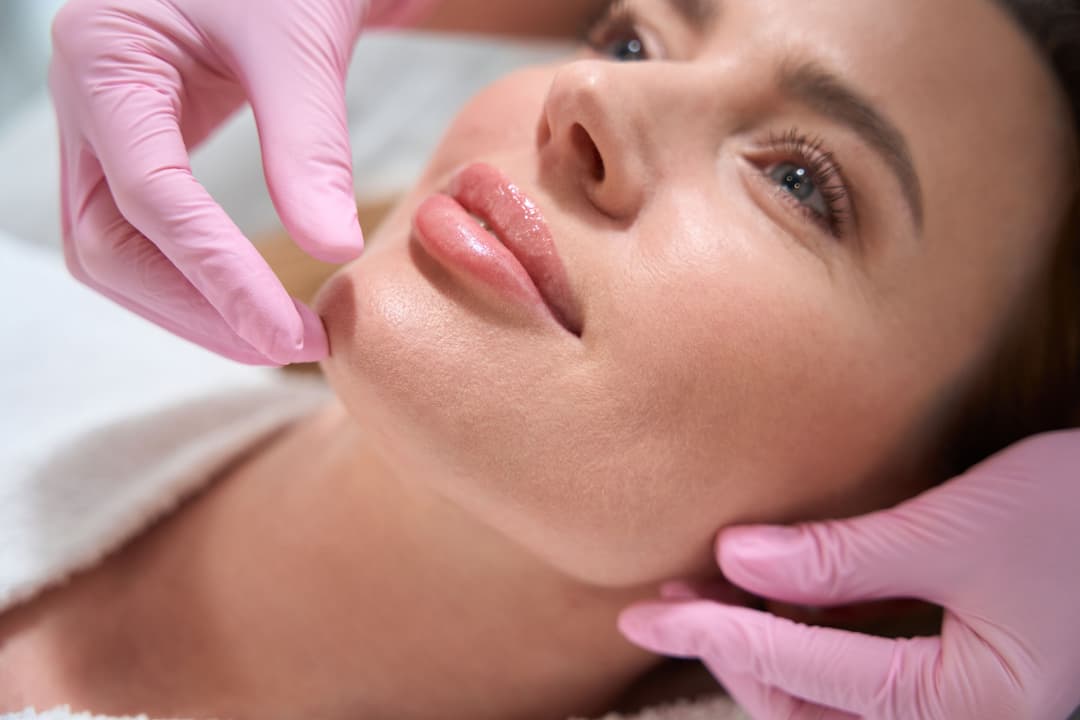
A lip filler appointment at Spectrum Skin Clinic takes 30 to 45 minutes including topical anesthesia and consultation. Dr. Munib applies topical numbing for 15 to 20 minutes, marks the lip landmarks, and selects cannula or needle technique by zone. Product is placed in small, slow increments with the patient sitting upright.
Immediate volume is visible at the end of the session, with swelling that peaks at 24 to 48 hours. Most patients return to normal social activity within 3 to 5 days; full swelling resolution takes 7 to 14 days. Final integrated shape settles by week 4 to 6.
HA fillers at the lip last 9 to 12 months on average. Product choice affects duration: thinner gels (Volbella, Restylane Kysse) tend toward the 9-month end; firmer gels (Juvéderm Ultra Plus) toward the 12-month end. With consistent maintenance every 9 to 12 months, the dose required at each subsequent session often decreases as the lip retains residual product.
Safety and Who May Not Be a Candidate
Lip filler is avoided in pregnancy and is generally deferred during breastfeeding. Patients with a history of cold sores (oral HSV) are pre-treated with antiviral medication starting two days before the appointment, as needle trauma at the lip can trigger an outbreak.
The most serious adverse outcome specific to lip filler is vascular occlusion at the superior or inferior labial artery. Cannula technique, awareness of the vermilion border anatomy, and slow injection markedly reduce — but do not eliminate — this risk. All staff at Spectrum carry hyaluronidase for immediate dissolve in the event of vascular compromise.
Patients with active perioral infection, recent dental work in the upper or lower jaw, or significant migration from prior filler are evaluated case-by-case. A consultation also confirms whether dissolve is the right first step for patients arriving with prior product placement concerns.
When Lip Filler Goes Wrong — Documented Risks
Three categories of lip-filler complications appear in the dermatology and aesthetic-surgery literature. Understanding them is part of an informed consultation.
Vascular Occlusion at the Labial Artery
The superior and inferior labial arteries run along the vermilion border. A high-pressure bolus into either can cause vascular occlusion, with skin pallor, severe pain, and risk of tissue necrosis if not reversed quickly. Cannula technique displaces vessels rather than piercing them and is the safer approach for most lip work. Immediate hyaluronidase administration can reverse partial vascular events if recognized early.
Filler Migration
Migration appears as a shelf or roll above the vermilion border, a flattened cupid's bow, or a muffled lip line. The common causes are over-dosing past the lip's volume tolerance, superficial placement above the border, and repeated treatments layered on prior product without dissolving first. Ultrasound-guided dissolution with hyaluronidase is the standard reversal.
Asymmetry and Over-correction
Asymmetric outcomes happen when the smaller side is under-dosed or when the patient's existing asymmetry is mirrored rather than corrected. Over-correction shows as a duck-bill or sausage shape that changes the patient's facial character. Conservative first-session dosing with a 4-to-6-week recheck is the safer path; aggressive single-session correction raises the risk of both.
Aftercare & Recovery
No downtime. Most patients return to normal activity the same day.
First 24 hours: apply ice in short intervals to limit swelling; avoid pressing or massaging the treated area; sleep with the head elevated.
First 48 hours: skip strenuous exercise, saunas, hot yoga, and alcohol to reduce swelling and bruising.
First 2 weeks: avoid dental work and dental cleanings to limit pressure on the lip while the product integrates.
First 2 weeks: report any vision changes, severe pain, skin blanching, or unusual color change immediately — these may indicate vascular involvement and require prompt evaluation.
Full result: swelling resolves by week 2; integrated final shape settles by week 4 to 6.
What Affects Your Cost
Priced per syringe. Lip filler typically uses 0.5 to 1 mL at the first session for natural-projection goals.
Total depends on three factors. First: which HA product is selected based on the patient's lip structure. Second: how much volume the lip can tolerate without crossing into overdone territory. Third: whether the plan includes combination treatment such as lip flip Botox or perioral skin work.
First-time patients are started at the lower end of the volume range with a 4-to-6-week recheck before any additional product is placed. Dr. Munib confirms the estimate at the consultation.
Will Lip Filler Look Natural?
Natural results come from three decisions made before product touches the lip. First: how much volume the patient's existing lip can hold without losing its natural ratio. Second: which product is chosen for the patient's lip structure. Third: where the filler is placed by zone.
Maintaining the upper-to-lower lip ratio near 1:1.6 is the visual anchor. Filler that overshoots upper-lip volume reads as overdone because the eye perceives the broken ratio before it perceives the size change. Conservative dosing within the patient's ratio is how a lip looks fuller without looking treated.
Dr. Munib calibrates the first session to natural projection rather than maximal volume. Patients who want more after seeing the settled result at week 4 to 6 can add at a recheck. Patients who arrive wanting a dramatic look are walked through realistic projections before any product is placed.
"I had my lip filler dissolved and the experience was incredible. The Doctor explained everything clearly, my lips already look softer and more natural." — Diana
Related Treatments
Lip filler is one of several lip and perioral treatments at Spectrum Skin Clinic. Lip flip Botox uses a small dose at the upper orbicularis to roll the upper lip outward without adding volume. Lip filler dissolve addresses migrated or overfilled prior product with ultrasound-guided hyaluronidase. Facial balancing is the broader scope when lip work is part of a chin, jawline, or midface plan.
When perioral skin quality is part of the concern, fractional CO2 laser or RF microneedling addresses lip-line wrinkles that filler alone cannot correct. View Spectrum's before-and-after gallery for results across the lip and dermal-filler menu.
Book Lip Filler in Irvine, CA
Schedule a consultation with Dr. Sabeen Munib to assess lip anatomy, prior filler history, and the appropriate first-session dose. Cannula technique and conservative starting volume are standard.
Real Patient Results
All treatments performed personally by Dr. Sabeen Munib at Spectrum Skin Clinic, Irvine.
Related Blogs
Personalized Aesthetic & Regenerative Solutions Designed to Heal, Enhance & Restore Naturally



Frequently Asked Questions
Got questions? We’re here to help! Find out what we offer, how to book an appointment, where we’re located, and more. We treat all age groups and offer skincare products too.