

Mild redness and warmth
1 to 2 days
3 to 6 months
Varies by laxity
Periodic sessions
Overview
Non-Surgical Skin Tightening in Irvine
Skin tightening is a family of non-surgical treatments for loose, lax skin on the face, neck and jawline. Collagen thins with age and the dermis loses its scaffold, so skin that once sat taut begins to soften and drift. Energy-based devices heat the deeper layers and prompt the body to lay down new collagen over the months that follow.
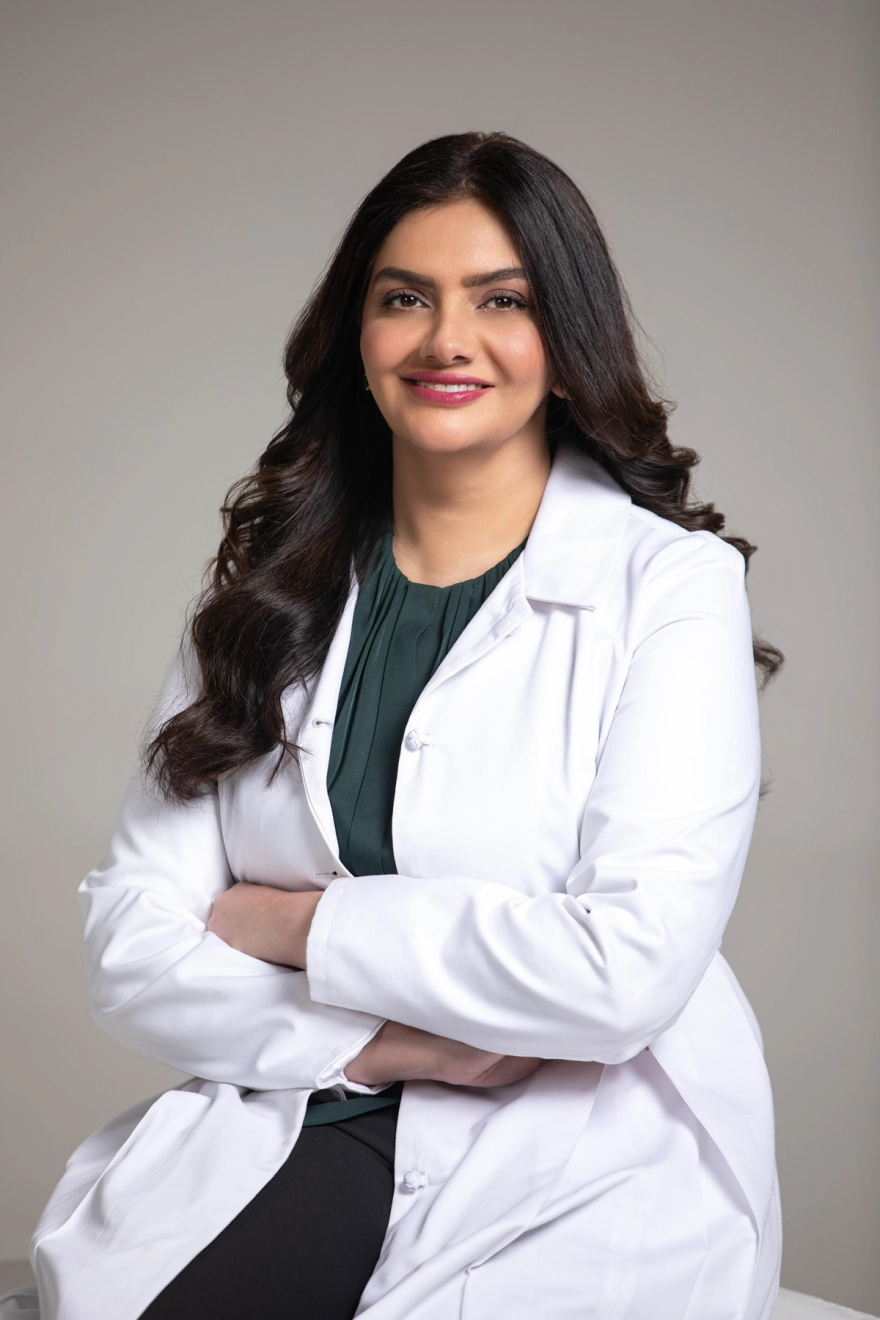
Radiofrequency, focused ultrasound and laser each reach a different depth, and one setting does not suit every face. Sabeen Munib, MD performs every laser and energy treatment at Spectrum Skin Clinic in Irvine and matches the method to the tissue in front of her.
Patients in Irvine, Newport Beach and across Orange County describe the same loosening in different words: sagging skin, a softening jawline, early jowls, a crepey neck. The words change. The laxity underneath is what the assessment reads.
The Spectrum approach
Why patients choose Spectrum for skin tightening
Spectrum runs radiofrequency, focused ultrasound and laser under one roof, so the plan follows the skin and not a single machine. Dr. Munib selects among them at the assessment.
The honest limit is stated up front. Non-surgical energy firms mild to moderate laxity, but it does not remove skin, so it cannot match what a surgical facelift does for a heavy, hanging neck or deep jowls. When the sagging is past what energy can reach, the answer is a referral to a facial surgeon, not a series that will disappoint.
One physician carries the plan from assessment through aftercare, which lets the approach adjust as collagen rebuilds across a series.
Personally performed
Three modalities
Non surgical
Honest limits
Before & After
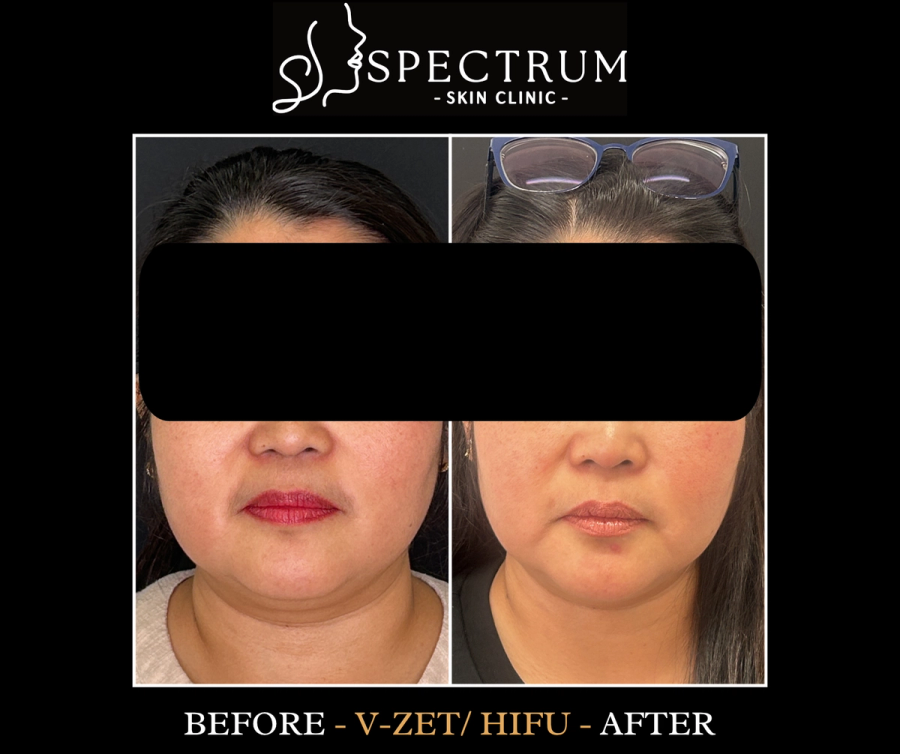
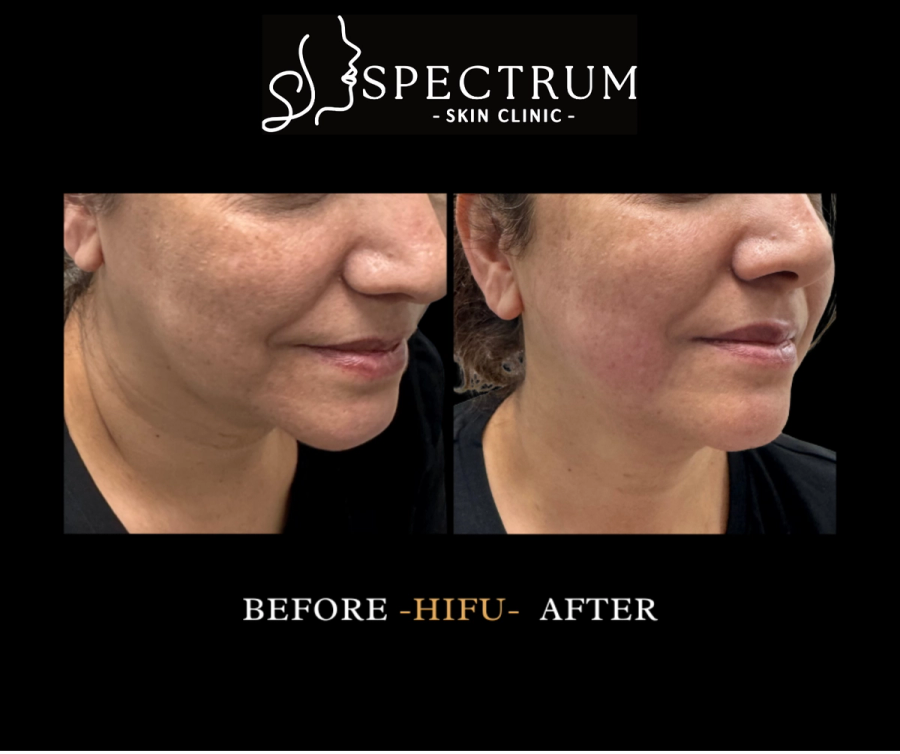
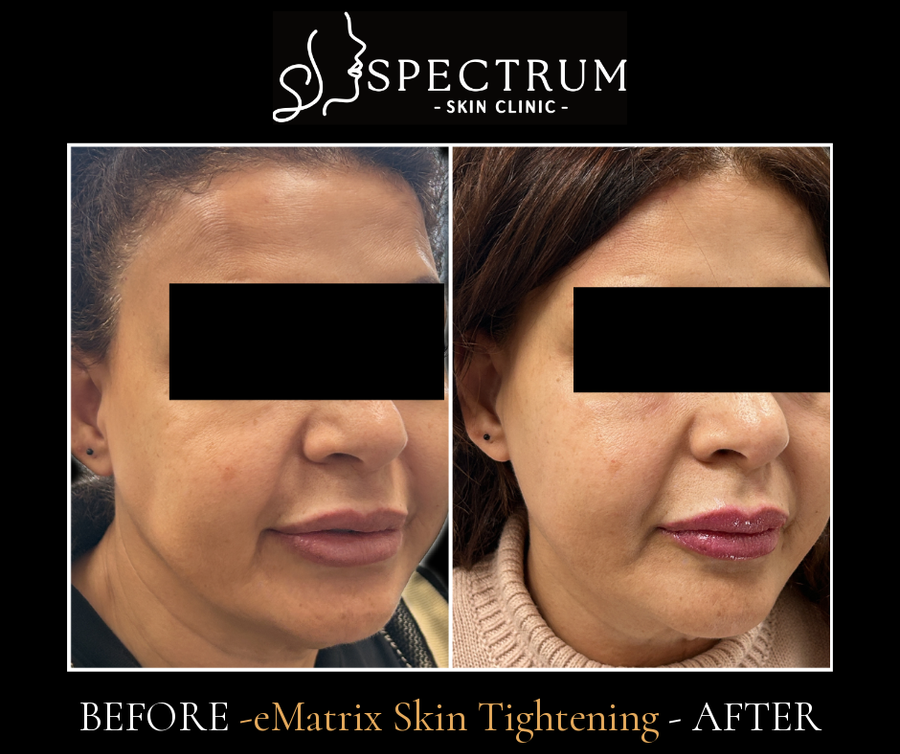
Skin Tightening Before and After
Real patients treated at Spectrum Skin Clinic. Results vary with each person, and the photographs are examples rather than a promise of any one result.
How Non-Surgical Skin Tightening Works
Energy-based skin tightening heats the dermis and the support layer beneath it to a set temperature. Controlled heat contracts the collagen already there and triggers the body to build new collagen over the following months. No incision is made and no skin is removed.
Radiofrequency delivers that heat through the dermis and the deeper fibrous layer. Focused ultrasound, the energy behind HIFU, reaches fixed depths with sound rather than current and targets the foundation that holds the lower face. Laser works from the surface down, firming texture as it heats.
Why one device does not fit every face
Laxity is not uniform. Early softening along the jawline sits at a different depth than a loose neck, and thick skin carries heat differently than thin under-eye skin.
Matching the energy and the depth to what is actually loose separates a firmer contour from a series that changes nothing. The assessment names what is slack and where before any device is chosen.
Matching the method
Which option fits which laxity
These are starting points, not rules. The final plan follows the assessment, and options are often staged or combined.
Combined approaches
Treatments that pair with skin tightening
Who may be a candidate
Skin tightening suits mild to moderate laxity and a patient who expects a gradual change rather than an overnight one. Adults from their late thirties through their fifties, slowing early sagging, tend to fit well.
How Dr. Munib decides
Dr. Munib palpates the skin at rest, reads how far it moves and how quickly it settles, and weighs skin type, the depth of the laxity and the downtime you can accept. Radiofrequency, HIFU, laser or a staged combination follows from that reading, not from the brand on the device.
Likely a good fit
Mild to moderate looseness along the jawline, a softening lower face, a crepey neck or under-eye laxity, in skin that still has some spring and in a patient who can accept a result that builds over months.
Where energy is not enough
Heavy, hanging skin and advanced sagging are better served by surgery, because energy firms but does not excise tissue. Active skin infection, certain implanted electronic devices and pregnancy may delay or rule out energy-based tightening, which is screened before any treatment.
What to expect
What to expect and timeline
The change is gradual by design. Deeper laxity usually needs a short series for the full result, which is mapped at the consultation.
Documented risks
Safety, downtime and skin tone
Energy-based skin tightening has a long track record and is well tolerated when the settings are matched to the person. Most effects are temporary and tied to the dose and depth used.
Redness, swelling and warmth
The skin is usually pink, slightly swollen and warm for a short time after treatment. For most non-surgical options this settles within a day, and radiofrequency microneedling may add a day or two of mild redness.
Fat loss from excess heat
Over-applied heat can reduce facial fat where it is not wanted, which is why the dose is calibrated to the individual rather than run at a fixed setting.
Burn or blistering
A burn is uncommon and rises with heat that is too high for the skin and the depth being treated. Screening skin type and medical history before treatment is how that risk is kept low.
These effects are reviewed with you before treatment so the decision to proceed is an informed one.
How the risk is kept low
Risk scales with dose and depth, so Dr. Munib sets the energy to your skin and screens your medical history before treating.
Contact cooling and measured passes keep the surface comfortable while the deeper layers take the heat.
Aftercare and recovery
What affects your cost
What affects the cost of skin tightening
Cost tracks the device, how much skin is treated and how many sessions the laxity needs. A full face and neck across a series costs more than a single small zone.
Prices are quoted at the consultation once the plan is set, so the figure reflects the actual treatment rather than a generic package. New patients receive an offer on a first treatment, applied at booking.
New patients: 15% off your first treatment.
Pay monthly with


Will this actually work
Does non-surgical skin tightening really work?
For mild to moderate laxity, yes. Radiofrequency and focused ultrasound firm and lift the skin gradually as new collagen forms, easing early jowls and a softening jawline. The change arrives over months, not on the drive home.
The limit is the amount of sagging. When the skin is heavily loose or hanging, energy cannot reproduce what a surgical lift removes, and the consultation says so plainly rather than selling a series that will fall short.
Explore
Related Treatments
V-ZET HIFU
Focused ultrasound that lifts the deeper layers of the lower face and neck. The right page when HIFU suits the depth of your laxity.
Secret PRO
Radiofrequency microneedling that firms and renews skin by placing heat in the dermis. The right page when texture sits alongside the looseness.
Sublative Resurfacing
RF resurfacing that firms surface texture and tone. The right page when crepey surface skin matters as much as tightening.
Non-Surgical Facelift
A combined non-surgical lifting plan using energy and filler. The right page when the skin needs both firming and restored volume.
Laser and Energy Devices
The full laser and energy roster and how each platform is selected. The right page to see where tightening sits among the devices Dr. Munib runs.
XeRF vs Fotona
A comparison of XeRF, a monopolar radiofrequency system, with Fotona's laser approach to tightening, and the reasoning behind each.
Patient reviews
What Patients Say
4.97★ across 441 verified Boulevard patient reviews.

Deepak Jadhav

Mahjabeen Saeed

Jamel Neill

Questions
Frequently Asked Questions
Adults with mild to moderate laxity on the face or neck and realistic expectations are typical candidates. Dr. Munib confirms skin type and the degree of sagging before choosing a device.
Advanced sagging with excess skin is better served by surgery. Active infection, certain implanted devices, and pregnancy may delay or rule out energy-based tightening.
The visit starts with a skin assessment, then cleansing and mapping. The device delivers measured energy in passes, with contact cooling, and aftercare is reviewed before leaving.
Recovery is minimal for most non-surgical options. Temporary redness or warmth settles within a day, and radiofrequency microneedling may add a day or two of mild redness.
Cost depends on the device, the area, and the number of sessions. Dr. Munib gives transparent pricing at the consultation once the plan is set.
Yes. Radiofrequency, ultrasound, microneedling, and injectables are often staged or combined, and the plan depends on the concern and the skin.
Results build as collagen forms and can last a year or more with maintenance. Aging continues, so periodic sessions help hold the firmness over time.
Some firmness shows early, with collagen-driven improvement over three to six months. Deeper laxity usually needs a short series for the full result.
Ultherapy is a brand of microfocused ultrasound, and HIFU is the broader focused-ultrasound category. Both stimulate collagen with ultrasound energy and are non-surgical.
Sofwave and HIFU both use ultrasound to stimulate collagen for skin tightening. They reach the skin at different depths; the right choice depends on the degree and location of laxity assessed at consultation.
Ultherapy uses focused ultrasound, while Thermage uses radiofrequency. Both are non-surgical and stimulate collagen; the better fit depends on skin type, laxity, and goals.
It depends on how much laxity is present, the area, and your goals. Dr. Munib assesses the skin and recommends HIFU, radiofrequency, or a combination during the consultation.
Spectrum provides non-surgical body contouring, fat reduction and skin tightening. Whether it is appropriate depends on your presentation, your history and an in-person evaluation with Sabeen Munib, MD.
Published peer-reviewed literature describes this approach for this indication. Evidence describes what has been reported in studied groups, not a predicted result for any individual. In selected patients it may be appropriate; that judgement is made at consultation.
Yes. Non-surgical only. Anything outside that is discussed at consultation, and a referral is made where it is more appropriate.