
Same day
Minimal
Varies
Bruising, swelling
Overview
Dermal Fillers in Irvine, From Lips to Jawline
Dermal fillers, facial fillers and injectable fillers name the same treatment. Each is a gel or material placed under the skin to add volume or smooth a fold, and FDA regulates each one as a medical device.
Lip injections, cheek filler and chin filler in Irvine or anywhere in Orange County are the same appointment in different tissue. What changes between them is the depth, the product and the anatomy underneath.
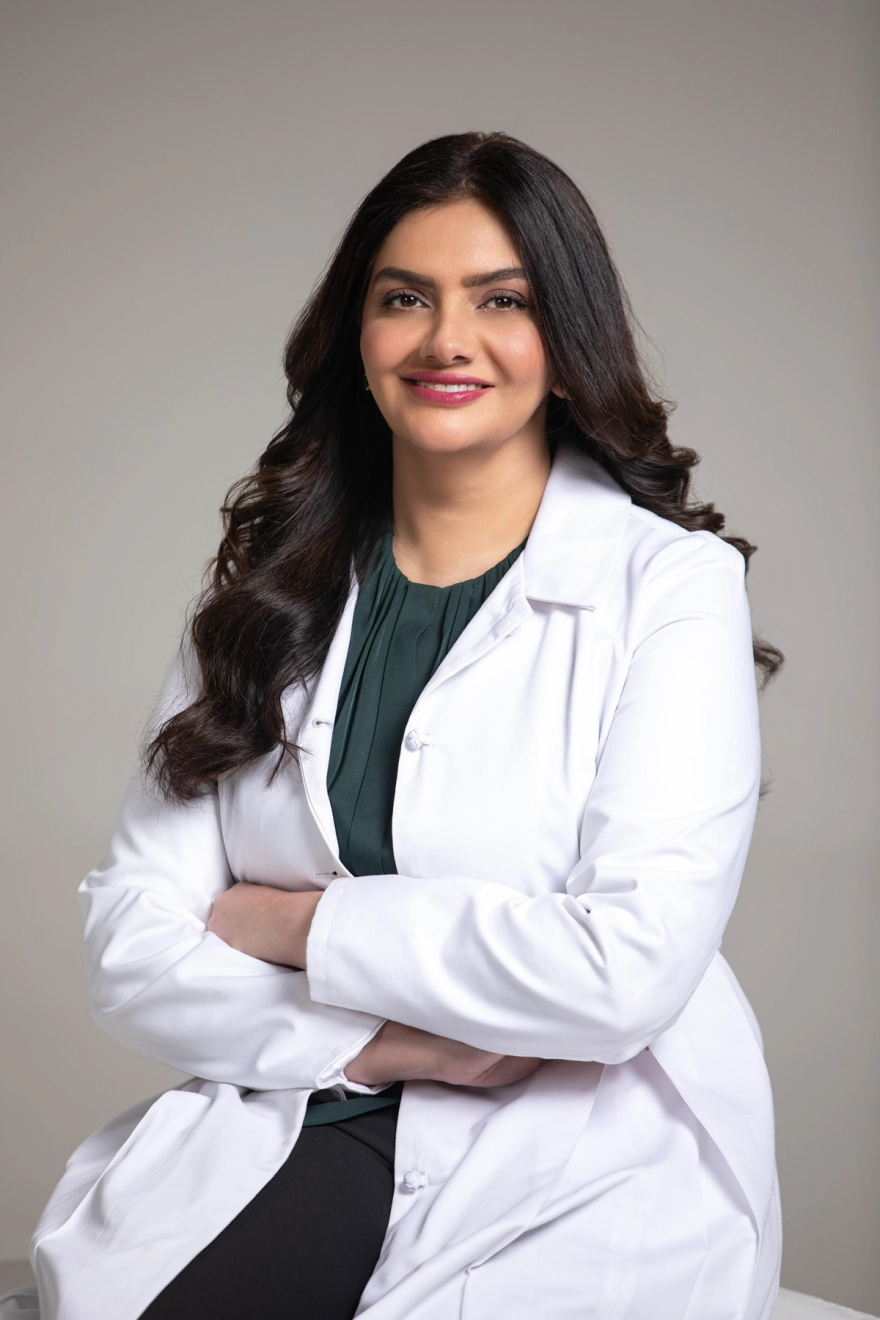
At Spectrum Skin Clinic, Sabeen Munib, MD performs every filler and every injectable. She has practiced in the Irvine area for 15+ years. We do not hand filler to an esthetician or to another injector.
FDA has approved fillers in adults 22 and older for moderate to severe wrinkles and folds, such as the nasolabial folds. Approved uses also include adding volume to the lips, cheeks, chin and back of the hand, and Restylane Eyelight is approved for hollows under the eyes. Any use outside a product's approval is explained before anyone books it.
The Spectrum approach
Why Patients Choose Spectrum Skin Clinic for Filler
Filler belongs at different depths in different parts of the face. Cheek filler such as Restylane Contour sits deep, while lip filler sits within the lip itself. Dr. Munib examines the face before choosing a product, a depth and an amount for each site.
Your first visit is a $65 aesthetic consultation. Dr. Munib decides with you whether filler fits at all, which product suits the tissue, and where it goes. When the line in question comes from muscle rather than lost volume, the answer is a different treatment.
Sabeen Munib, MD performs every filler and every injectable at Spectrum Skin Clinic. The same practice evaluates filler placed elsewhere and dissolves it when that is clinically appropriate. New treatment and correction sit under one physician.
Personally performed
Anatomy led
Ultrasound mapped
Informed consent
How Filler Changes the Face
Hyaluronic acid fillers are smooth gels, and each product is made for a certain tissue and depth. Restylane Contour is for cheek augmentation, Restylane Kysse for the lips, Restylane Eyelight for hollows under the eyes, and Restylane Refyne for deeper folds such as the smile lines.
The brand does not decide the treatment. The tissue does.
Sculptra and Radiesse work differently from a hyaluronic acid gel. They stimulate collagen, and the result continues to build for months after treatment. Some fillers are absorbed by the body over time. How long a result lasts depends on the material and the tissue it sits in, and a repeat treatment may be needed to keep it.
A forehead line made by muscle movement is not a filler problem: gel placed under it does not stop the muscle. The FDA advises against using fillers in some areas, including the forehead and between the brows. Lines like these are a Botox question, not a filler question.
Anatomy and Ultrasound at the Needle
The most serious filler risk is injection into a blood vessel. It is rare, and it turns on where the needle tip sits near the vessels in that tissue. Knowledge of facial anatomy is the first protection against it.
Spectrum uses a Clarius handheld ultrasound to map filler already in the face and to guide dissolving. The scan shows where earlier product sits before more is added or any is removed. A face with an unknown filler history is mapped, not guessed at.
Which treatment fits
Filler, Collagen Stimulator or Neither
The finding decides the treatment. Lost volume, a thin lip and a line made by muscle movement each call for something different.
Combined approaches
Filler Alongside Other Treatments
Who may be a candidate
Filler adds volume or smooths a fold. A candidate has a finding that volume can address: a flattened cheek, a thin lip, a recessed chin or a deep nasolabial fold.
Age, earlier filler and medical history change the answer. The FDA approvals for these fillers cover adults over 21.
How Dr. Munib decides
Dr. Munib examines the face and asks what filler, if any, is already there. Where earlier product is uncertain, ultrasound shows its location before anything new is placed. The product, depth and amount then follow the facial structure, not a preset syringe count.
Often a good fit
Age-related volume loss in the cheek, thin lips or a soft lip border, a recessed chin, softened jawline definition, and moderate to severe nasolabial folds. These match labeled uses of the products, and Dr. Munib confirms the fit at the consultation.
Where filler falls short
Lines in the forehead and between the brows come from muscle movement, and the FDA advises against filler there. An allergy to lidocaine, to the bacterial proteins used in Juvederm products, or a prior reaction to hyaluronic acid filler rules those products out. Loose skin may need the energy treatments of the non-surgical facelift rather than more volume.
What to expect
What to Expect After Filler
Early swelling can make a lip or cheek look fuller than it will settle. Judge the result once the swelling has gone, not on the first day.
Documented risks
Side Effects and Risks of Dermal Fillers
Any dermal filler can cause temporary side effects, permanent side effects, or both. The common ones are short-lived. One is rare and serious, and it shapes how filler is placed.
Bruising, swelling and redness
These are the common effects at the injection site, along with pain, tenderness, itching and rash. Swelling and redness usually fade within a few days, and bruising is temporary.
Lumps, asymmetry and migration
Filler can sit unevenly, form a lump, or move from where it was placed. These are uncommon. Filler that sits wrong is evaluated and, where appropriate, dissolved.
Injection into a blood vessel
Filler placed inside a vessel can block blood flow to the tissue it supplies. It is rare, and it is the most concerning filler risk. Possible outcomes include tissue death, vision loss and stroke.
Allergy
Juvederm products contain lidocaine and are made with bacterial proteins. An allergy to either, or a prior reaction to hyaluronic acid filler, rules those products out.
Off-label placement
FDA advises caution with filler around the eyes, in the nose, forehead, between the brows and in the neck. Restylane Eyelight is FDA-approved for hollows under the eyes. Any placement outside a product's approval is discussed before treatment.
Before anything is injected, Dr. Munib goes through the product, where it goes and what could go wrong. You decide once you understand it.
Filler Placed Elsewhere
Some patients arrive with filler from another clinic that sits unevenly, has moved or feels wrong. That visit is a $150 physician evaluation, separate from the $65 consultation.
Dr. Munib reviews what was injected, where and when, then examines the tissue, with ultrasound when the product's location is unclear. She treats what falls within the practice's scope and dissolves filler when that is clinically appropriate. When a case falls outside that scope, she coordinates care or refers.
The evaluation does not guarantee correction. Some changes after filler are permanent.
Aftercare and Recovery
What affects your cost
What a Filler Treatment Costs
Filler cost depends on the product and on how many syringes the tissue needs. A lip may take a single syringe, while restoring volume across the cheeks and chin takes more.
The first visit is a $65 aesthetic consultation. Dr. Munib sets out the product, the syringe count and the price before anything is injected.
A separate $150 physician evaluation covers filler placed elsewhere, complications and second opinions. It is an assessment, not a promise of correction.
New patients receive a discount on their first treatment, which does not apply to filler dissolving.
New patients: 15% off your first treatment.
Pay monthly with


Will this look natural?
Will Filler Still Look Like Me?
Patients often ask whether people will be able to tell. Overfilling is what people notice. Too much product, repeated too often, stretches the tissue and changes how the face looks at rest.
Dr. Munib uses precise placement and conservative amounts. A lip or cheek can take more at a later visit if the first result falls short, and that is easier than taking product away.
The face still looks like your own, with more support in the cheek or more definition at the lip. The amount was set by the anatomy, not by the number of syringes on a menu.
Explore
Related Treatments
Lip Filler
When the lip is the focus: volume, border definition and lip injections placed by Dr. Munib.
Cheek Fillers
When age-related volume loss has flattened the cheek and the midface needs deep support.
Jaw Line Filler
When jawline definition has softened, or the jaw and chin need to be brought into proportion.
Under Eye Filler
When hollowing under the eye is the finding. Candidacy is assessed in person.
Filler Dissolve
When filler from any clinic has moved, looks uneven or needs reversing.
Non-Surgical Facelift
When loose skin, not only lost volume, drives the change and energy treatments join filler.
Dermal Fillers
When a brand name is your starting point and you want product-by-product detail.
Patient reviews
What Patients Say
4.97★ across 441 verified Boulevard patient reviews.

Dina Naziri

Jamel Neill

Siena Viencek-Walsh


Questions
Frequently Asked Questions
It depends on the product and the area. Restylane Kysse in the lips is clinically proven to last up to 1 year, according to its maker. Some fillers are absorbed over time, so patients may need repeat treatments to keep the result; how long it lasts depends on the material and the treated area. At your consultation, Dr. Munib tells you what to expect for the product she chooses.
Filler is a medical treatment, and any dermal filler can cause temporary side effects, permanent side effects, or both. Most are mild and short-lived, like swelling, bruising or tenderness where the filler went in. Uneven results, filler that moves, or a puffy look when too much is placed are other downsides to know about. The most concerning risk is filler accidentally entering a blood vessel, which is rare. At Spectrum Skin Clinic, every filler is placed by Sabeen Munib, MD, and hyaluronic acid filler can be dissolved if it ever needs to be. Call us right away if you notice changes in your vision, skin that turns white or dusky, or pain that keeps getting worse after treatment.
Fillers and Botox do different jobs. Fillers add volume and shape, in areas like the cheeks, lips, chin and jawline. Botox works on the muscles behind lines that form when you move. So one isn't “better” than the other, and many patients plan them together. Dr. Munib will help you decide what fits your concerns, budget and goals.
Pricing varies based on the filler type, area treated, and the injector’s expertise. At Spectrum Skin Clinic, 3 syringes typically range between $1,800–$2,400, depending on the product used (e.g., Restylane, Radiesse, or Sculptra). Each syringe is 1mL and often distributed across multiple areas for facial harmony. For example: • 1 syringe in lips • 1 syringe in cheeks • 1 syringe in chin or nasolabial folds We never overfill. Instead, we focus on strategic placement for maximum lift and natural results.