
Warm, not painful
Right after
1 to 2 hours
Builds across sessions
Every 4 to 6 weeks
Overview
Carbon Laser Facial in Irvine
The Carbon Laser Facial is known by several names, and the confusing ones are Carbon Peel, Hollywood Peel and Charcoal Peel. All of them describe the same treatment, and none of them involve a peel.
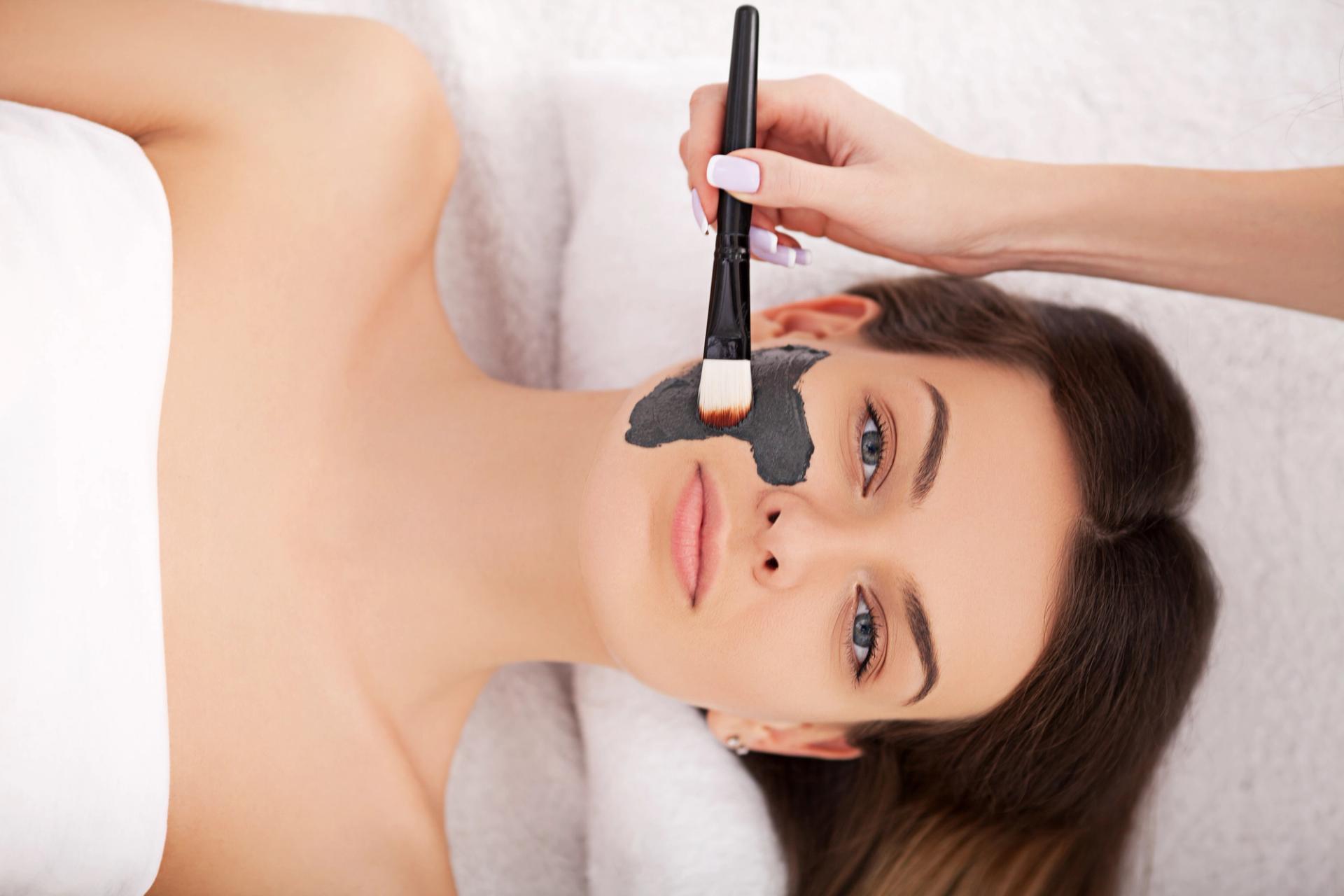
A layer of medical-grade activated carbon is applied to the skin and allowed to settle into the pores, where it binds oil and debris. A Q-switched laser is then passed across the surface. The laser targets the carbon, vaporizing it and lifting what it has bound with it.
It suits oily, congested and breakout-prone skin, large or clogged pores, and dullness. No acid is used and there is no recovery period. Most patients have nothing visible afterward, though some notice light dryness or fine flaking for a day or two.
Read this first
This Is a Laser Treatment, Not a Chemical Peel
The word peel in Carbon Peel, Hollywood Peel and Charcoal Peel is a marketing name, not a description. No acid touches the skin and nothing peels off afterward. The active step is laser energy hitting a carbon layer.
If what you are looking for is an actual chemical peel, glycolic, salicylic, pigment control or TCA, that is a different treatment entirely and it is priced differently. See chemical peels in Irvine instead.
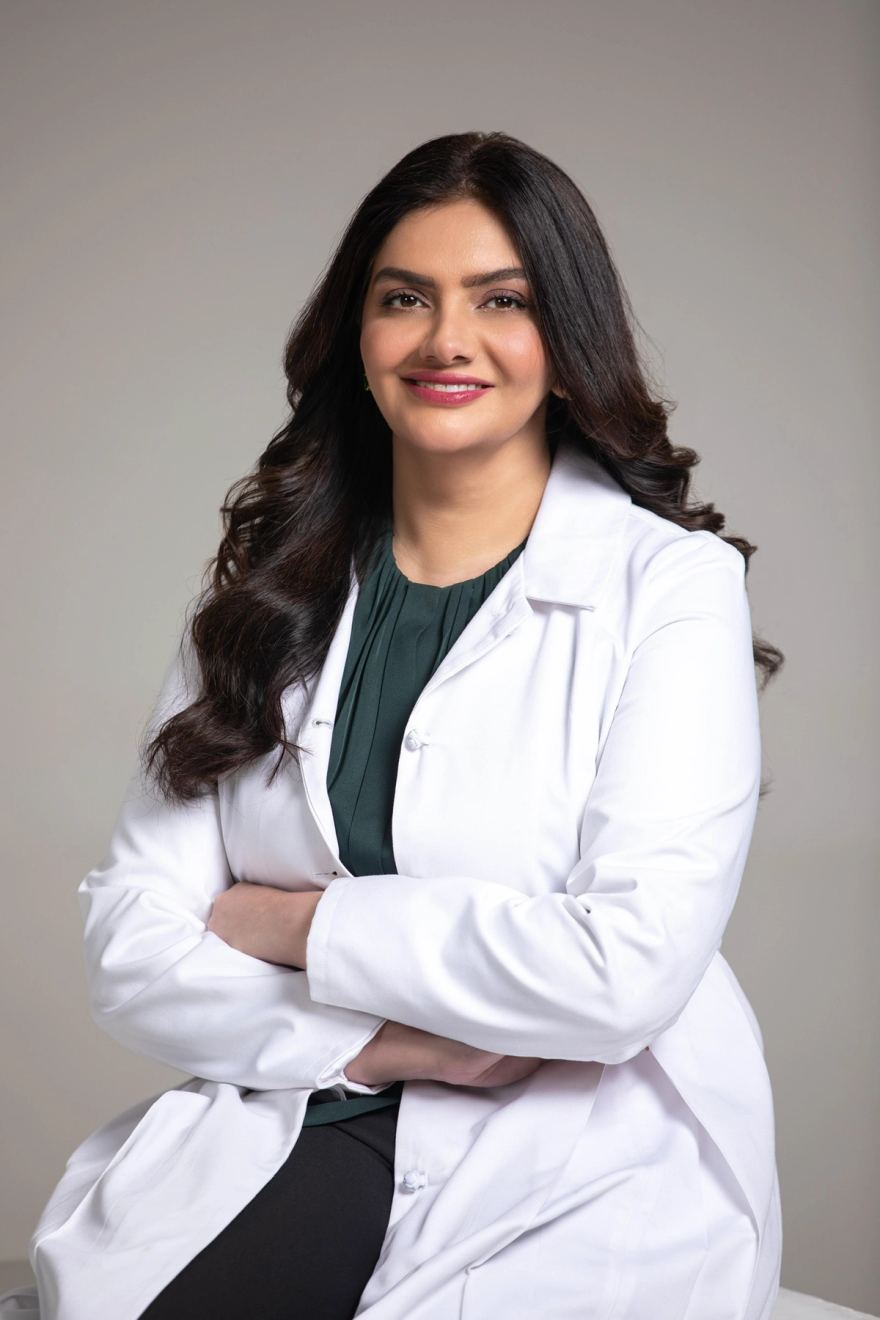
The distinction also decides who treats you. California regulates cosmetic laser treatment as the practice of medicine, so this is performed by Sabeen Munib, MD and cannot be delegated. Superficial chemical peels are within licensed esthetician scope and are performed by Leah.
0
I to V
15+
4.97★
How the treatment runs
What Happens in a Session
Four steps, about 30 to 45 minutes, no recovery attached to any of them.
Cleanse
Give the carbon a clean surface to sit on
Carbon layer
Bind oil and debris inside the pore
Laser pass
Vaporise the carbon and lift what it holds
Second pass, where indicated
Add a mild photothermal effect
30 to 45 minutes
Best outcomes after 3 to 5 sessions spaced 2 to 3 weeks apart
How the Carbon Laser Facial Works
Activated carbon is highly absorbent. Applied to the skin it settles into the follicular openings and binds sebum, dead cells and debris.
The Q-switched laser delivers extremely short pulses that are strongly absorbed by the black carbon particles and poorly absorbed by surrounding skin. The carbon is vaporized, and what it bound to is removed with it.
Why the carbon is the point
Without the carbon layer this laser has a different job entirely. The carbon acts as an artificial chromophore, giving the laser something specific to target at the surface.
That selectivity is why the treatment can be used across Fitzpatrick I to V, including melanin-rich skin, when the settings are chosen correctly. Skin type, carbon layer thickness and laser settings are established at assessment rather than standardized.
Is this the right treatment
What It Treats, and What It Does Not
It is a surface treatment for oil and congestion. It is not a pigment or scar treatment.
Combined approaches
What It Is Sequenced With
It is a maintenance treatment more often than a standalone fix.
Candidacy
Who May Be a Candidate
This suits teens and adults with oily, congested or breakout-prone skin, and anyone wanting a no-downtime refresh before an event.
It is suitable across Fitzpatrick I to V, including melanin-rich skin, because the laser targets the carbon rather than pigment in the skin.
How Dr. Munib decides
Skin type, how oily and congested the skin actually is, whether acne is active, and what you have used recently. Carbon layer thickness and laser settings follow from that.
Likely a good fit
Oily or congested skin, clogged pores, dullness, and a preference for a treatment with no recovery period.
Where it is limited
It will not treat melasma, deeper pigment, atrophic scarring or laxity, none of which are surface problems. Active infection, broken skin or sunburn mean deferring. And if you specifically wanted a chemical peel, this is not one.
What happens
What to Expect
There is no acid-peel shedding despite the name. Some patients notice light dryness or fine flaking for a day or two, which is the carbon layer and surface debris coming away rather than a chemical peel reaction. If you are expecting sheets of skin to lift over a week, that is a chemical peel and this is not one.
Risks
Risks and Side Effects
Low risk when settings match the skin type, which is why the device is physician-operated.
Transient redness
The most common effect, usually settling within one to two hours.
Pigment change
Uncommon with correct settings, and the reason settings are matched to Fitzpatrick type rather than standardized.
Temporary breakout or milia
Small whiteheads or a short-lived breakout can appear in the first 48 to 72 hours as loosened debris clears the pore. It usually settles within a few days.
What the treatment is, and specifically what it is not, is covered before the first session.
Why a physician operates the laser
California regulates cosmetic laser treatment as the practice of medicine. Estheticians may not operate lasers regardless of supervision, so this treatment is performed by Sabeen Munib, MD rather than delegated.
Aftercare
Cost
What Affects Your Cost
A single Carbon Laser Facial is $299 for a 45 minute session.
Best outcomes come from a short series of three to five sessions rather than one visit, and package pricing is available. Oily skin is usually maintained every four to six weeks after that.
The full plan and price are confirmed at your consultation before anything is scheduled.
New patients: 15% off your first treatment.
Pay monthly with


The name problem
How Long Does the Result Last?
The immediate brightening lasts roughly two to four weeks, which is why patients book it before an event. Oil and congestion return on their own schedule, because the treatment clears the pore rather than changing how much sebum you produce.
The mild collagen response from repeated sessions builds more slowly and holds longer. That is the argument for a series of three to five rather than a single visit, with maintenance every four to six weeks for oily skin.
On the name: Hollywood Peel and Carbon Peel describe the instant-glow effect rather than the mechanism, which is why patients arrive expecting an acid treatment. If you want dead surface skin chemically loosened and shed over several days, you want a chemical peel instead.
Explore
Related Treatments
Chemical Peels
Actual chemical peels: glycolic, salicylic, pigment control and TCA.
Acne Facial
Clinical acne protocol when acne is active rather than just congestion.
Glass Skin Facial
Hydrodermabrasion facial for pores and luminosity.
Picoway Laser
Picosecond laser when pigment rather than congestion is the concern.
Laser and Energy Devices
The laser platforms in use at Spectrum and what each is suited to.
Dermaplaning
Physical exfoliation, sequenced separately from laser work.
Patient reviews
What Patients Say
4.97★ across 441 verified Boulevard patient reviews.
L. G.
Further reading
Related Articles

Questions
Frequently Asked Questions
No, and this is the most common confusion. A Carbon or Charcoal Peel is a laser treatment. Activated carbon is applied and a Q-switched laser vaporises it, lifting oil and debris with it. No acid is used and nothing flakes off afterward. Chemical peels are a separate treatment at Spectrum, using glycolic, salicylic, pigment control or TCA.
A layer of medical-grade activated carbon is applied to the skin and settles into the pores, binding oil and debris. A Q-switched laser then targets the carbon and vaporises it, removing what it bound to. It suits oily, congested and breakout-prone skin.
Yes, that is its core indication. It lifts debris from the pore and refines surface texture. Settings and carbon layer thickness are matched to your skin at assessment.
No acid-peel shedding, because no acid is used. Some patients have slight redness for one to two hours, and some notice light dryness or fine flaking for a day or two as the carbon layer and loosened debris come away. Most people return to their day immediately.
Results are visible after the first session. Best outcomes come after three to five sessions spaced two to three weeks apart, with maintenance every four to six weeks for oily skin.
It is suitable across Fitzpatrick I to V, including melanin-rich skin, because the laser targets the carbon layer rather than pigment in the skin. Settings are still matched to skin type rather than standardized.
Sabeen Munib, MD. California regulates cosmetic laser treatment as the practice of medicine, so lasers are not delegated to an esthetician regardless of supervision.
A single Carbon Laser Facial is $299 for a 45 minute session. Package pricing is available for a series of three to five, which is what produces the best outcome. The full plan and price are confirmed at your consultation.
Neither is better, because they do different jobs. A carbon laser facial uses a carbon layer to clear oil and debris from the pore, so it suits congestion and oily skin. A picosecond laser targets pigment within the skin, so it suits sun spots, melasma and tattoo. If your concern is congestion, carbon. If it is pigment, pico. Dr. Munib will tell you which your skin actually needs.
The immediate brightening lasts roughly two to four weeks. The treatment clears the pore rather than reducing how much oil you produce, so congestion returns on its own schedule. The mild collagen response from a series of three to five sessions builds more slowly and holds longer, with maintenance every four to six weeks for oily skin.
Dr. Munib performs all microneedling and medium/deep chemical peels and regenerative treatments; Leah performs aesthetician-scope facials, light peels, dermaplaning and lash services. Whether it is appropriate depends on your presentation, your history and an in-person evaluation with Sabeen Munib, MD.
Published peer-reviewed literature describes this approach for this indication. Evidence describes what has been reported in studied groups, not a predicted result for any individual. In selected patients it may be appropriate; that judgement is made at consultation.
Yes. Medium and deep peels are Dr. Munib. Light peels are aesthetician scope. Anything outside that is discussed at consultation, and a referral is made where it is more appropriate.