
Radiofrequency
Face and body
I to VI
Redness, swelling
Overview
RF microneedling in Irvine and Orange County
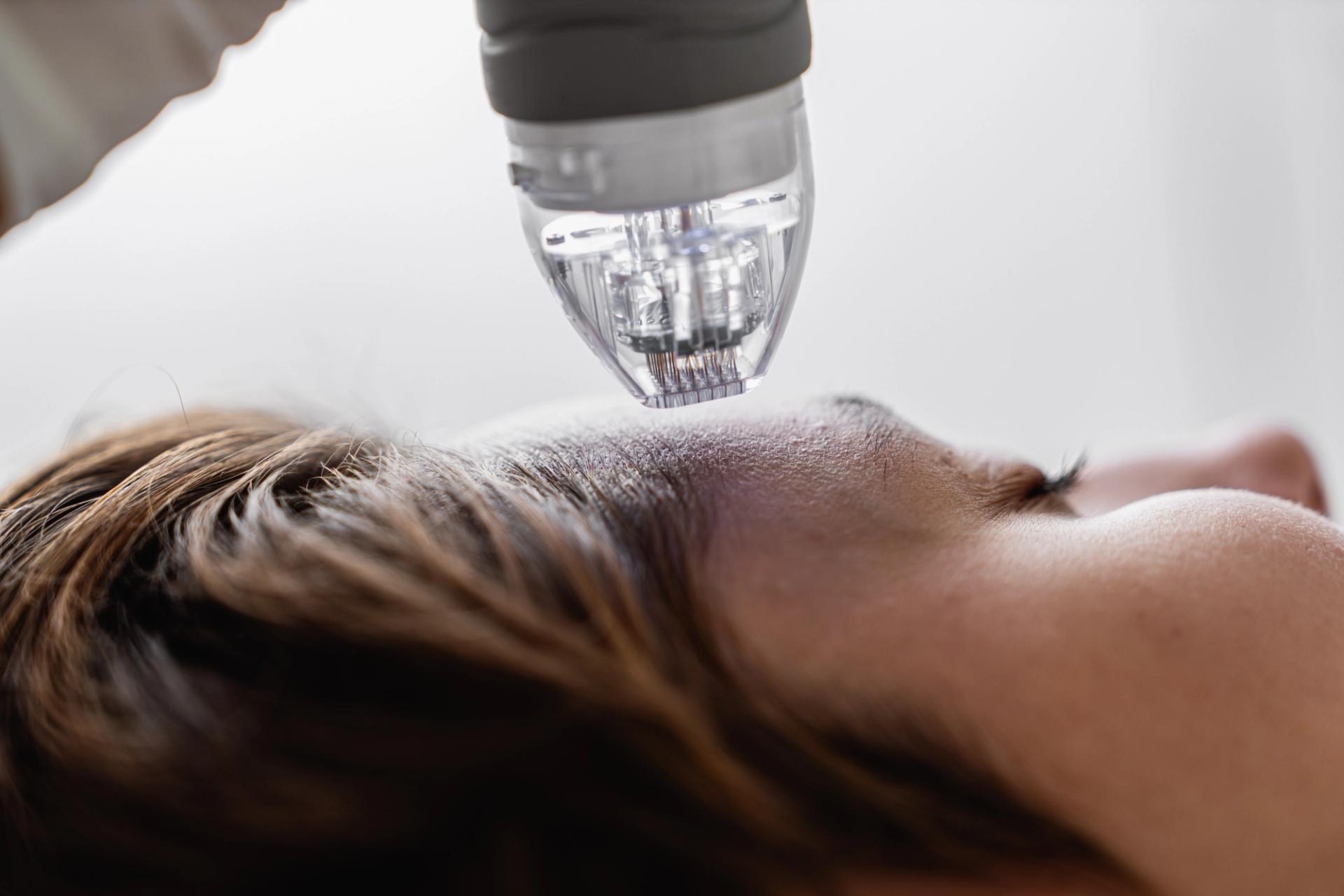
Radiofrequency microneedling drives fine needles into the skin and sends radiofrequency current through their tips into the dermis. The micro-injury and the heat together prompt the skin to lay down new collagen, the basis of this kind of skin rejuvenation.
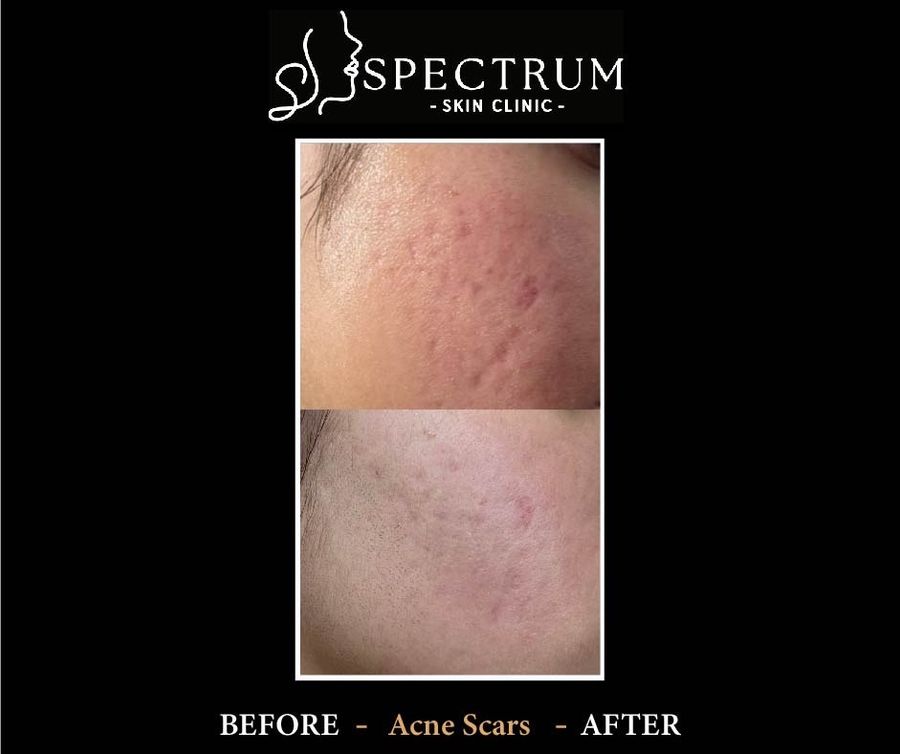
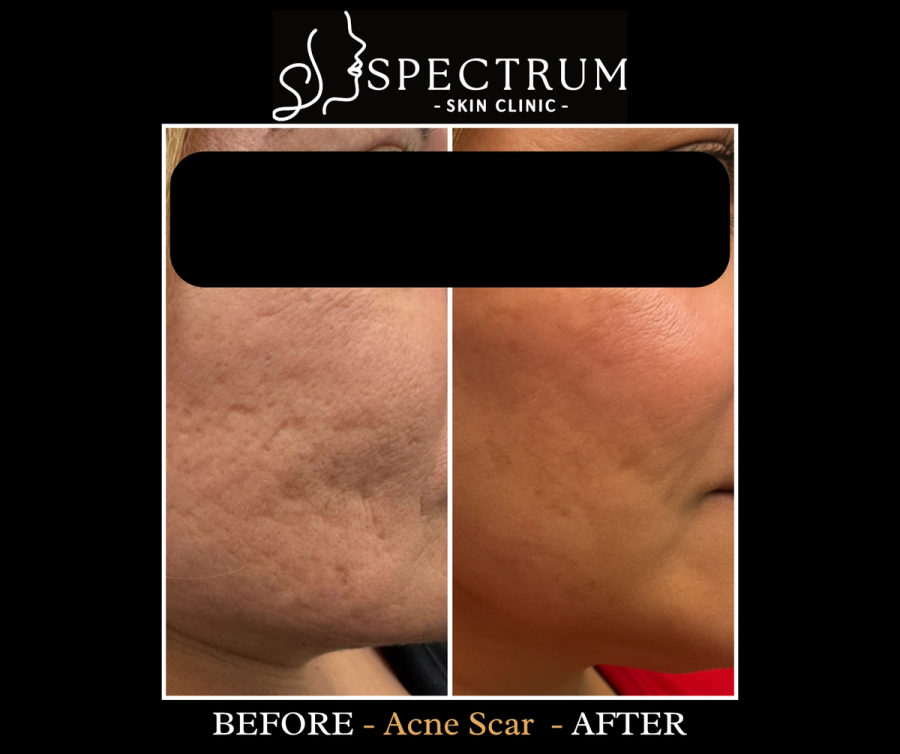
The treatment refines skin texture, softens depressed acne scars, firms mild to moderate laxity, and makes enlarged pores look less open. It is used on the face, neck, and body, and it works across skin types from I to VI.
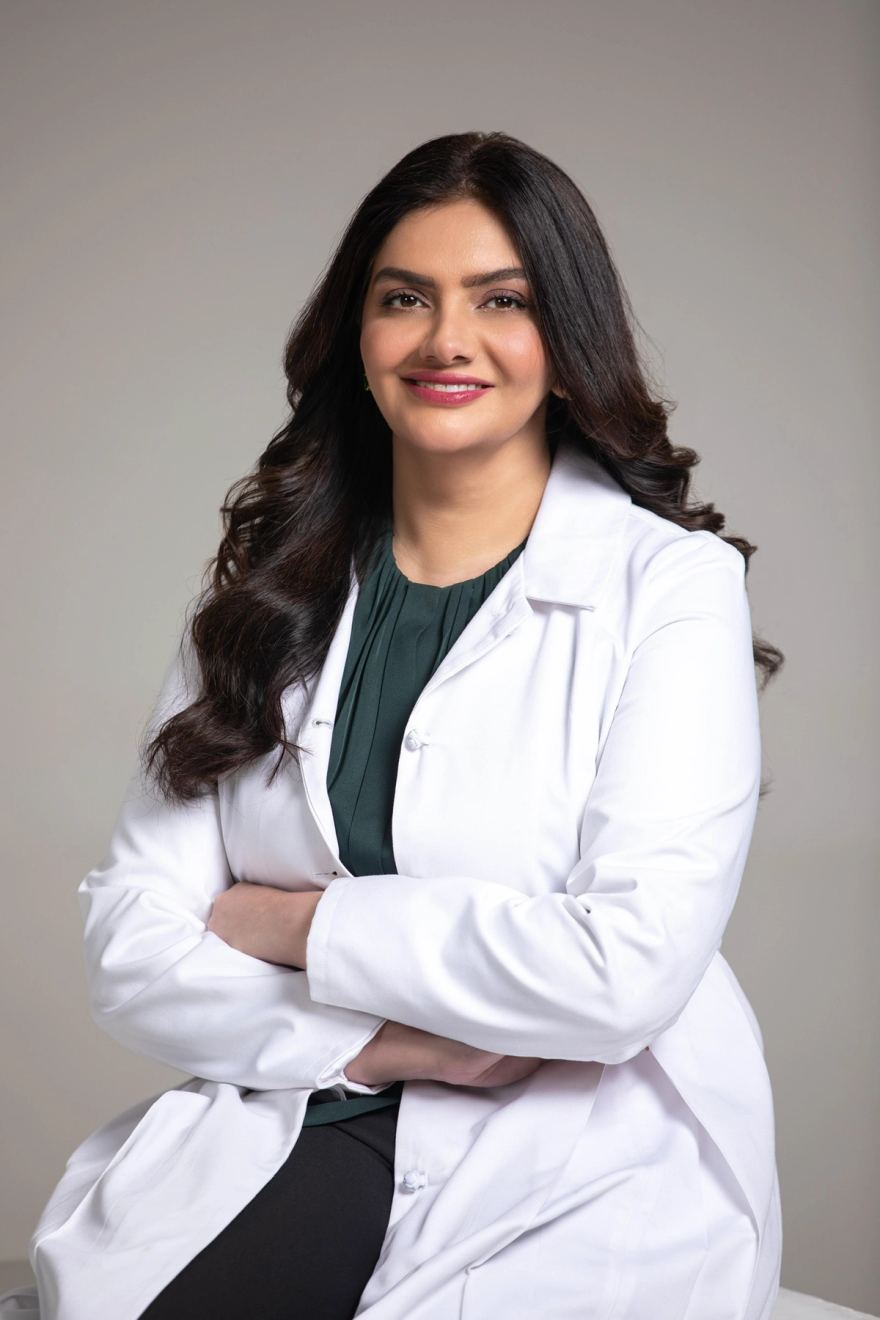
At Spectrum Skin Clinic in Irvine, Dr. Sabeen Munib, MD performs every radiofrequency microneedling session. Patients come from Irvine, Tustin, Rancho Santa Margarita, Corona, and across Orange County.
The Spectrum approach
Why patients choose Spectrum for RF microneedling
Radiofrequency microneedling is a non-laser energy treatment combined with microneedling, and at Spectrum both are performed by Dr. Sabeen Munib, MD. It is not delegated.
She examines and palpates the skin, judges how deep the finding sits, and matches needle depth and energy to it. Scar depth, pore size, laxity, and how much redness you can accept all move the settings.
The device follows the skin, which is why the consultation comes first. For deeper resurfacing she may reach for Secret PRO, which adds a fractional CO2 laser to the radiofrequency microneedling; for most texture and tightening the Matrix system is enough.
Physician performed
Depth led
Two systems
Informed consent
Before & After
Laser Skin Resurfacing Before and After
Radiofrequency microneedling results build as collagen remodels, so a before photo and an after photo taken months apart show gradual firming and smoother texture rather than an overnight change.
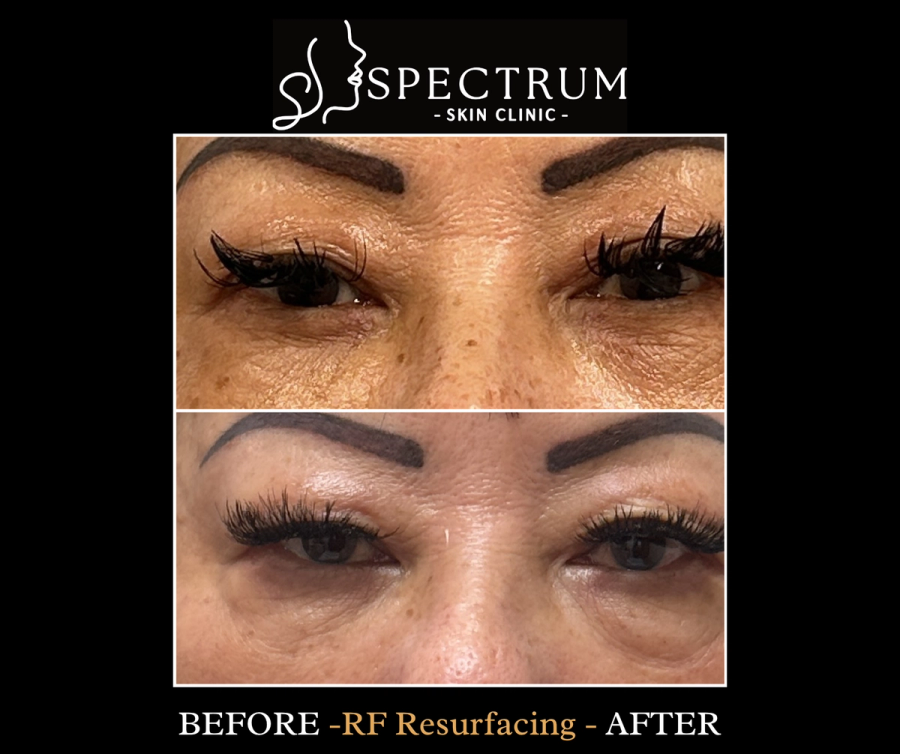
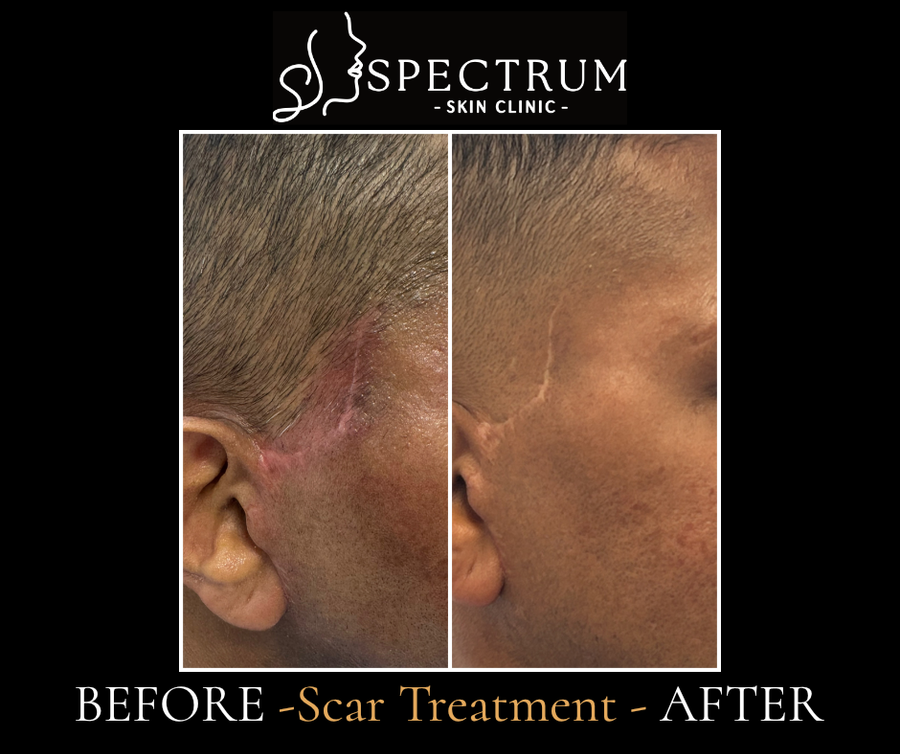
How RF microneedling works
Standard microneedling creates columns of controlled injury and the skin repairs them with fresh collagen. That repair stays near the surface, so it does most of its work on fine texture and tone.
Radiofrequency changes where the energy lands. The needles carry current to their tips and heat the dermis from the inside while the surface stays comparatively cool. Heated collagen contracts first and then rebuilds over the following weeks, which is what firms sagging skin and remodels scar tissue.
Surface microneedling on its own does not reach that depth. For skin laxity, early jowling, or deeper acne scars, microneedling alone underdelivers, and the added radiofrequency is what reaches the tissue those findings sit in.
How the energy is controlled
The current concentrates at the needle tips rather than spreading across the surface, so the epidermis absorbs less heat. That matters most in darker skin, where surface heat is what drives post-inflammatory pigment. A surface radio frequency facial warms only the top layer and will not reach a scar.
Radiofrequency microneedling is a mechanism, not a single machine. Morpheus8, Secret PRO, Matrix, Agnes RF, and Profound RF all deliver current through needles and differ mainly in needle depth and tip design. Spectrum runs the Secret PRO and Matrix systems, and the older Candela eMatrix sublative platform shares the same bipolar radiofrequency principle.
Needle depth and energy are set to the skin and the finding in front of her, not to a fixed protocol. Surface radiofrequency devices such as Pelleve and Exion, and fiber-based endo-laser tightening, heat tissue without needles and suit different findings.
RF microneedling and the alternatives
RF microneedling, surface microneedling, and resurfacing, which fits which skin
The right choice follows the depth of the finding, not the name of a device.
Combined approaches
What RF microneedling pairs with
Who may be a candidate
Radiofrequency microneedling suits skin with rough texture, enlarged pores, mild to moderate laxity, early jowling, and depressed acne scars. Because the energy sits at the needle tips, it can be used on darker skin with a lower risk of pigment shift.
It is also used for stretch marks on the body, where it remodels collagen and elastin in the stretched dermis. It softens stretch marks rather than removing them, and red, newer marks tend to respond more than older white ones.
How the decision is made
Pigment stability is checked before any radiofrequency is planned. Patients with active melasma are started on a pigment-first plan and re-evaluated for radiofrequency microneedling only once the pigment is stable. Depth, device, and whether to pair the treatment are decided at the in-person consultation.
A good fit
You have texture, enlarged pores, mild to moderate laxity, or depressed acne scars, your pigment is stable, and you can accept a few days of redness while collagen remodels.
Where it does less
Severe sagging with loose excess skin needs a surgical lift, not energy. Active melasma can flare with heat, so it is not first-line there. Deep, boxy scars may need resurfacing alongside it.
What to expect & timeline
What to expect
Results are progressive and build across a series. The number of sessions and their spacing are set at the consultation, not from a fixed schedule.
Documented risks
Risks and how they are handled
Most of what follows is common, mild, and passes on its own. It is named plainly so you can weigh it before you book.
Redness and swelling
The skin reddens and may swell after controlled micro-injury and heating, much like a mild sunburn. It is expected and settles without treatment.
Post-inflammatory pigment
Darker skin can develop temporary brown discoloration where surface heat was high. It is infrequent and usually fades on its own, and settings are lowered in darker skin to limit it.
Discomfort during treatment
The needles and heat produce warmth and pressure. Topical numbing is applied first, and most patients describe pressure rather than pain.
Melasma flare
Heat can stir up the overactive pigment cells behind melasma. Pigment stability is assessed before radiofrequency is planned, and active melasma is treated first.
Risks, alternatives, and what the treatment will and will not do are reviewed with you before anything is booked.
How safety is managed
Every session is performed by Dr. Sabeen Munib, MD, who sets needle depth and energy to the skin in front of her.
Skin type is assessed before treatment, and settings are calibrated to limit pigment shift in Fitzpatrick types IV to VI.
Aftercare & recovery
What affects your cost
RF microneedling pricing in Irvine
Radiofrequency microneedling at Spectrum starts at $850. The exact figure depends on the area treated, which device the skin calls for, and whether the session is paired with exosomes, PRP, or resurfacing.
The plan is set at the in-person consultation once the finding, skin type, and device are matched.
New patients: 15% off your first treatment.
Pay monthly with


Will this look natural?
Will RF microneedling change how I look?
Radiofrequency microneedling firms and smooths the skin you already have. It does not add volume or change your features, so it does not make the face look done.
The change is gradual. Collagen remodels over weeks, so the skin tightens and the texture refines slowly rather than overnight. What you see at the end of a series looks like your own skin, firmer and more even.
Explore
Related Treatments
Microneedling
Collagen-induction microneedling for texture and tone when the added radiofrequency is not needed.
Secret PRO
Secret PRO pairs a fractional CO2 laser with RF microneedling for deeper resurfacing and remodeling.
Laser Genesis
Laser Genesis for redness, enlarged pores, and glow with no downtime.
Skin Tightening
Non-surgical skin tightening for mild laxity, including surface radiofrequency.
Neck Tightening
Targeted tightening for the neck and jawline.
PDO Thread Lift
Dissolvable threads that lift and stimulate collagen where energy alone will not hold.
Stretch Mark Treatment with Microneedling
RF and microneedling for stretch marks on the body.
Matrix PRO vs Morpheus8
How Morpheus8 and Matrix compare, and why needle depth matters more than the brand.
Laser and Energy Devices
The full roster of laser and energy platforms, each operated by Dr. Sabeen Munib, MD.
Patient reviews
What Patients Say
4.97★ across 441 verified Boulevard patient reviews.

Mahjabeen Saeed

Deepak Jadhav

Jamel Neill


Questions
Frequently Asked Questions
RF microneedling includes the addition of radiofrequency energy, which tightens and heats the deeper layers of skin, boosting collagen production and improving results, especially for laxity and scarring.
Yes. RF microneedling is considered safe for Fitzpatrick skin types I–VI when performed by experienced providers. It avoids the risk of pigment disruption that some lasers carry.
Topical numbing makes the treatment very tolerable. Patients report mild warmth and pressure rather than pain.
Most patients benefit from 3–4 sessions spaced about a month apart. Maintenance every 6–12 months is recommended to preserve results.
Cost depends on the device used (Matrix Pro, Sublime, or Sublative), the surface area treated, and the number of sessions planned. A single full-face RF microneedling session typically falls in the several-hundred-dollar range, with a course of three to four sessions making up the realistic budget. Exact pricing is reviewed at consultation once goals, skin type, and device match are confirmed. Insurance does not generally cover cosmetic RF microneedling.
RF microneedling is not first-line for active melasma and can rebound the pigmentation in some patients. Heat-based and inflammation-inducing devices can worsen melasma's underlying melanocyte hyperactivity, particularly in Fitzpatrick III–VI skin. Dr. Sabeen Munib, MD evaluates pigment stability before any RF treatment is considered. Patients with active melasma are typically started on a pigment-first plan and re-evaluated for RF only once the melasma is stable.
RF microneedling is a recognized option for stretch marks (striae distensae), targeting collagen and elastin remodeling in the dermis where stretch marks form. Results depend on whether the marks are red (early, more responsive) or white (mature, slower to improve). A series of three to six sessions spaced four to six weeks apart is the typical plan, with realistic expectations set at consultation. Combination with PRP or topical pigment work may be considered in selected patients.
RF microneedling can reduce the appearance of enlarged pores by stimulating dermal collagen, which firms the skin around each follicular opening. The pore itself does not get smaller, but the surrounding skin becomes more taut, which makes pores look less prominent. Three to four sessions over twelve to sixteen weeks is the realistic plan. Results are gradual rather than immediate, and ongoing sun protection is what preserves the improvement.
Morpheus8 is a brand of RF microneedling made by InMode. It uses the same approach as other RF microneedling devices: radiofrequency delivered through microneedles to remodel collagen. Spectrum uses the Secret PRO and Matrix PRO systems.
Yes. RF microneedling combines traditional microneedling with radiofrequency energy. The microneedles deliver heat into the deeper layers of the skin, which tightens tissue and stimulates collagen.
RF microneedling is the broader category that Morpheus8 belongs to, so the treatments work on the same principle. The right device depends on skin type, treatment depth, and goals assessed at consultation.
RF microneedling is used for acne scars, large pores, fine lines, skin texture, and mild laxity on the face and body. Dr. Munib confirms candidacy and settings during the consultation.
Published peer-reviewed literature describes this approach for this indication. Evidence describes what has been reported in studied groups, not a predicted result for any individual. In selected patients it may be appropriate; that judgement is made at consultation.