Fractional CO₂ Laser Skin Resurfacing in Irvine, CA — by Sabeen Munib M.D.
Deep resurfacing for acne scars, sun damage, and texture — settings chosen for your skin, not the device default.
Resurface Deeply. Smooth Scars. Reverse Skin Damage
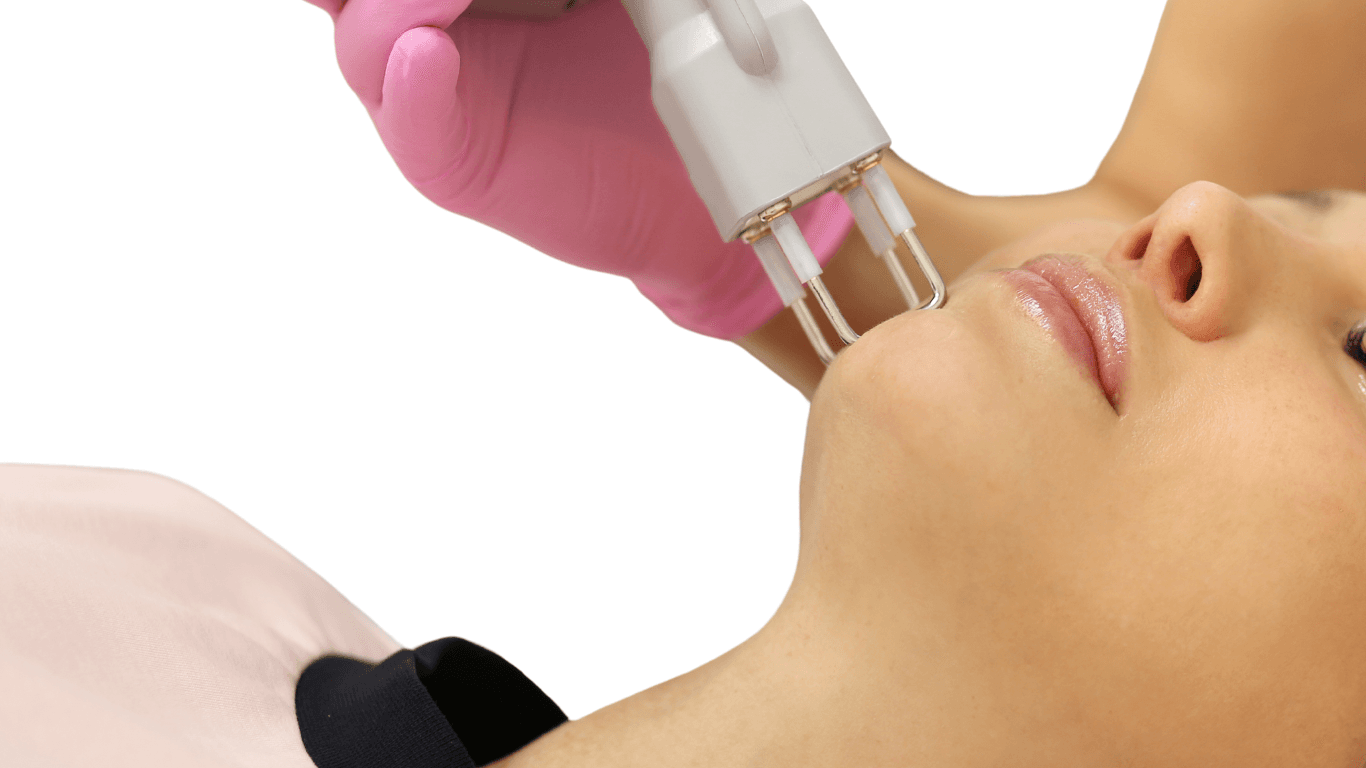
Fractional carbon dioxide (CO₂) laser is a deep form of laser skin resurfacing, designed to target moderate to severe sun damage, acne scarring, texture irregularities, and deep lines. At Spectrum Skin Clinic, we use advanced CO2 laser protocols tailored to each patient’s skin type and healing capacity, offering dramatic improvement with precise, physician-led treatment.
Unlike superficial peels or non-ablative lasers, CO2 laser reaches the deep dermis, where true collagen remodeling occurs. The result is smoother, tighter, more even-toned skin, often with just 1–2 sessions.

Spectrum at a glance
| Starting price | Google rating | Patient reviews | Physician-performed | Experience |
|---|---|---|---|---|
| Starting at $1,200 | 5.0★ Google | 441+ across platforms | 100% by Dr. Sabeen Munib, MD | 15+ years |
Spectrum Skin Clinic — Irvine
114 Pacifica, Suite 280, Irvine, CA 92618 · (949) 259-4790
Why Patients Choose Spectrum for CO2 Laser
Fractional CO2 is one of the most powerful resurfacing tools available, and one of the easiest to get wrong. Depth, density, and how aggressively the laser is run have to be matched to your skin type and the concern being treated, or you risk trading texture for a pigment problem.
At Spectrum Skin Clinic, every CO2 treatment is performed by or directly supervised by Dr. Sabeen Munib, MD, who sets the depth, density, and number of sessions for your skin rather than running a fixed protocol. She has advanced experience treating skin types III–V, including post-acne and scar-prone skin, and follows complication-correction and pigment-injury-prevention protocols that a device operator alone cannot offer.
That physician judgment is the difference on an ablative laser: the plan is built around your skin's healing and pigment risk, and can dial down to lower-downtime settings or escalate to deeper resurfacing depending on what your skin actually needs.

What Is Fractional CO2 and How Does It Work?
Fractional CO2 laser delivers microscopic columns of targeted heat into the skin, creating precise ablation and coagulation zones while leaving surrounding tissue intact to speed healing. These columns stimulate neocollagenesis, the collagen-remodeling process that firms and resurfaces skin from within.
By controlling depth, energy, and density, treatment can be tailored to be:
- Light and gentle, for melasma, crepey skin, or fine lines
- Aggressive and corrective, for deep acne scarring, etched wrinkles, or laxity
Settings are adapted for Fitzpatrick skin types I–V, with pre- and post-treatment protocols to protect melanin-rich skin.
What Conditions Can CO2 Laser Treat?
- Moderate to deep acne scars
- Fine lines and deep facial wrinkles
- Texture and pore size irregularities
- Sun damage and actinic keratoses
- Crepey skin on eyelids, neck, and décolletage
- CO2 laser under eyes, fine lines, crepiness, and tone in the periorbital area
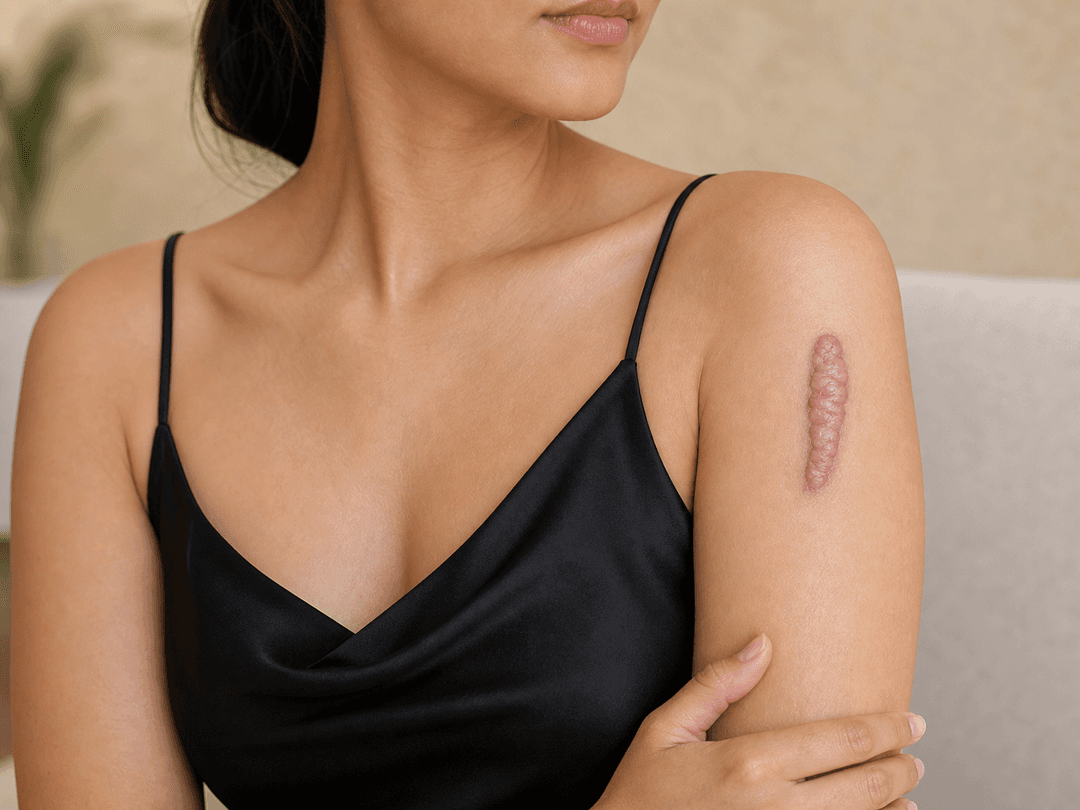
- Stretch marks and surgical or traumatic scars
- Post-inflammatory hyperpigmentation (PIH), when combined with pigment-control plan
- Skin laxity in lower face, under eyes, or neck
- Post-surgical scar refinement
Who Is a Good Candidate for CO2 Laser Resurfacing?
- Adults with photoaged, scarred, or wrinkled skin seeking true resurfacing
- Patients post-acne who’ve plateaued on microneedling or peels
- Skin types I–IV (with modifications for higher-risk types)
- Fitzpatrick V+ patients may be better suited for Secret PRO or Sublative RF if risk of PIH is high
- Not recommended if pregnant, on isotretinoin, or with active infections or poor wound healing

What to Expect During Treatment
- Topical numbing for 45–60 minutes
- Option for nerve block or local anesthesia for full-face treatments
- Procedure time: 30–60 minutes depending on area
- Immediate tightness, redness, and pinpoint oozing post-treatment

CO₂ Laser Recovery Day-by-Day: What to Expect
- Days 1–3: Redness, swelling, pinpoint crusting
- Days 4–7: Peeling, dryness, bronzing
- Day 7+: Renewed skin begins to emerge
- Makeup typically allowed after day 7, with CO2 laser downtime largely cosmetic at that point
- CO2 laser recovery follows a predictable day-by-day pattern, while full healing and collagen remodeling continue over 3–6 months.
Proper sun avoidance, pigment-prevention agents, and hydration protocols are mandatory. We provide a custom skincare plan including SkinCeuticals Epidermal Repair, CE Ferulic, and gentle SPF.

How Many Sessions Are Needed?
- 1–2 sessions for dramatic resurfacing or deep scarring
- Mild resurfacing may be done in series of 3 spaced 8–12 weeks apart
- Maintenance yearly or bi-annually depending on sun exposure and skin behavior
Post-Treatment Support & Enhancements
Following CO2 laser, we may recommend:
- Skin Exosomes or PRFM to accelerate recovery and reduce PIH
- Glass Skin Facial or LED therapy starting 3–4 weeks post-treatment
- Rejuran or Skin Boosters to improve elasticity and reinforce the skin barrier
- Pigment suppression plan including tranexamic acid, glutathione, or tyrosinase inhibitors for melanin-rich skin
Related Before & After Results
See real CO2 laser before and after results from patients treated personally by Sabeen Munib, MD at Spectrum Skin Clinic in Irvine:
Lower-Downtime Fractional CO2 (Fraxis Duo): “Cool Peel”-Style Resurfacing
Fractional CO2 doesn't have to mean two weeks of downtime. By adjusting energy, density, and depth on Fraxis Duo, fractional CO2 can be delivered at lower intensities, a CO2 peel or "cool peel"-style approach that targets only the superficial skin layers and produces meaningful resurfacing with 2–3 days of downtime instead of the 7–14 days associated with deeper ablative treatment.
This lower-downtime Fraxis Duo CO2 setting suits patients who want visible improvement in skin texture, pore size, and superficial pigmentation but cannot commit to extended recovery. It can be repeated every 4–6 weeks for cumulative results, or combined with a deeper fractional pass in the same session for a “dual-pass” approach.
At Spectrum Skin Clinic in Irvine, lower-downtime fractional CO2 is one of several Fraxis Duo settings Sabeen Munib, MD selects based on each patient’s skin type, downtime tolerance, and resurfacing goal. Most patients see progressive improvement over 4–6 weeks, with optimal results at 3 months.
Fraxis Duo RF Microneedling: Adjustable-Depth Dermal Remodeling
Beyond CO2, Fraxis Duo also offers RF microneedling, radiofrequency energy delivered through ultra-fine insulated needles inserted at adjustable depths from approximately 0.5 to 3.5 mm. Unlike surface ablation, this approach places controlled thermal energy at chosen depths within the dermis, triggering deep dermal remodeling and collagen response while leaving the skin surface largely intact.
Fraxis Duo RF microneedling suits patients who want substantive collagen remodeling for acne scarring, textural irregularity, surgical scars, or stretch marks but prefer not to commit to ablative downtime. The adjustable depth allows Sabeen Munib, MD to target the precise dermal layer where remodeling is needed, superficial for fine texture, deeper for established scarring.
Surface downtime is typically minimal: a small dot pattern from the needle channels that resolves within 1 to 3 days. Fraxis Duo RF microneedling pairs well with PRFM and other biologic adjuncts for supported healing.
Nordlys Fractional Resurfacing: Non-Ablative Collagen Remodeling
Spectrum Skin Clinic also offers Nordlys fractional resurfacing as a non-ablative option. Unlike ablative CO2, which removes tissue, Nordlys 1565 nm fractional resurfacing delivers light energy that creates controlled micro-injuries in the dermis while leaving the skin surface largely intact. This means minimal downtime (redness for 24–48 hours) with strong collagen remodeling beneath the surface.
Nordlys fractional resurfacing is well-suited for patients with medium-to-darker skin tones (Fitzpatrick III–VI) where surface ablation carries a higher pigmentation risk, as well as patients seeking collagen remodeling and scar refinement without committing to ablative downtime. It pairs well with Selphyl PRFM for supported healing and enhanced collagen production.
For patients deciding between Fraxis Duo CO2, Fraxis Duo RF microneedling, or Nordlys fractional resurfacing, Sabeen Munib, MD assesses skin tone, scar type, downtime tolerance, and resurfacing goal at consultation to recommend the right pathway, or a combination.
Choosing Your Resurfacing Pathway
| Modality | Best For | Downtime | Skin Tone Suitability |
|---|---|---|---|
| Higher-Intensity Fractional CO2 (Fraxis Duo) | Deep wrinkles, significant sun damage, deeper acne scars | 7 to 14 days of healing | Lighter skin tones (Fitzpatrick I–III) primarily |
| Lower-Downtime Fractional CO2 (Fraxis Duo) | Surface-level resurfacing with shorter recovery — “cool peel”-style | 2 to 3 days of downtime | Wide range — balances result with shorter recovery |
| Fraxis Duo RF Microneedling (0.5–3.5 mm) | Deep dermal remodeling, acne scars, texture, stretch marks | Minimal (small dot pattern, typically 1–3 days) | Adjustable depth — broader skin-tone candidacy |
| Nordlys Fractional Resurfacing | Collagen remodeling without ablation; scar refinement | Minimal (redness 24–48 hours) | Darker skin tones (Fitzpatrick III–VI); lower pigmentation risk |
Fractional CO₂ vs. Erbium (Er:YAG): How the Two Resurfacing Lasers Differ
The core difference between fractional CO₂ and erbium (Er:YAG) is how each laser's wavelength interacts with water in the skin, which in turn changes heat, downtime, and what each does best.
- Fractional CO₂ (10,600 nm), its energy carries a bit more residual heat, which drives stronger collagen tightening and deeper remodeling, with a longer recovery.
- Erbium / Er:YAG (2,940 nm), absorbed by water more avidly, so it ablates precisely with less surrounding heat; often gentler with shorter downtime, but typically less collagen tightening per pass.
- Neither is universally “better.” The right choice depends on the depth of the concern, skin type, pigment risk, and how much downtime you can take.
At Spectrum, resurfacing runs on two ablative platforms: fractional CO₂ on the Fraxis Duo, including lower-downtime cool-peel settings, and Er:YAG on the Fotona TimeWalker. Nordlys covers non-ablative resurfacing for tone and lighter cases. Having both wavelengths in the room means the choice is made from your skin rather than from what is available: CO₂ where deeper collagen tightening is the goal and downtime is acceptable, Er:YAG where precision and a shorter recovery matter more. Which one Dr. Munib recommends depends on the depth of the concern, your skin type, pigment risk, and how much downtime you can take. See Erbium Laser Resurfacing for that side in detail.
Fractional CO2 vs Fraxel: What's the Difference?
Fractional CO2 and Fraxel are often compared because both are fractional laser resurfacing treatments. Both create microscopic columns of treated skin that trigger collagen and renew the surface.
Both improve fine lines, texture, and scars, and both are non-surgical. The main difference is intensity: fractional CO2 is ablative, while Fraxel is non-ablative.
Fraxel is a brand of fractional laser made by Solta. Fractional CO2 is the ablative category, which reaches deeper and typically asks for a little more downtime in exchange for stronger resurfacing.
How Fractional CO2 and Fraxel Compare
| Feature | Fractional CO2 | Fraxel |
|---|---|---|
| Fractional resurfacing | Yes | Yes |
| Stimulates collagen | Yes | Yes |
| Treats lines, texture, and scars | Yes | Yes |
| Ablative or non-ablative | Ablative | Non-ablative |
| Typical downtime | About a week | A few days |
| Brand or category | Category (fractional CO2) | Solta brand |
How Dr. Munib Chooses
When ablative resurfacing fits, Dr. Sabeen Munib, MD treats with the clinic's fractional CO2 laser at Spectrum. She weighs the patient's skin type, the depth of lines or scars, downtime tolerance, and pigmentation risk, not the brand on the device.
For lighter needs she may choose a gentler, non-ablative approach instead. The plan is matched to the skin in front of her, which is why the consultation comes first.
Targeted & Related Resurfacing in Irvine
Beyond full-face treatment, fractional CO₂ can be focused on specific zones. For laser skin resurfacing in Irvine tailored to the delicate skin under the eyes, see:
CO₂ Laser Under the Eyes, conservative settings for crepiness, fine lines, and texture in thin periorbital skin (it refines skin quality; it does not lift eyelids or remove fat bags).
Fractional CO2 is one of twelve laser and energy platforms here. To see how it sits against the others, and which concerns point to a different device, read our laser and energy device roster. Every platform is operated by Dr. Sabeen Munib.
Medical Review
Medically advised by Dr. Sabeen Munib, MD. Spectrum Skin Clinic · 114 Pacifica, Suite 280, Irvine, CA 92618 · (949) 259-4790
Is Co2 Right For You? Book Your Consult
CO2 laser consultations start with the texture, scarring, or photodamage you want to resurface and how your skin heals, fractional CO2 carries real downtime and pigment considerations. Dr. Sabeen Munib, MD assesses your skin type and whether CO2 is the right intensity for your goal. Schedule your consultation to plan it safely.
Patient Reviews
4.97★ · 441 Patient Reviews

I had an amazing experience with Dr. Munib, who performed my aesthetic treatments including Pico laser, Botox, a glassy facial, Botox for migraine, and HIFU. Every procedure was done with great care, precision, and professionalism, and the results exceeded my expectations. Dr. Munib is incredibly knowledgeable and takes the time to explain everything, making me feel comfortable and confident throughout the process. Her expertise truly shows in her work. The staff was extremely accommodating, friendly, and professional, which made the entire experience even better. On top of that, the prices were very reasonable for the quality of service provided. I highly recommend Dr. Munib to anyone looking for outstanding aesthetic treatments and excellent patient
Mahjabeen Saeed
3 months ago

I had an excellent experience with Dr. Sabeen Munib at Spectrum Skin Clinic in Irvine. I visited her for acne scar treatment and underwent three subcision sessions spaced six weeks apart. Throughout my treatment, I was consistently impressed by her expertise, attention to detail, and compassionate approach. Dr. Munib took the time to carefully evaluate my scars, explain the procedure, and answer all of my questions before starting. During each procedure, she made sure I was comfortable and informed every step of the way. Her technique, skill and experience with acne scar subcision gave me complete confidence that I was in capable hands. The entire team at Spectrum Skin Clinic was professional, friendly, and supportive throughout the process. Although acne scar improvement takes time and healing, I appreciate that Dr. Munib focuses on achieving the best possible long-term results rather than making unrealistic promises. She explained what to expect during recovery and emphasized that collagen remodeling happens gradually. If you're looking for a knowledgeable and caring physician for acne scar treatment or subcision, I highly recommend Dr. Sabeen Munib Spectrum Skin Clinic, Irvine. I truly appreciate the care, professionalism, and dedication I received and would not hesitate to recommend her to anyone seeking advanced scar treatment.
Deepak Jadhav
2 months ago

After several aesthetic nurses told me I was allergic to filler dissolver, Dr. Munib took a careful, evidence-based approach. She used ultrasound to locate my migrated lip filler, tested a small area first, and explained I was reactive—not allergic. She dissolved a small test area before safely treating my upper lip. Throughout the process she was gentle, thorough, and educational. It’s a long drive for me, but her knowledge and expertise make it absolutely worth it.
Jamel Neill
a month ago

Truly an amazing experience with Dr. Munib! She really listened to my concerns with my nose filler and was such an expert on mapping out where the old filler was. I’ve have dissolver before and was promised results that were never met. I wish I went here sooner! She knew exactly where it was and feel so confident in her hands. Thank you for getting my confidence back.
Jessica napoles
a month ago
Real Patient Results
All treatments performed personally by Dr. Sabeen Munib at Spectrum Skin Clinic, Irvine.
Related Blogs
Personalized Aesthetic & Regenerative Solutions Designed to Heal, Enhance & Restore Naturally




Frequently Asked Questions
Got questions? We’re here to help! Find out what we offer, how to book an appointment, where we’re located, and more. We treat all age groups and offer skincare products too.